
thai green curry recipe

The Best thai green curry recipe
What I love most about this dish is how balanced it is. The coconut milk adds a creamy richness, but it’s lightened up with lean protein like chicken or tofu and a ton of vegetables. You get fiber from the veggies, healthy fats from the coconut, and a boost of vitamins from the herbs and spices. Plus, it’s endlessly adaptable—swap in whatever veggies you have on hand, adjust the spice level to your liking, or even make it vegetarian. It’s the kind of meal that keeps everyone happy without a lot of fuss, and that’s exactly why it’s a staple in our house.
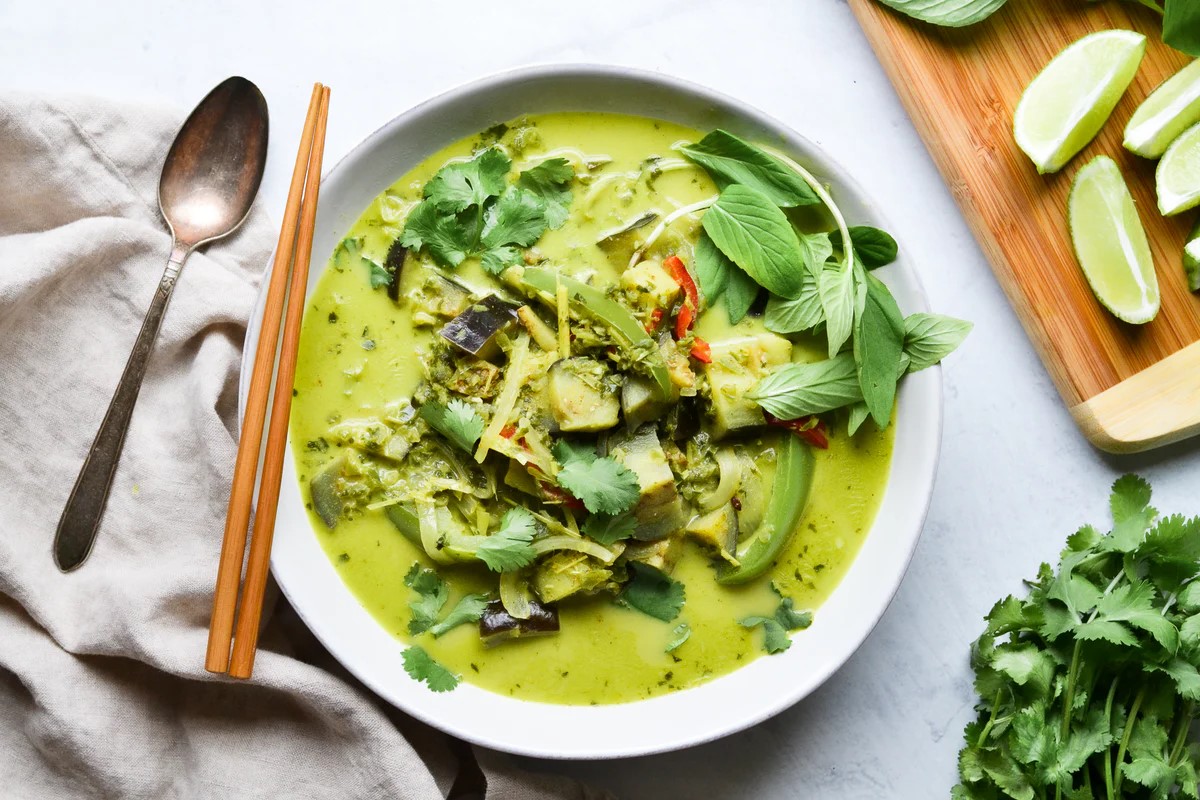
Authentic Thai Green Curry
A fragrant and creamy Thai green curry packed with tender chicken, fresh vegetables, and aromatic herbs. This dish balances spicy, sweet, and savory flavors for a comforting meal that’s ready in under an hour.
🥘Ingredients
- 2-3 tbsp Thai green curry paste (store-bought or homemade)
- 1 stalk lemongrass, bruised and cut into 2-inch pieces
- 3-4 kaffir lime leaves, torn
- 1-inch galangal or ginger, sliced
- 2 cloves garlic, minced
- 1 shallot, sliced
- 1-2 green Thai chilies, chopped (adjust to taste)
- 1 tsp coriander seeds, toasted
- 1/2 tsp cumin seeds, toasted
- 1/2 tsp white pepper
- 1 tbsp cilantro roots or stems, chopped
- 1 tsp shrimp paste (optional)
- 1 tbsp lime juice
- 1 lb (450g) boneless chicken thighs or breasts, sliced into thin strips
- 1 can (13.5 oz) coconut milk, divided
- 1 cup chicken or vegetable stock
- 1 tbsp palm sugar or brown sugar
- 1-2 tbsp fish sauce (adjust to taste)
- 1 red bell pepper, sliced into thin strips
- 1 small eggplant, cut into bite-sized pieces
- 1 cup Thai basil leaves
- 1 cup bamboo shoots, sliced (optional)
- 1-2 kaffir lime leaves, torn
- 1 tbsp vegetable oil
- Steamed jasmine rice
- Fresh Thai basil leaves
- Lime wedges
- Sliced red chili (optional)
👨🍳Directions
-
1
If making curry paste from scratch, pound lemongrass, galangal, garlic, shallot, chilies, coriander seeds, cumin seeds, white pepper, cilantro roots, and shrimp paste (if using) in a mortar and pestle until a smooth paste forms. Add lime juice and set aside. (Skip if using store-bought paste.) -
2
Heat oil in a large skillet or wok over medium heat. Add 2-3 tablespoons of the thick coconut cream (from the top of the can) and let it sizzle for 1-2 minutes until fragrant. -
3
Add the green curry paste and stir-fry for 2-3 minutes until the oil begins to separate and the paste darkens slightly. -
4
Add the chicken strips and cook for 3-4 minutes until they turn opaque. -
5
Pour in the remaining coconut milk and chicken stock. Stir well to combine. -
6
Add bell pepper, eggplant, bamboo shoots (if using), and kaffir lime leaves. Bring to a gentle simmer and cook for 8-10 minutes until the vegetables are tender. -
7
Season with fish sauce and palm sugar. Taste and adjust seasoning—balance should be spicy, salty, and slightly sweet. -
8
Stir in Thai basil leaves and remove from heat. -
9
Serve hot over steamed jasmine rice, garnished with fresh basil leaves, lime wedges, and sliced red chili if desired.
🔧Equipment
- Mortar and pestle (if making paste from scratch)
- Large deep skillet or wok
- Wooden spoon
- Cutting board
- Sharp knife
- Measuring spoons
- Ladle
📊Nutrition Facts (per serving)
📝Notes
Watch Video Of How Authentic Thai Green Curry Works
❓ Frequently Asked Questions About Thai Green Curry
1. What makes Thai green curry different from other Thai curries?
Thai green curry is distinct due to its vibrant green color, which comes from fresh green chilies, cilantro, and kaffir lime leaves in the curry paste. Unlike red or yellow curries, it has a fresher, herbaceous flavor with a balance of spicy, sweet, and savory notes. It’s typically creamier and milder than red curry but can be adjusted for heat by controlling the amount of green chilies.
2. Can I make Thai green curry paste from scratch?
Yes! Homemade green curry paste is fresher and more flavorful than store-bought. Blend together green chilies, lemongrass, galangal (or ginger), garlic, shallots, cilantro roots, kaffir lime zest, coriander seeds, cumin, white pepper, and shrimp paste (or salt for a vegetarian version). Adjust the spice level by adding more or fewer chilies. Store unused paste in the fridge for up to a week or freeze it for longer use.
3. What protein works best in Thai green curry?
Chicken (especially thigh meat) is the most traditional choice, but you can also use shrimp, beef, pork, tofu, or even fish. For seafood, add it later in cooking to prevent overcooking. Tofu is great for vegetarians—pan-fry it first for a crispier texture. The key is to choose a protein that absorbs the curry’s flavors well.
4. Is coconut milk necessary, or can I substitute it?
Coconut milk is essential for authentic Thai green curry, as it provides the creamy base and balances the heat. However, if you’re avoiding coconut, you can use a mix of heavy cream and chicken or vegetable broth for richness, though the flavor will differ. Light coconut milk works but results in a thinner curry. Avoid dairy-free alternatives like almond milk, as they lack the necessary fat content.
5. How do I fix a green curry that’s too spicy or too bland?
If it’s too spicy, balance the heat by adding more coconut milk, a splash of lime juice, or a teaspoon of palm sugar (or brown sugar). For a bland curry, enhance the depth with fish sauce, more lime juice, or a spoonful of curry paste. Taste as you go—Thai cooking relies on balancing sweet, salty, sour, and spicy flavors. Garnishing with fresh Thai basil or cilantro can also brighten the dish.


