
dutch oven bread recipe

The Best dutch oven bread recipe
What I love most about this recipe is how it balances simplicity and depth. You don’t need fancy ingredients—just good flour, a little yeast, and a touch of salt and sugar—but the Dutch oven gives it that extra layer of flavor that regular loaves just can’t match. My family loves how it stays fresh for days, and my kids always ask for seconds because it’s so satisfying. It’s also a great way to use whole grains or gluten-free flours if you want to make it healthier without sacrificing taste. Whether you’re feeding a crowd for a holiday dinner or just want a reliable bread to keep on hand, this recipe delivers. The health benefits are real too—it’s packed with fiber, especially if you use whole wheat or seeds, and the slow bake helps retain moisture, so you’re not dealing with dry, crumbly slices. Plus, it’s foolproof, meaning fewer mistakes and more joy in the kitchen.
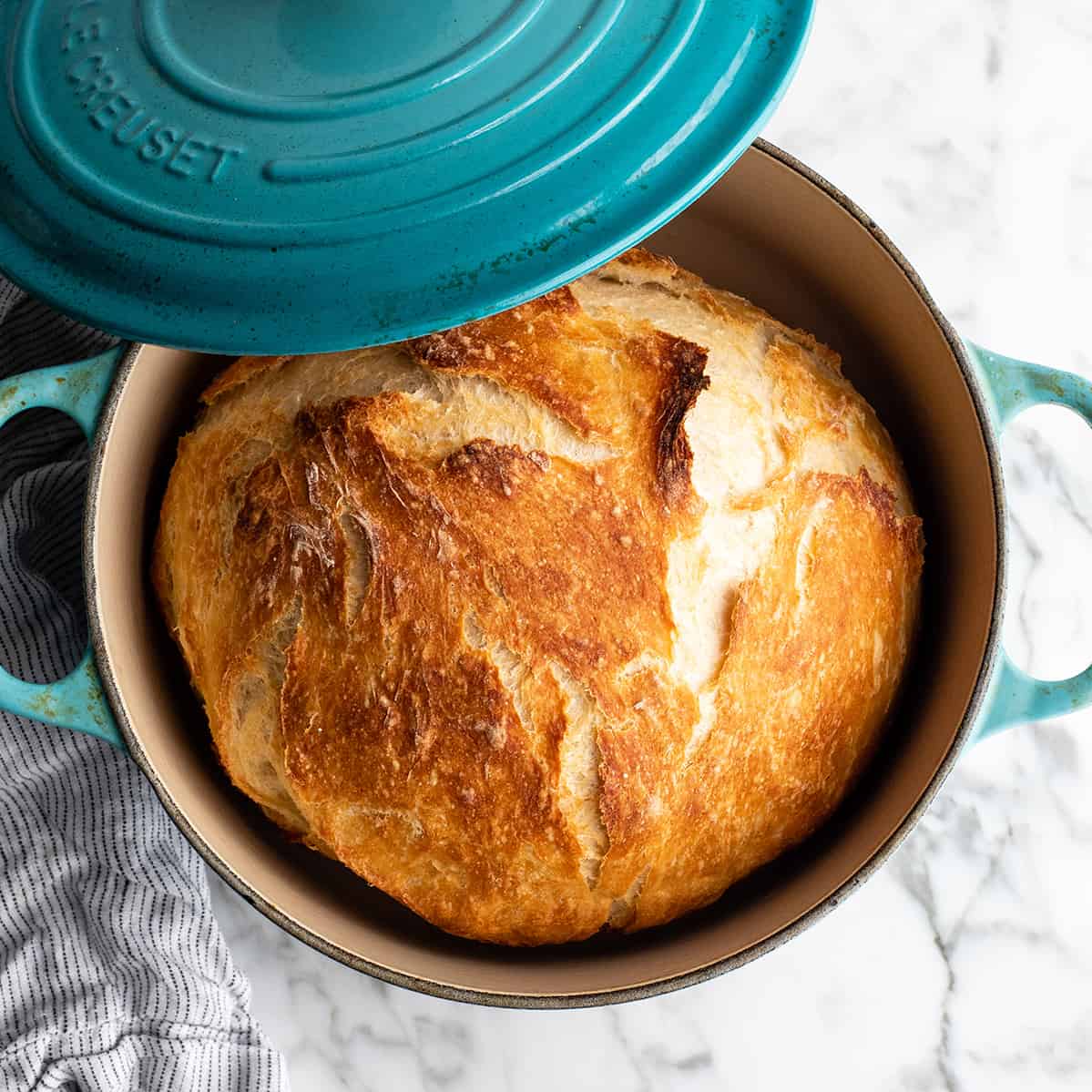
Dutch Oven Bread (Bakkerijbrood)
A classic Dutch-style bread baked in a cast-iron Dutch oven for a crispy crust and soft interior. Perfect for sandwiches or toast.
🥘Ingredients
- 3 cups all-purpose flour
- 1 tsp salt
- 1 packet (2 ¼ tsp) active dry yeast
- 1 cup warm water (110°F/43°C)
- 1 tbsp olive oil
- 1 tbsp olive oil
- 1 tsp dried oregano
- ½ tsp black pepper
- ½ tsp garlic powder
👨🍳Directions
-
1
In a mixing bowl, dissolve yeast in warm water. Let sit for 5 minutes until foamy. -
2
Whisk flour and salt in a separate bowl. Gradually add yeast mixture and olive oil, mixing until a dough forms. -
3
Knead the dough on a lightly floured surface for 8–10 minutes until smooth and elastic. Place in a greased bowl, cover, and let rise in a warm place for 1 hour or until doubled in size. -
4
Preheat oven to 425°F (220°C). Preheat the Dutch oven in the oven for 15 minutes. -
5
Remove dough from the bowl, punch down, and shape into a round loaf. Place inside the preheated Dutch oven, grease the lid, and sprinkle with olive oil, oregano, black pepper, and garlic powder. -
6
Cover the Dutch oven and bake for 30 minutes. Remove the lid and bake for another 15–20 minutes until the bread is golden brown.
🔧Equipment
- Mixing bowl
- Dutch oven (cast iron)
- Measuring cups and spoons
- Whisk
- Oven
📊Nutrition Facts (per serving)
📝Notes
Tips
- For extra flavor, add 1 tbsp honey or a pinch of nutmeg to the dough.
- Ensure the Dutch oven is fully preheated for even baking.
- Let the bread cool before slicing to maintain its structure.
Substitutions
- Use whole wheat flour for a nutritious twist.
- Replace yeast with 1 tbsp baking powder for a quick version.
Watch Video Of How Dutch Oven Bread (Bakkerijbrood) Works
❓ Frequently Asked Questions About Dutch Oven Bread (Bakkerijbrood)
1. What is the primary difference between baking Dutch oven bread and traditional loaf bread in terms of equipment?
The primary difference is that Dutch oven bread is baked in a heavy cast-iron pot (like a Dutch oven) with a tight-fitting lid, which creates a steamy environment that helps the crust develop a crispy exterior while keeping the interior soft and moist. Traditional loaf bread is usually baked in a standard oven with no lid, resulting in a less uniform crust and potentially drier crumb.
2. How long should I let the dough rest before baking in a Dutch oven?
For optimal results, let the dough rest (proof) in a warm place for about 1 to 2 hours, or until it has doubled in size. If your kitchen is cold, you may need to extend this time, possibly up to 3 hours, depending on the temperature. Avoid over-proofing, as it can make the bread dense.
3. Why does the Dutch oven bread have a better crust compared to regular loaf bread?
The Dutch oven’s tight-fitting lid traps steam inside the pot during baking, which creates a moist environment. This steam helps the crust form quickly and develops a crispy, golden exterior. Without the lid, traditional bread relies on oven heat alone, leading to a softer crust.
4. Can I use a different type of flour for this recipe, and if so, which ones work best?
Yes, you can substitute all-purpose flour with whole wheat flour (mixed with white flour for better texture) or bread flour (for a chewier crust). For a lighter texture, consider using half whole wheat and half all-purpose or half rye and half all-purpose. Avoid overly high-protein flours (like bread flour alone) if you want a softer loaf.
5. What are the common mistakes beginners make when baking Dutch oven bread, and how can they be avoided?
Common mistakes include:
– Overproofing the dough (leads to a dense, flat loaf) → Proof in a warm spot and check for slight doming.
– Not preheating the Dutch oven properly (cold pot causes uneven baking) → Preheat for at least 30 minutes before adding dough.
– Skipping the pre-salt step (weakens gluten) → Brush the dough with water before baking.
– Opening the lid too early (dries out the crust) → Let it bake fully (usually 45–60 minutes) before checking.

