
pork stew recipe

The Best pork stew recipe
One of the best things about this stew is how it’s so adaptable. You can make it as simple or as fancy as you like—just enough herbs or a splash of red wine to elevate it, or leave it plain and hearty. My family loves it because it’s filling but not heavy, and the flavors are always balanced—sweet from the carrots, savory from the pork, and a little tang from the vinegar or beer we sometimes add. It’s not just a meal; it’s a tradition. I’ll often make a big pot when we have company or when the kids are coming over for a movie night, and everyone always raves about how good it tastes. And let’s not forget the health benefits—leaner cuts of pork, plenty of fiber from the vegetables, and the vitamins in the carrots and onions make it a balanced meal without sacrificing that comforting taste. It’s the kind of dish that makes you feel good inside and out.
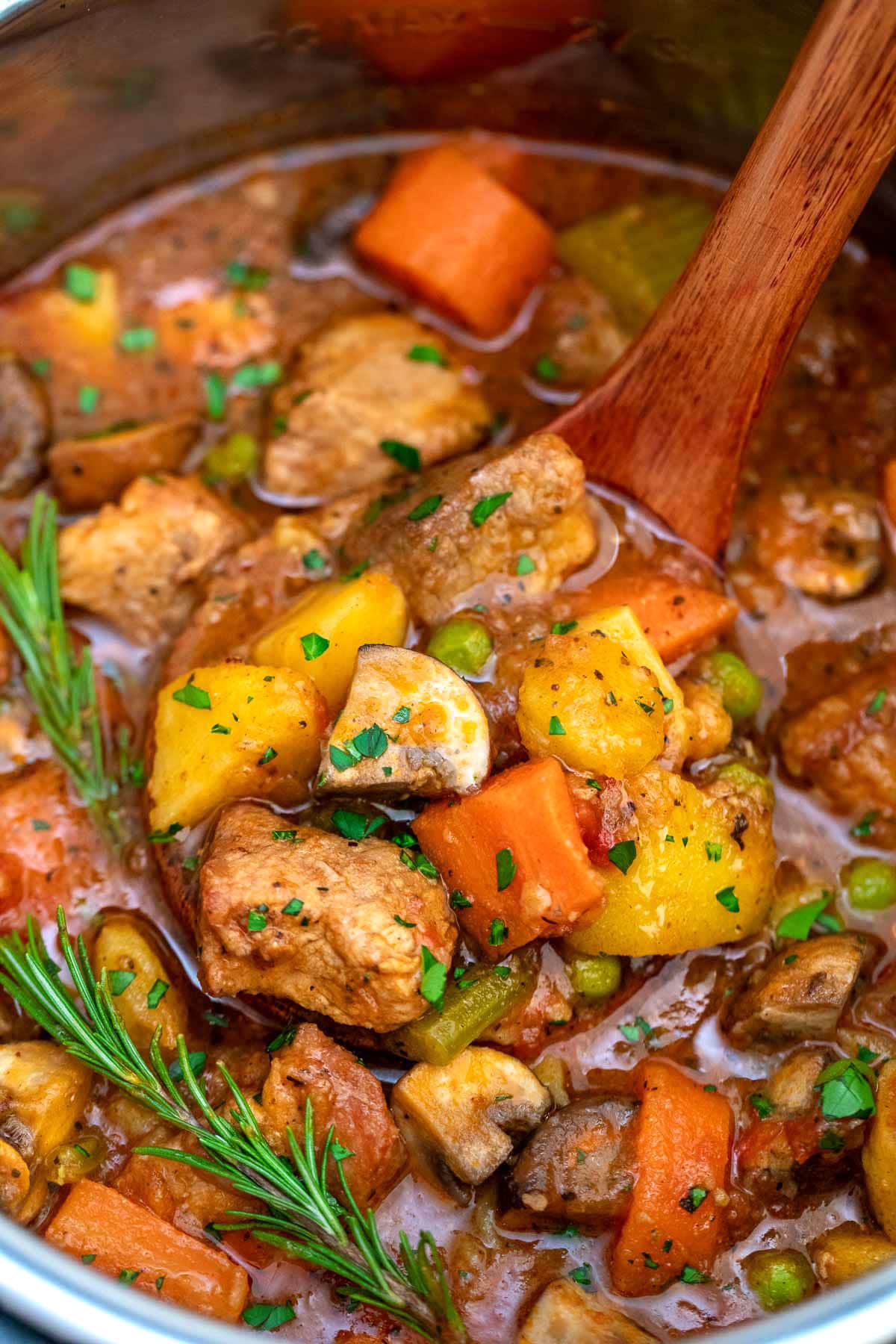
Classic Pork Stew
A hearty and comforting stew featuring tender pork, rich tomato-based sauce, and aromatic vegetables. Perfect for cold days!
🥘Ingredients
- 2 lbs pork shoulder (cut into 2-inch chunks)
- 2 tbsp olive oil
- 2 tbsp tomato paste
- 1 large onion (diced)
- 3 cloves garlic (minced)
- 1 carrot (diced)
- 1 celery stalk (diced)
- 2 cups beef or vegetable broth
- 1 cup red wine (optional)
- 1 tbsp Worcestershire sauce
- 1 tsp dried thyme
- 1 tsp dried rosemary
- 1 bay leaf
- Salt and black pepper to taste
- Fresh parsley (chopped)
- Crusty bread (for serving)
👨🍳Directions
-
1
Preheat oven to 375°F (190°C). In a large pot, heat olive oil over medium heat. Brown the pork chunks on all sides, then remove and set aside. -
2
In the same pot, sauté onion, garlic, carrot, and celery until softened (about 5 mins). Stir in tomato paste and cook for 1 minute. -
3
Return pork to the pot. Pour in broth, red wine (if using), Worcestershire sauce, thyme, rosemary, bay leaf, salt, and pepper. Bring to a boil, then reduce heat to low. -
4
Cover and transfer pot to the oven. Simmer for 1 hour, stirring occasionally. Remove from oven and let it rest for 10 minutes. -
5
Discard bay leaf. Adjust seasoning if needed. Garnish with fresh parsley before serving with crusty bread.
🔧Equipment
- Large pot or Dutch oven
- Knife and cutting board
- Mixing bowls
- Wooden spoon
- Measuring cups and spoons
📊Nutrition Facts (per serving)
📝Notes
Tips
- For extra tenderness, use pork tenderloin instead of shoulder.
- Add potatoes or sweet potatoes for a thicker stew.
- Use low-sodium broth to control sodium content.
Variations
- Add mushrooms for an earthy flavor.
- Include a splash of cream at the end for a richer texture.
Watch Video Of How Classic Pork Stew Works
❓ Frequently Asked Questions About Pork Stew
1. What is the best cut of pork for making a rich and flavorful pork stew?
The best cuts for pork stew are fatty, flavorful ones like shoulder (or “pork shoulder”), pork butt, or ribs. These cuts break down beautifully in slow cooking, adding both meat and fat to enhance the stew’s richness. If you’re short on time, even boneless pork chops or pork tenderloin can work, though they’ll require extra tenderness.
2. How long should I simmer the pork stew for to ensure it’s tender and flavorful?
For a classic pork stew, simmer the meat and broth for 2.5 to 3.5 hours on low heat (or until the pork is fork-tender). If using a slow cooker, cook on Low for 6–8 hours or High for 3–4 hours. The key is patience—slow cooking breaks down collagen, making the meat fall apart easily.
3. Can I make pork stew ahead of time, and if so, how should I store it?
Yes! Pork stew tastes even better the next day as flavors meld. Store it in an airtight container in the fridge for up to 4 days or freeze for up to 3 months. When reheating, warm it gently on the stove over low heat or in the microwave (add a splash of broth to prevent drying).
4. What spices and herbs work best in a traditional pork stew, and can I substitute any?
Classic pork stew relies on garlic, bay leaves, thyme, rosemary, black pepper, and a pinch of salt (adjust to taste). For extra depth, add paprika, cumin, or a splash of red wine or beer. If you prefer, skip some herbs and focus on onion, carrot, and celery for a savory base. Avoid overly strong spices like cayenne unless you like heat.
5. How do I avoid making my pork stew too watery or too dry?
To prevent a watery stew, reduce the broth after simmering the meat and add cornstarch slurry (1 tbsp cornstarch + 2 tbsp water) to thicken it. If it’s too dry, add a little water, broth, or even a splash of cream while reheating. Always skim off excess fat during cooking, but don’t over-reduce it—fat adds flavor!

