
khao soi recipe

The Best khao soi recipe
What I love most about khao soi isn’t just the taste—it’s how versatile it is. It’s great for a casual weeknight dinner after a long day, or it can be the centerpiece at a small celebration with friends. The coconut milk gives it a creamy richness that’s satisfying, and the herbs and spices add depth without being overpowering. Plus, it’s a great way to use up extra rice noodles or even swap them out for spaghetti if you’re in a pinch. My husband always says it’s the kind of meal that makes him feel like he’s eating in a restaurant, but at home, it’s a no-fuss way to impress. And the health benefits? Well, the coconut milk is packed with medium-chain triglycerides, which are good for energy, and the herbs like lemongrass and galangal add antioxidants. It’s not some extreme health food, but it’s not just empty calories either—it’s a meal that feels nourishing in every way.
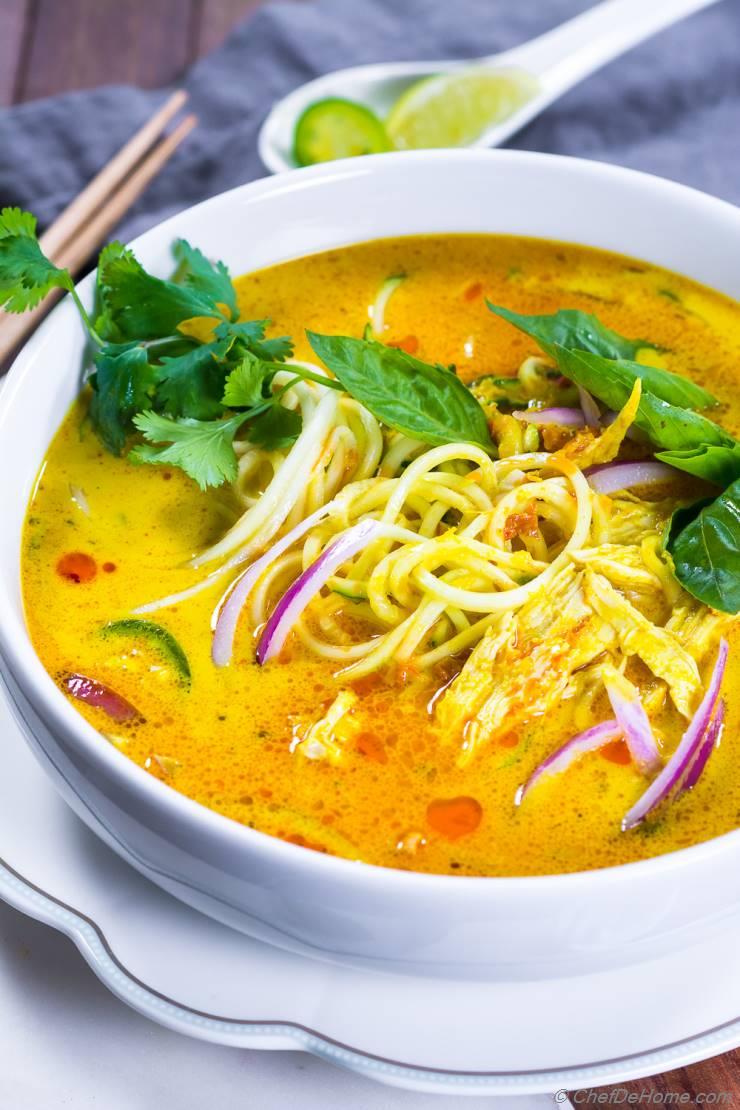
Khao Soi (Thai Noodle Soup with Coconut Curry)
A rich and aromatic Thai noodle soup featuring crispy fried egg noodles, a creamy coconut curry base, and a variety of fresh and savory toppings. Perfect for a comforting meal!
🥘Ingredients
- 2 tbsp coconut oil
- 1 tbsp red curry paste
- 1 can (400ml) coconut milk
- 1 can (14 oz) diced tomatoes
- 1 stalk lemongrass, bruised and chopped
- 2 cloves garlic, minced
- 1-inch ginger, sliced
- 1 green chili, sliced (optional)
- 1 tbsp fish sauce
- 1 tsp sugar
- 200g rice noodles (khao soi noodles)
- 1 tbsp vegetable oil
- 1 egg, beaten
- 1/2 cup Thai basil leaves
- 1/4 cup cilantro, chopped
- 1/4 cup Thai chili slices
- 1/4 cup pickled vegetables (carrots, daikon, or cucumber)
- 1/4 cup crushed peanuts
- 1/2 lime, juiced
- 1/2 cup shredded lettuce or cabbage
- 1/4 cup fried shallots
👨🍳Directions
-
1
Prepare the coconut curry base: In a saucepan, heat coconut oil over medium heat. Add red curry paste and stir for 1 minute until fragrant. Add coconut milk, diced tomatoes, lemongrass, garlic, ginger, green chili, fish sauce, and sugar. Simmer for 10 minutes, stirring occasionally. -
2
Cook the noodles: Boil rice noodles according to package instructions (usually 3-5 minutes in boiling water). Drain and rinse with cold water to stop cooking. Set aside. -
3
Fry the noodles: Heat vegetable oil in a frying pan over medium-high heat. Pour in the drained noodles and fry for 2-3 minutes until crispy. Remove with a slotted spoon and set aside. -
4
Prepare the egg: In a small bowl, beat the egg and set aside. -
5
Assemble the soup: In the same pot used for the curry base, add the cooked noodles and simmer for 2-3 minutes. Pour the beaten egg into the noodles and let it cook until the whites are set but the yolks remain runny. Remove from heat. -
6
Prepare toppings: In a separate bowl, combine Thai basil leaves, cilantro, Thai chili slices, pickled vegetables, crushed peanuts, lime juice, shredded lettuce or cabbage, and fried shallots. -
7
Serve: Divide the noodles and curry base among bowls. Top each bowl with the egg, and arrange the prepared toppings around the bowl.
🔧Equipment
- Large pot
- Medium saucepan
- Frying pan
- Slotted spoon
- Knife and cutting board
- Mixing bowls
- Measuring cups and spoons
📊Nutrition Facts (per serving)
📝Notes
- For extra richness, add a splash of heavy cream to the curry base.
- Adjust the spice level by adding more or fewer green chilies.
- Use a mix of fresh and dried Thai basil for enhanced flavor.
- Ensure the noodles are well-drained and rinsed to avoid a soggy texture.
Watch Video Of How Khao Soi (Thai Noodle Soup with Coconut Curry) Works
❓ Frequently Asked Questions About Khao Soi (Thai Noodle Soup with Coconut Curry)
What is the difference between khao soi and other Thai curries like tom yum or green curry?
Khao soi is distinct from other Thai curries like tom yum or green curry because it’s a northern Thai dish, primarily from Chiang Mai. Unlike spicy, broth-based curries, khao soi is a creamy coconut curry served with crispy fried rice noodles (khao soi), often topped with a fried egg and pickled vegetables. It’s lighter, milder, and more refreshing, with a focus on the buttery, aromatic noodles and the balance of flavors from the coconut milk, herbs, and spices.
—
Why does khao soi have a distinct creamy texture, and what ingredients contribute to this?
The creamy texture of khao soi comes from a combination of ingredients:
– Coconut milk (full-fat for richness) is the base, providing a velvety, buttery depth.
– Butter or ghee (often added at the end) enhances the richness and gives a luxurious mouthfeel.
– The curry paste itself, made with ingredients like lemongrass, galangal, kaffir lime leaves, and chili, contributes subtle layers of flavor that complement the creaminess without overpowering it.
– The fried rice noodles (khao soi) absorb the sauce, making each bite extra creamy.
—
Can I make khao soi without a wok or a large skillet, and what’s the best alternative?
Yes, you can make khao soi without a wok! The key is to use a large, heavy-bottomed skillet or deep frying pan (like a cast-iron or stainless steel one) that can handle high heat. If you don’t have one, a large pot with a lid (for simmering the curry) and a separate pan for frying the noodles will work. For extra crispiness, ensure your oil is very hot when frying the noodles—use a deep pan to avoid splattering.
—
How do I balance the flavors in khao soi to avoid it being too spicy or too sour?
Balancing khao soi’s flavors requires attention to the curry paste, toppings, and finishing touches:
– Spice control: Start with a mild curry paste (reduce chili if needed) and add heat gradually with fresh chilies or sriracha at the end. Northern Thai cuisine favors subtle heat, so less is often more.
– Acidity: Use lime juice (freshly squeezed) or pickled vegetables (like Thai pickled daikon or cucumber) to cut sourness without overpowering the dish. A splash of fish sauce can also add depth without bitterness.
– Creaminess: The coconut milk and butter are your friends—they mellow out spiciness. Avoid adding too much water to dilute the sauce.
– Herbs: Fresh cilantro, Thai basil, and mint add freshness. A sprinkle of lime zest or a squeeze of lime right before serving brightens the dish.
—
Why does the fried rice noodles (khao soi) need to be extra crispy, and how do I achieve that?
The crispy texture of khao soi noodles is essential because they’re the star of the dish—they soak up the creamy sauce and add a satisfying contrast to the soft curry. To achieve perfect crispiness:
1. Use the right noodles: Opt for rice noodles (like khao niao or rice vermicelli), not wheat noodles. They’re thinner and absorb oil better.
2. Cold water trick: Soak the noodles in cold water for 10–15 minutes to firm them up, then drain and pat dry thoroughly.
3. High-heat frying: Heat a generous amount of oil (like peanut or vegetable oil) to 350–375°F (175–190°C). Fry the noodles in batches until golden and crispy (about 2–3 minutes per batch). Don’t overcrowd the pan.
4. Season lightly: Add a pinch of salt or a splash of fish sauce while frying to enhance flavor without making them soggy.
5. Drain well: Use a slotted spoon to remove noodles and let them sit on a wire rack or paper towels to drain excess oil. Serve immediately while crispy!


