
korean chicken recipe

- The Best korean chicken recipe
- Korean Chicken Banchan (Bulgogi-Style) with Rice
- 🥘Ingredients
- 👨🍳Directions
- 🔧Equipment
- 📊Nutrition Facts (per serving)
- 📝Notes
- Watch Video Of How Korean Chicken Banchan (Bulgogi-Style) with Rice Works
- ❓ Frequently Asked Questions About Korean Chicken Banchan (Bulgogi-Style) with Rice
The Best korean chicken recipe
I love this recipe because it’s adaptable—you can make it spicier or milder depending on what your family likes, and the marinade gives the chicken that deep, savory flavor without needing a ton of extra ingredients. My husband and I both swear by it for meal prep because it keeps well in the fridge for a few days, and the leftovers taste even better the next day. It’s also got some real health perks, too. The chicken is lean and packed with protein, and the veggies in the sauce add fiber and vitamins. Plus, the way the garlic and ginger shine in the marinade gives it a little extra zing without all the extra calories. It’s that kind of dish that feels indulgent but isn’t—perfect for when you want something hearty but still light, or when you’re feeding a crowd and need something that’s going to be a hit. My kids might complain about the spice at first, but once they try it, they’re always asking for seconds. It’s that kind of recipe that makes me feel good about feeding my family without worrying about overdoing it.
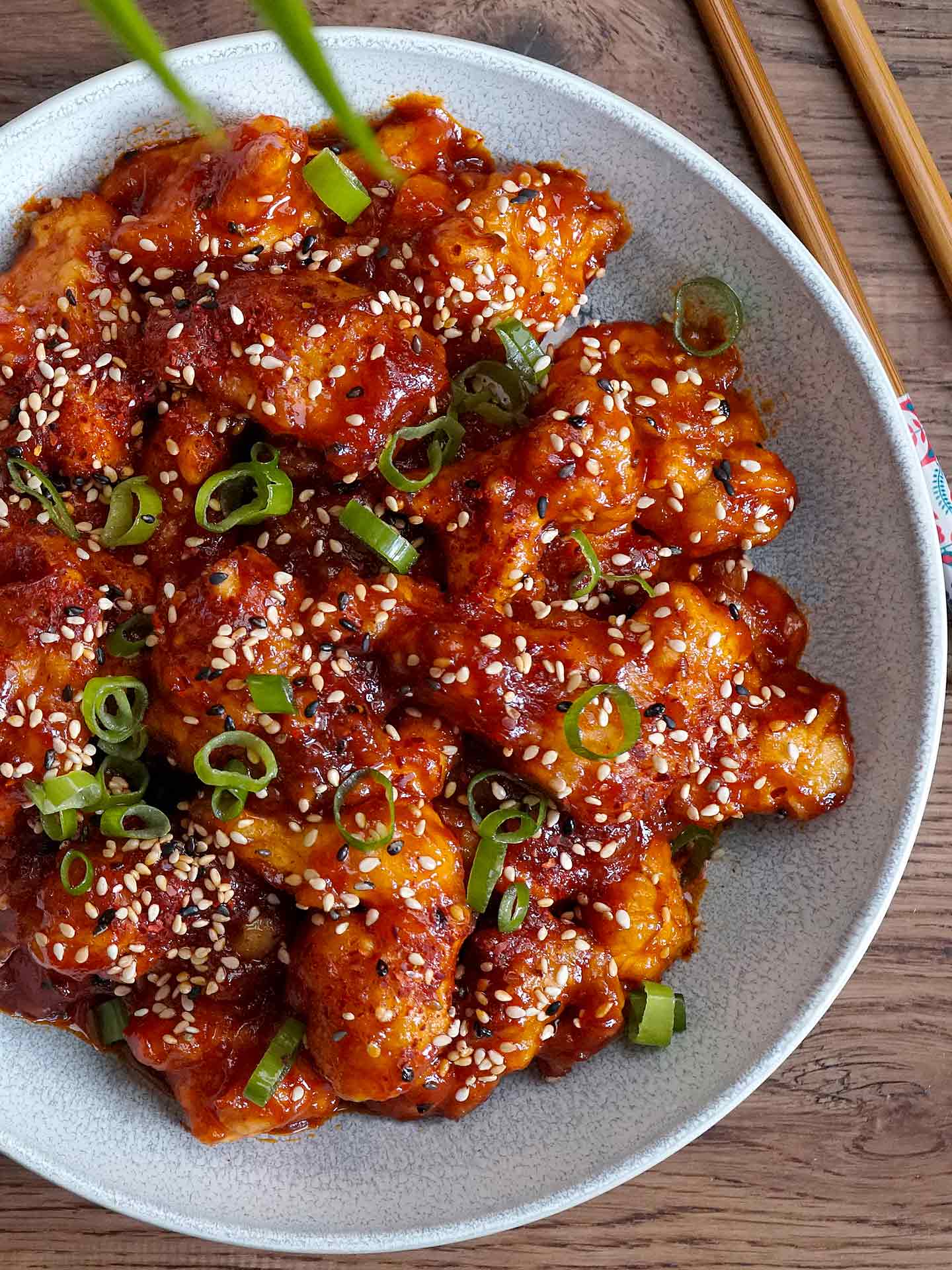
Korean Chicken Banchan (Bulgogi-Style) with Rice
A flavorful Korean-inspired dish featuring marinated and grilled chicken served with steamed rice and traditional side dishes. Bulgogi is known for its sweet, savory, and slightly spicy flavors.
🥘Ingredients
- 1.5 lbs (700g) boneless chicken thighs or breasts, thinly sliced
- 2 tbsp soy sauce
- 1 tbsp brown sugar
- 1 tbsp sesame oil
- 2 cloves garlic, minced
- 1 tbsp grated ginger
- 1 tbsp rice vinegar
- 1 tsp gochugaru (Korean red pepper flakes, optional for heat)
- 2 cups (400g) short-grain white rice
- 2 cups water
- 1 cup kimchi
- ½ cup pickled radish (danmuji)
- 1 cup steamed green beans (mu)
- 1 small cucumber, sliced
👨🍳Directions
-
1
Prepare the rice: Rinse the rice until the water runs clear. Combine rice and water in a rice cooker or pot, then cook according to package instructions until fluffy. -
2
Marinate the chicken: In a bowl, mix soy sauce, brown sugar, sesame oil, garlic, ginger, rice vinegar, and gochugaru (if using). Add chicken slices and coat evenly. Cover and refrigerate for at least 2 hours (or up to overnight). -
3
Cook the chicken: Heat a skillet or grill pan over medium-high heat. Remove chicken from marinade (reserve marinade) and cook for 4-5 minutes per side until fully cooked and slightly charred. Set aside. -
4
Prepare banchan: While chicken cooks, prepare each side dish separately. Kimchi can be served as-is. Steam green beans for 3-4 minutes until tender-crisp. Slice cucumber and serve chilled. -
5
Serve: Divide cooked rice into bowls. Place sliced chicken on top, drizzle reserved marinade over the chicken, and arrange banchan around the plate.
🔧Equipment
- Mixing bowls
- Cutting board
- Sharp knife
- Non-stick skillet or grill pan
- Rice cooker or pot with lid
- Wooden spoon
📊Nutrition Facts (per serving)
📝Notes
Tips
- For extra tenderness, marinate chicken overnight.
- Adjust sweetness/spice by tweaking sugar and gochugaru amounts.
- Use a mix of chicken thighs and breasts for balanced moisture and texture.
Variations
- Add sliced carrots or mushrooms to the chicken for extra flavor.
- Serve with a side of kimchi fried rice for a complete meal.
Watch Video Of How Korean Chicken Banchan (Bulgogi-Style) with Rice Works
❓ Frequently Asked Questions About Korean Chicken Banchan (Bulgogi-Style) with Rice
What is the secret to making the perfect crispy skin on Korean fried chicken?
The secret lies in a combination of techniques: double-frying (first a light oil bath to seal the coating, then a deeper fry at a higher temperature for crispiness). Use a mix of cornstarch and flour for the batter, and ensure the chicken is thoroughly dried before coating. Additionally, avoid overcrowding the fryer—cook in batches for even crispiness.
—
Why does my Korean fried chicken taste bland or lack flavor?
Several factors can make your chicken taste flat: insufficient marinating (try a mix of soy sauce, sesame oil, garlic, and ginger for depth), undercooked batter (ensure the batter is thick enough to trap juices), or using too much water in the marinade. Also, check if your spices (like black pepper, paprika, or sugar) are balanced—Korean fried chicken often uses a sweet-savory glaze (like ssamjang or gochujang sauce). Freshly ground black pepper adds a key umami note.
—
How do I achieve the signature “sticky” glaze for Korean fried chicken?
The glaze comes from a sweet-savory sauce—here’s the classic method:
1. Mix 1 cup soy sauce, ½ cup brown sugar, 2 tbsp gochujang (Korean chili paste) or 1 tbsp gochugaru (chili flakes), 1 tbsp sesame oil, 2 tbsp rice vinegar, and 1 tbsp honey (or maple syrup).
2. Simmer gently until thickened (about 5–7 minutes), then brush generously over hot chicken before serving. For extra stickiness, let the chicken cool slightly before glazing, then reheat briefly in a pan with a little oil.
—
Can I make Korean fried chicken without deep-frying?
Yes! For a stovetop or air-fryer version, try this method:
– Batter: Use a mix of flour, cornstarch, and a little baking powder (for lift). Dredge chicken in the batter, then coat in crushed cornflakes or breadcrumbs for extra crunch.
– Cooking method:
– Stovetop: Heat 1 inch of oil in a pan over medium-high. Fry in batches for 3–4 minutes per side until golden. Drain on paper towels.
– Air fryer: Cook at 375°F (190°C) for 10–12 minutes, shaking halfway, until crispy.
– Glaze: Brush with a light honey-soy sauce (less sweet than traditional) to prevent sogginess.
—
What’s the difference between Korean fried chicken and American-style fried chicken?
Korean fried chicken (gyudae jeon) stands out in these ways:
– Batter: Often thinner and lighter (less flour, more cornstarch or egg wash) to avoid a heavy, greasy texture. Some recipes use a double-dredge (first flour, then cornstarch) for extra crispiness.
– Seasoning: More umami-rich—think soy sauce, sesame oil, garlic, and ginger in the marinade or batter. The glaze is sweet, spicy, and sticky (often with gochujang or ssamjang).
– Texture: The skin is crispier due to double-frying (light fry first, then deep fry), while American-style chicken often relies on a single heavy fry.
– Serving style: Typically served with steamed rice, kimchi, or a side of ssamjang (spicy dipping sauce). American fried chicken is usually served with coleslaw or pickles.
—
