
beef jerky dehydrator recipe


The Best beef jerky dehydrator recipe
I have been making beef jerky at home for years now, and this dehydrator recipe is my absolute favorite. My kids love it for after school snacks, and my husband packs it for his hunting trips. It is so much better than store bought because you control exactly what goes into it.
No weird preservatives or excess sugar, just real beef and simple seasonings. This recipe is perfect for anyone who wants a high protein snack that is low in fat and carbs. Beef jerky is packed with protein, iron, and zinc, which makes it great for energy and muscle recovery.
I love that I can make a big batch on the weekend and have snacks ready for the whole week. It is also a lifesaver for road trips and hiking adventures. The key to great jerky is slicing the beef against the grain and marinating it long enough.
I use a flank steak or top round because they are lean and slice beautifully. The dehydrator does all the work, slowly drying the meat at a low temperature to lock in flavor. You get chewy, savory strips that are full of umami goodness.
This recipe has become a staple in our home because it is so versatile. You can adjust the spices to make it sweet, spicy, or smoky. My kids prefer a milder version with a touch of honey, while my husband likes it fiery with extra red pepper flakes.
No matter how you season it, this jerky disappears fast. I always double the batch because it never lasts long.
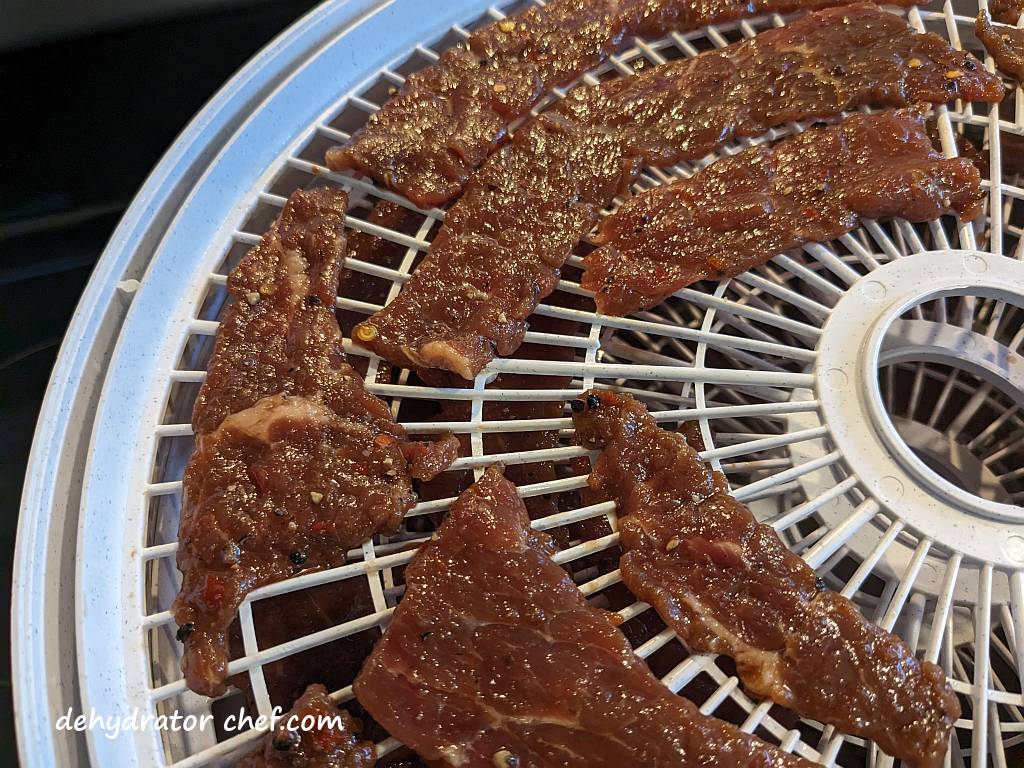
Homemade Beef Jerky in a Dehydrator
This beef jerky recipe is simple and yields perfectly chewy, flavorful strips. The marinade combines soy sauce, Worcestershire, and spices for a classic taste.
🥘Ingredients
For the Beef
👨🍳Directions
🔧Equipment
📊Nutrition Facts (per serving)
📝Notes
Watch Video Of How Homemade Beef Jerky in a Dehydrator Works
This beef jerky dehydrator recipe is always a good idea because it is so easy to customize and makes a healthy snack that everyone loves. I make a big batch for family movie nights, road trips, and even as a protein packed addition to lunchboxes.
It is one of those recipes that feels like a treat but is actually good for you. For storage, I keep my jerky in a mason jar on the counter, and it gets eaten within a week.
If you have leftovers, you can reheat them in a low oven for a few minutes to refresh the texture, though I rarely need to. Serve it as is or crumble it over salads and soups for extra flavor.
This recipe never fails to impress, and I am sure it will become a favorite in your home too.
❓ Frequently Asked Questions About Beef Jerky in a Dehydrator
1. How long does homemade beef jerky last?
Properly stored in an airtight container, homemade beef jerky will last up to 2 weeks at room temperature. For longer storage, keep it in the refrigerator for up to 3 months or freeze it for up to 6 months. Make sure the jerky is completely dry before storing to prevent mold.
2. Can I use ground beef instead of whole muscle meat?
Yes, you can make jerky from ground beef using a jerky gun or by pressing it into thin strips. Use lean ground beef with at least 90% lean to avoid too much fat, which can go rancid. The drying time will be similar, but the texture will be more like a meat stick than traditional jerky.
3. Why is my jerky too tough or too chewy?
If your jerky is too tough, you may have sliced the meat with the grain instead of against it. Slicing against the grain shortens the muscle fibers and makes it easier to chew. If it is too chewy, it might be under dried; continue drying in 30 minute increments until it reaches the desired texture.
4. Do I need to cure the meat before dehydrating?
Curing is not necessary for safety if you are using a dehydrator that reaches 160°F, which kills bacteria. However, some people like to add a curing salt like Prague powder for a more traditional flavor and color. If you skip the cure, just make sure to refrigerate the jerky if you plan to keep it for more than a couple of weeks.
5. Can I make this recipe in an oven instead of a dehydrator?
Absolutely. To make jerky in the oven, place the marinated strips on wire racks set over baking sheets. Bake at the lowest temperature setting, usually around 170°F to 200°F, with the oven door propped open slightly to let moisture escape. Drying time will be 3 to 5 hours, depending on thickness.
