
daikon radish recipe

- The Best daikon radish recipe
- Crispy Roasted Daikon Radish with Honey-Glazed Garlic
- 🥘Ingredients
- 👨🍳Directions
- 🔧Equipment
- 📊Nutrition Facts (per serving)
- 📝Notes
- Watch Video Of How Crispy Roasted Daikon Radish with Honey-Glazed Garlic Works
- ❓ Frequently Asked Questions About Crispy Roasted Daikon Radish with Honey-Glazed Garlic
The Best daikon radish recipe
This recipe is perfect for any occasion, really. It’s easy to prep ahead and store in the fridge for days, so you can have it ready whenever you need it—whether it’s a quick lunch, a side for dinner, or even a garnish for a fancy meal. My family loves it because it’s healthy but doesn’t feel like a chore. Daikon is packed with vitamins, fiber, and antioxidants, and it’s low in calories but high in nutrients. Plus, it’s so fresh and vibrant, it makes any plate look better just by being there. I’ve used it in everything from raw salads to roasted sides to even a simple pickled version with rice vinegar and sugar. It’s that kind of ingredient that feels like a no-brainer—just as good in a casual weeknight meal as it would be at a potluck or a holiday spread. My kids swear by it, and honestly, so do I. It’s one of those foods that’s always a hit, no matter how you serve it.
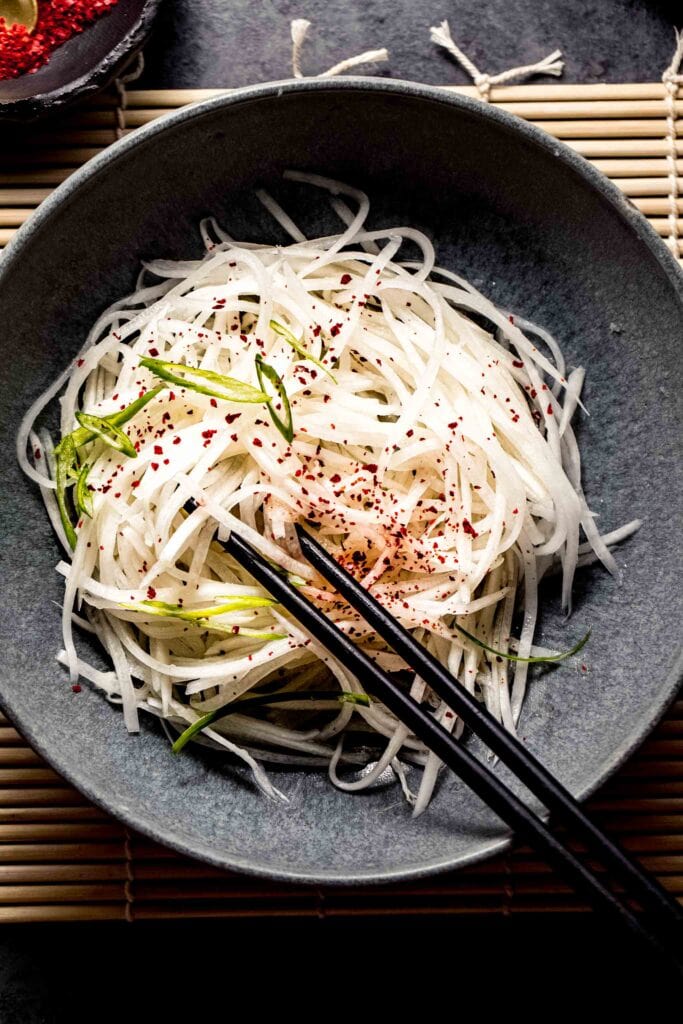
Crispy Roasted Daikon Radish with Honey-Glazed Garlic
A delightful and healthy dish featuring crispy roasted daikon radish glazed with a sweet and savory honey-garlic sauce. Perfect for a light yet flavorful meal.
🥘Ingredients
- 1 large daikon radish, peeled and sliced into ½-inch rounds
- 1 tbsp olive oil
- ½ tsp salt
- ¼ tsp black pepper
- 3 tbsp honey
- 4 cloves garlic, minced
- 2 tbsp soy sauce
- 1 tbsp rice vinegar
- 1 tsp grated ginger
- 1 tbsp sesame oil
- 1 tbsp sesame seeds
- 1 green onion, sliced
- 1 tsp toasted sesame oil
👨🍳Directions
-
1
Preheat oven to 400°F (200°C). Line a baking sheet with parchment paper. -
2
In a large bowl, toss daikon radish slices with olive oil, salt, and pepper until evenly coated. -
3
Spread the daikon slices evenly on the prepared baking sheet in a single layer. -
4
Roast in the preheated oven for 25-30 minutes, flipping halfway through, until golden and crispy. -
5
While the daikon roasts, prepare the honey-garlic sauce: In a small saucepan, heat sesame oil over medium heat. Add minced garlic and grated ginger, sautéing for 1 minute. Pour in honey, soy sauce, and rice vinegar. Simmer for 3-4 minutes until slightly thickened. Remove from heat and set aside. -
6
Once the daikon is crispy, remove from the oven and let cool slightly. Drizzle with the honey-garlic sauce and toss gently. -
7
Optional: Sprinkle with sesame seeds, green onions, and a drizzle of toasted sesame oil before serving.
🔧Equipment
- Mixing bowl
- Cutting board
- Sharp knife
- Baking sheet
- Oven
- Small saucepan
- Whisk
- Tongs
📊Nutrition Facts (per serving)
📝Notes
Tips
- For extra crunch, roast the daikon at a higher temperature (425°F/220°C) for a shorter duration.
- Substitute honey with maple syrup if preferred.
- Add shredded carrots or bell peppers for extra crunch and color.
Storage: {“shortTerm”:”Store in an airtight container in the refrigerator for up to 3 days.”,”longTerm”:”Reheat in the oven at 350°F (175°C) for 10-15 minutes before serving.”}
Watch Video Of How Crispy Roasted Daikon Radish with Honey-Glazed Garlic Works
❓ Frequently Asked Questions About Crispy Roasted Daikon Radish with Honey-Glazed Garlic
What is the best way to prepare daikon radish for cooking?
Daikon radish can be prepared in several ways, but the best method depends on the dish you’re making. For raw consumption, simply peel and slice it into thin rounds or julienne strips. For cooking, you can slice it into half-moons, cubes, or thinly slice it and sauté it. If you’re making a stir-fry, thinly slice it and toss it with oil before adding other ingredients. For pickling, thinly slice it and soak it in a mixture of vinegar, sugar, salt, and spices for a few days.
—
How do I store daikon radish properly to keep it fresh?
To keep daikon radish fresh, store it properly:
– Unpeeled: Place the whole daikon in a perforated plastic bag or a breathable container in the refrigerator. This helps maintain moisture and prevents drying out.
– Peeled: If you’ve already peeled it, store the slices or chunks in an airtight container with a damp paper towel to retain moisture. Change the towel every few days.
– Freezing: For long-term storage, you can freeze daikon radish. Slice it thinly, blanch for 2-3 minutes in boiling water, then cool in ice water. Drain well, pat dry, and store in a freezer bag. It can last up to 6 months.
– Avoid: Don’t wash the daikon until you’re ready to use it, as excess moisture speeds up spoilage.
—
Can daikon radish be used in both sweet and savory dishes?
Yes, daikon radish is incredibly versatile and can be used in both sweet and savory dishes. In savory dishes, it adds a crisp, refreshing crunch and a mild, slightly sweet flavor, often used in stir-fries, salads, soups, or pickles. In sweet dishes, its natural sweetness makes it a great substitute for carrots in desserts like daikon mochi (Japanese sweet rice cakes) or in glazed or caramelized preparations. Its versatility makes it a favorite in various cuisines worldwide.
—
What are some common mistakes to avoid when cooking with daikon radish?
When cooking with daikon radish, avoid these common mistakes:
– Overcooking: Daikon can become mushy if boiled or steamed too long. For stir-fries or sautéing, cook it quickly over high heat to preserve its crispness.
– Peeling too early: If you peel daikon before storing or slicing, it dries out faster. Peel only when ready to use.
– Ignoring texture: Daikon has a dense texture—if you want it tender, consider slicing it thinly or using it in dishes where it can absorb flavors (like soups or stews).
– Using stale oil: If you’re frying or sautéing daikon, ensure your oil is fresh to prevent a bitter taste.
– Skipping seasoning: Daikon absorbs flavors well, so don’t forget to season it properly with salt, soy sauce, or spices to enhance its natural taste.
—
How does daikon radish compare to regular radish in flavor and texture?
Daikon radish and regular radish (like black radish) differ significantly in flavor and texture:
– Flavor: Daikon has a milder, sweeter, and less pungent taste compared to black radish, which can be sharp and peppery. Its flavor is closer to a mild, earthy vegetable with a hint of nuttiness.
– Texture: Daikon is denser and less fibrous than regular radish, making it more suitable for raw consumption or dishes where you want a crisp bite. Black radish, on the other hand, is crunchier but can be more bitter.
– Versatility: Daikon’s mild taste makes it more adaptable to a wider range of dishes, from stir-fries to desserts, while black radish is often used in spicier or more robust recipes.
– Preparation: Daikon is easier to slice thinly and holds up better in salads, while black radish is better for quick-cooking dishes like pickles or sautéing.


