
jewish brisket recipe

The Best jewish brisket recipe
The health benefits of brisket might surprise you. While it’s rich, the right preparation keeps it manageable for those watching their portions. The slow cooking process breaks down the collagen, making the meat incredibly tender without needing too much fat to stay moist. Plus, when you use herbs and spices like garlic, onion, and bay leaves, you’re adding flavor without excess calories. My husband and I have been eating it regularly lately—it’s not just for holidays anymore. It’s a meal that feels indulgent but actually makes you feel good afterward, and that’s something I love about it. Plus, the way it stays juicy and flavorful for days makes leftovers a breeze. It’s the kind of dish that’s perfect for a weeknight dinner or a weekend feast, always a hit with everyone.
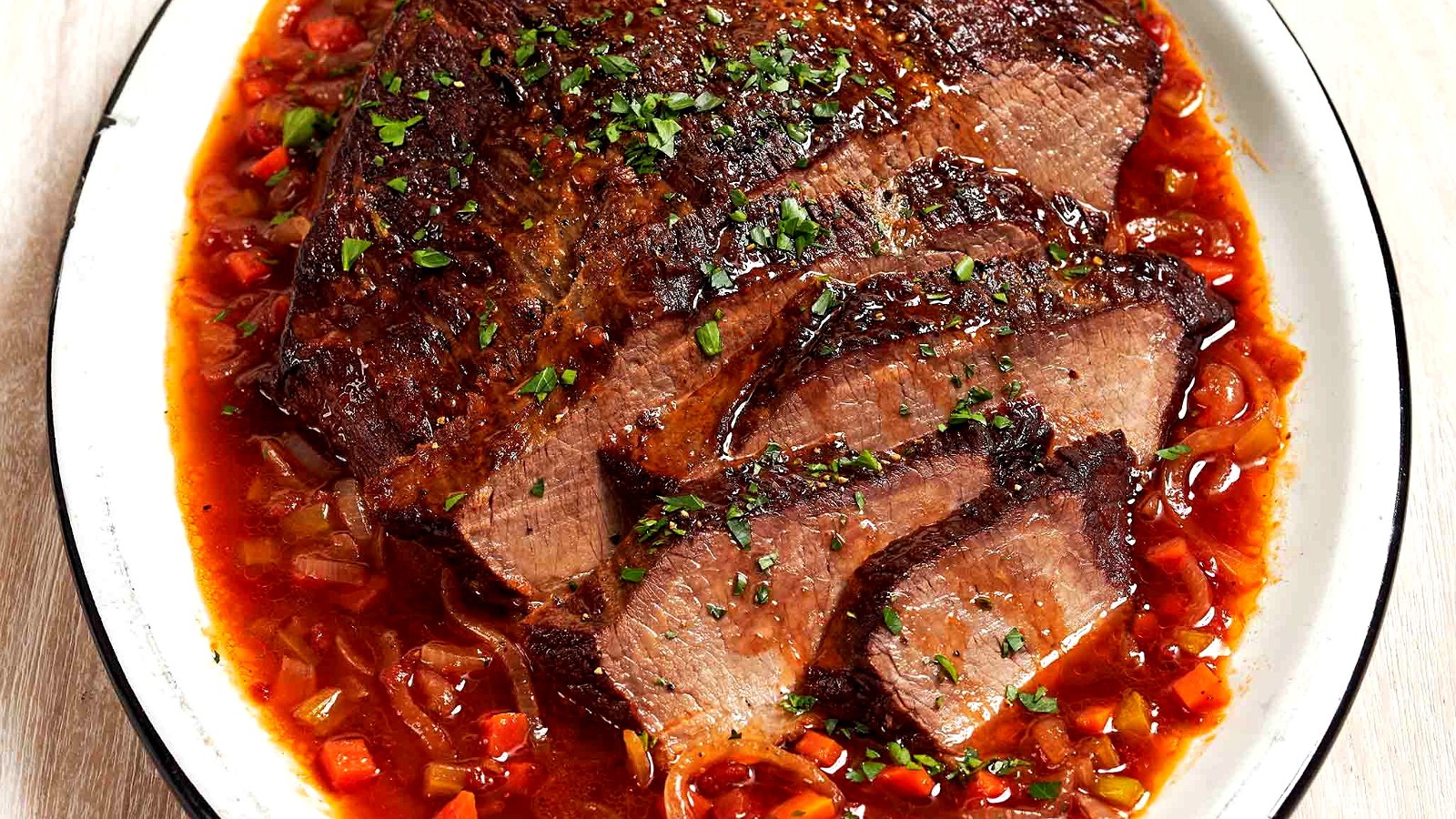
Classic Jewish Brisket with Charcoal Smoking
A tender, flavorful brisket slow-cooked to perfection, traditionally smoked over charcoal for a rich, smoky taste. Ideal for Shabbat meals or family gatherings.
🥘Ingredients
- 2 lbs beef brisket (packed tightly)
- 2 tbsp kosher salt
- 2 tbsp black pepper
- 2 tbsp garlic powder
- 2 tbsp onion powder
- 2 tbsp smoked paprika
- 1 tbsp dried oregano
- 1 tbsp dried thyme
- 1 cup apple cider vinegar
- 1 cup beef broth
- 1 lb hardwood charcoal (oak or hickory)
- 1 cup chopped fresh rosemary
- 1 cup chopped fresh thyme
- 1 cup chopped garlic cloves
- 1 cup chopped onions
- 1 cup apple cider vinegar
👨🍳Directions
-
1
Preheat smoker to 225°F (or use a Dutch oven over indirect heat). Prepare the charcoal by placing it in a fireproof container and igniting it. Once fully lit, transfer to the smoker. -
2
In a large bowl, mix the apple cider vinegar, beef broth, and all the spices (salt, pepper, garlic powder, onion powder, smoked paprika, oregano, thyme). Pour this mixture over the brisket and let it marinate for at least 4 hours (or overnight in the fridge). -
3
In a separate bowl, combine chopped rosemary, thyme, garlic, onions, and apple cider vinegar. Spread this mixture evenly over the top of the marinated brisket. -
4
Place the brisket in the smoker (or Dutch oven) with the lid on. Smoke or cook over indirect heat for 6-8 hours, or until the internal temperature reaches 195°F (for medium-rare). -
5
Remove the brisket from the smoker/Dutch oven and let it rest for 30 minutes before slicing against the grain.
🔧Equipment
- Smoker or heavy pot with lid (Dutch oven)
- Measuring cups and spoons
- Aluminum foil
- Mixing bowls
- Knife and cutting board
📊Nutrition Facts (per serving)
📝Notes
Tips
- For a smokeless version, use a heavy pot and cook over low heat with a lid.
- Ensure the brisket is fully marinated for maximum flavor.
- Adjust cooking time based on your smoker’s performance; check internal temperature with a meat thermometer.
- Serve with classic Jewish sides like matzo ball soup, pickles, and a fresh salad.
TraditionalVariations
- Some families add a splash of vodka or whiskey to the marinade for an extra depth of flavor.
- A traditional Jewish brisket is often served with a side of chopped onions and pickles.
Watch Video Of How Classic Jewish Brisket with Charcoal Smoking Works
❓ Frequently Asked Questions About Jewish Brisket with Charcoal Smoking
1. What is the key difference between traditional Jewish brisket and other brisket recipes?
The traditional Jewish brisket recipe emphasizes slow, low-and-slow cooking to tenderize the tough muscle fibers, often using a combination of kosher salt, garlic, onions, and spices like paprika or cumin. Unlike quick-seared brisket, it relies on hours of braising in a flavorful liquid (such as beef broth, wine, or a mix) to achieve melt-in-your-mouth texture.
2. How long should I cook a Jewish-style brisket, and what’s the ideal temperature?
A classic Jewish brisket is cooked at a low temperature (250–275°F/120–135°C) for 6–10 hours, depending on the size. The key is to cook it slowly to break down collagen while keeping the fat cap intact. For a smaller cut, aim for 4–6 hours, and for a larger one, extend to 8–10 hours with occasional basting.
3. What’s the best way to prepare the brisket before cooking?
First, kosher salt the brisket (rub both sides with coarse salt) for 48 hours to draw out moisture and enhance flavor. Trim excess fat but leave a small cap for richness. Some recipes also include a marinade with garlic, onions, and spices (like smoked paprika or mustard) before salting. Avoid over-trimming—just remove visible gristle.
4. Do you need to use a specific type of liquid for the braising liquid?
While traditional recipes often use a mix of beef broth, red wine (like Cabernet or Merlot), and sometimes tomato paste or onions, you can experiment with other liquids like chicken broth, beef stock with herbs, or even a simple onion-infused water. The goal is a rich, savory sauce that coats the meat. For a kosher version, ensure the broth is made with kosher-certified ingredients.
5. What’s the best way to check if the brisket is done without cutting into it?
Use the probe method: Insert a meat thermometer into the thickest part (avoiding bone). The brisket is done when it reaches 195–203°F (90–95°C) internally. Alternatively, press the fat cap—if it springs back slightly, it’s ready. Avoid cutting into it until it’s resting to prevent drying out.


