
salmon sushi bake recipe

The Best salmon sushi bake recipe
I love that this recipe is so adaptable. You can make it for a small family meal or double it for a crowd, and it’s easy to prep ahead if you’re short on time. The health benefits are pretty solid too—salmon is packed with omega-3s, which help keep everyone’s brain sharp and their hearts strong, and the avocado adds healthy fats that keep energy steady. No one has to worry about heavy sauces or greasy sides; this is balanced, light, and still packed with flavor. Plus, it’s a great way to use up whatever fresh fish you’ve got in the fridge, whether it’s leftover from a sushi night or a special catch. My kids love the idea of “building their own sushi” when we serve it, and it’s always a hit with friends over for dinner. It’s that kind of recipe that makes you feel good about what you’re putting on the table without overcomplicating anything.
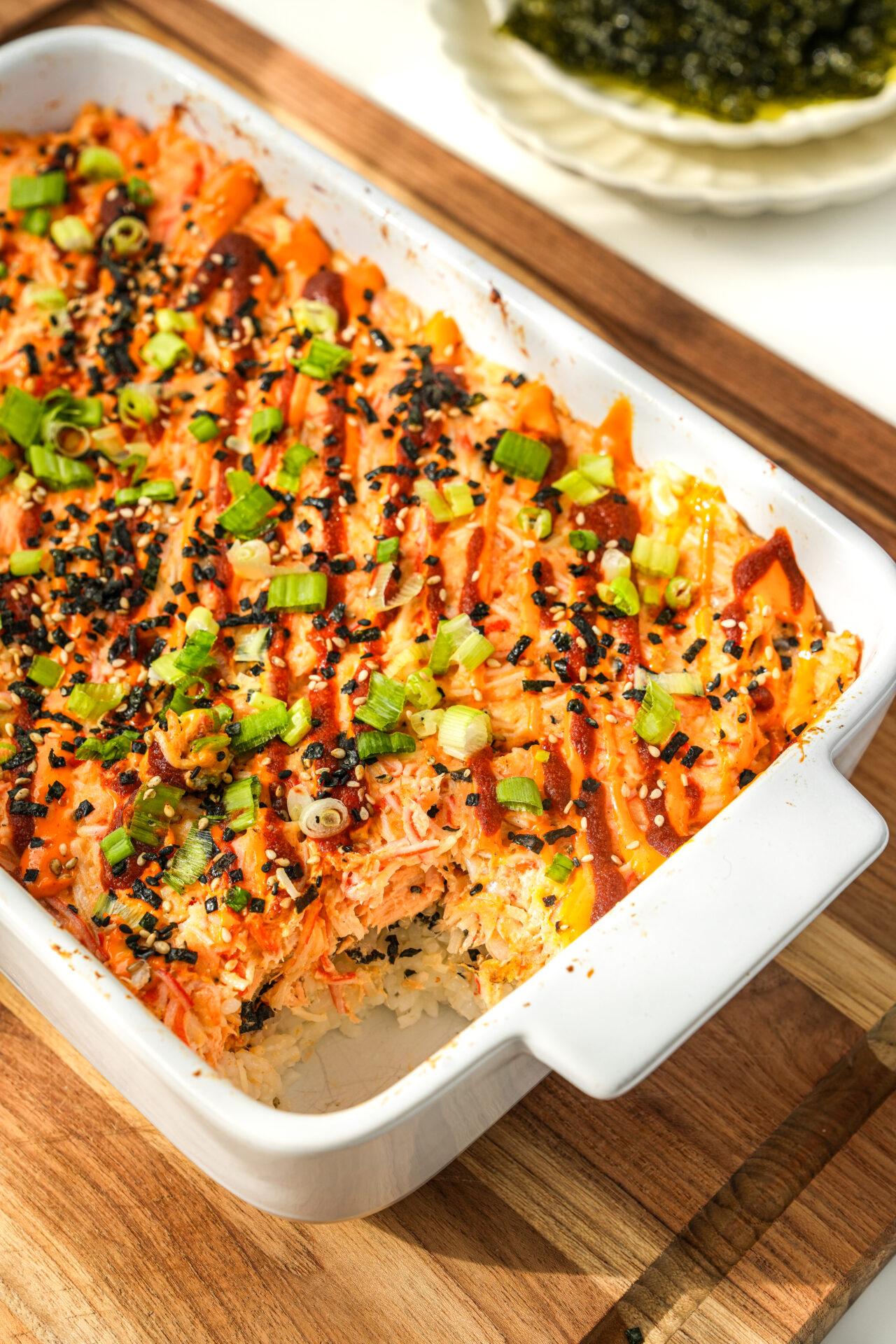
Salmon Sushi Bake
A delightful baked dish combining fluffy sushi rice with flaky salmon, topped with fresh vegetables and creamy sauce for a satisfying meal. This recipe is a must-try for any occasion.
🥘Ingredients
- 1 cup jasmine rice
- 1 cup water
- 1 tbsp rice vinegar
- 1 tsp sugar
- ½ tsp salt
- 4 fillets salmon
- 2 tbsp soy sauce
- 1 tbsp honey
- 1 tsp grated ginger
- 1 clove garlic, minced
- ½ cup shredded carrots
- ¼ cup sliced cucumber
- ¼ cup chopped scallions
- 2 tbsp sesame seeds
- 1 tbsp sesame oil
- 2 tbsp mayo
- 1 tbsp lemon juice
- 1 tsp sriracha (optional)
- ½ tsp garlic powder
👨🍳Directions
-
1
Rinse the jasmine rice thoroughly under cold water, then cook it in a pot with water (1:1 ratio) until fully absorbed. Remove from heat, cover, and let it sit for 10 minutes. Stir in rice vinegar, sugar, and salt. -
2
Preheat the oven to 375°F (190°C). In a bowl, mix soy sauce, honey, ginger, and minced garlic. Coat the salmon fillets with this mixture and place them in a greased baking dish. -
3
Arrange the cooked sushi rice in the baking dish, spreading it evenly. Top with shredded carrots, sliced cucumber, and chopped scallions. -
4
Place the salmon fillets on top of the rice. Drizzle with sesame oil and sprinkle sesame seeds evenly. -
5
Bake for 20 minutes. Remove from the oven, mix the sauce ingredients, and drizzle over the salmon sushi bake. Return to the oven for another 10 minutes until the salmon is cooked through. -
6
Let it rest for 5 minutes before serving. Use toothpicks to hold the dish together if needed.
🔧Equipment
- Mixing bowls
- Baking dish (9×13 inches)
- Knife and cutting board
- Mixing spoon
- Oven
- Toothpicks
📊Nutrition Facts (per serving)
📝Notes
Tips
- Ensure the salmon is fully cooked (145°F internal temperature) to avoid any risk of undercooking.
- For extra flavor, add a sprinkle of sesame seeds and a dash of chili flakes before baking.
- Substitute cucumber with avocado slices if preferred.
- Make ahead: Assemble the dish up to 24 hours in advance and refrigerate before baking.
Watch Video Of How Salmon Sushi Bake Works
❓ Frequently Asked Questions About Salmon Sushi Bake
What is the difference between salmon sushi bake and traditional sushi rolls?
Salmon sushi bake differs from traditional sushi rolls primarily in its preparation method. While sushi rolls are made by layering ingredients like nori (seaweed), rice, and fillings (such as salmon) on a bed of rice and rolled tightly, a sushi bake combines these elements into a baked dish. The ingredients are mixed with rice vinegar, sugar, and salt, then baked in a casserole dish until the salmon is cooked through and the rice is tender. This results in a baked, slightly crispy exterior and a moist, flavorful interior, making it a comforting yet elegant dish.
—
How long does it prepare and cook time for a salmon sushi bake, and what are the steps?
Preparing a salmon sushi bake typically takes around 30–40 minutes, including prep and baking time. Here’s a simplified step-by-step breakdown:
1. Prep salmon & rice: Thinly slice salmon into strips, pat dry, and season lightly with salt. Cook rice (short-grain preferred) and mix with rice vinegar, sugar, and salt.
2. Assemble layers: In a greased baking dish, spread a thin layer of rice, then add salmon strips, followed by another rice layer. Repeat until all ingredients are used.
3. Cover & bake: Cover tightly with foil and bake at 375°F (190°C) for 20 minutes. Remove foil, bake 10–15 minutes more until salmon is opaque and rice is tender.
4. Rest & serve: Let it rest 5 minutes before slicing into portions.
—
Can I substitute any of the ingredients in the salmon sushi bake recipe?
Yes, you can make substitutions, but some adjustments may affect texture or flavor:
– Salmon: Use tuna, mahi-mahi, or even white fish (like cod) for a lighter version. For extra richness, swap salmon for shrimp or scallops.
– Rice: Short-grain white rice is ideal, but jasmine rice works too. For gluten-free, use sushi rice or brown rice.
– Flavor boosts: Add avocado, cucumber, or pickled ginger for freshness. For creaminess, stir in light mayo or a drizzle of teriyaki sauce before baking.
– Vegetarian option: Replace salmon with tofu (marinated in soy sauce and smoked paprika) or lentils (for a heartier texture).
—
How do I ensure the salmon doesn’t get too dry while baking?
To keep the salmon moist in a sushi bake:
1. Pat dry: Ensure salmon is completely dry before slicing—excess moisture steams instead of searing.
2. Bake low & slow: Start at 350°F (175°C) for 15 minutes, then increase to 375°F (190°C) for the last 10–15 minutes. Cover with foil first to prevent over-browning.
3. Layer thickness: Use even, thin layers of salmon (¼-inch thick) to cook uniformly.
4. Baste with pan juices: After removing foil, brush the top with melted butter or olive oil to add moisture.
5. Rest: Let it sit covered for 5 minutes before slicing to redistribute juices.
—
Is this recipe gluten-free, and how can I make it dairy-free?
The base recipe is gluten-free if using certified gluten-free rice and avoiding cross-contamination. For a dairy-free version:
– Skip butter/oil in the pan (use olive oil or avocado oil instead).
– Replace butter with melted coconut oil if needed for binding.
– Use dairy-free mayo (like Hellmann’s Light or store-brand) if adding creaminess.
– Ensure any seasonings (e.g., teriyaki sauce) are gluten-free.
– For extra richness, drizzle with dairy-free honey or maple syrup instead of sugar.


