
beef jerky recipe dehydrator

The Best beef jerky recipe dehydrator
Health-wise, beef jerky is one of those foods that actually gives you something good for you. It’s loaded with protein, which helps keep us full and supports muscle growth, especially after a long day of play or sports. The lean cuts we use mean it’s low in fat but still packed with iron and zinc, which are important for energy and immunity. My husband and I have been making it with grass-fed beef these days, so it’s even better for us—no artificial junk, just pure, natural flavor. The kids don’t even notice how healthy it is because it tastes so good, and I love that we can serve it as part of a balanced meal or as a standalone snack. It’s the kind of food that feels like a treat but actually works for you, and that’s what I’m always looking for in a recipe. Plus, it’s so versatile—you can season it differently each time, or even make it with other meats like turkey or chicken, and it’s always a crowd-pleaser. It’s that kind of recipe that makes me feel good about what I’m feeding my family, and honestly, it’s one of those things that just makes life a little easier.
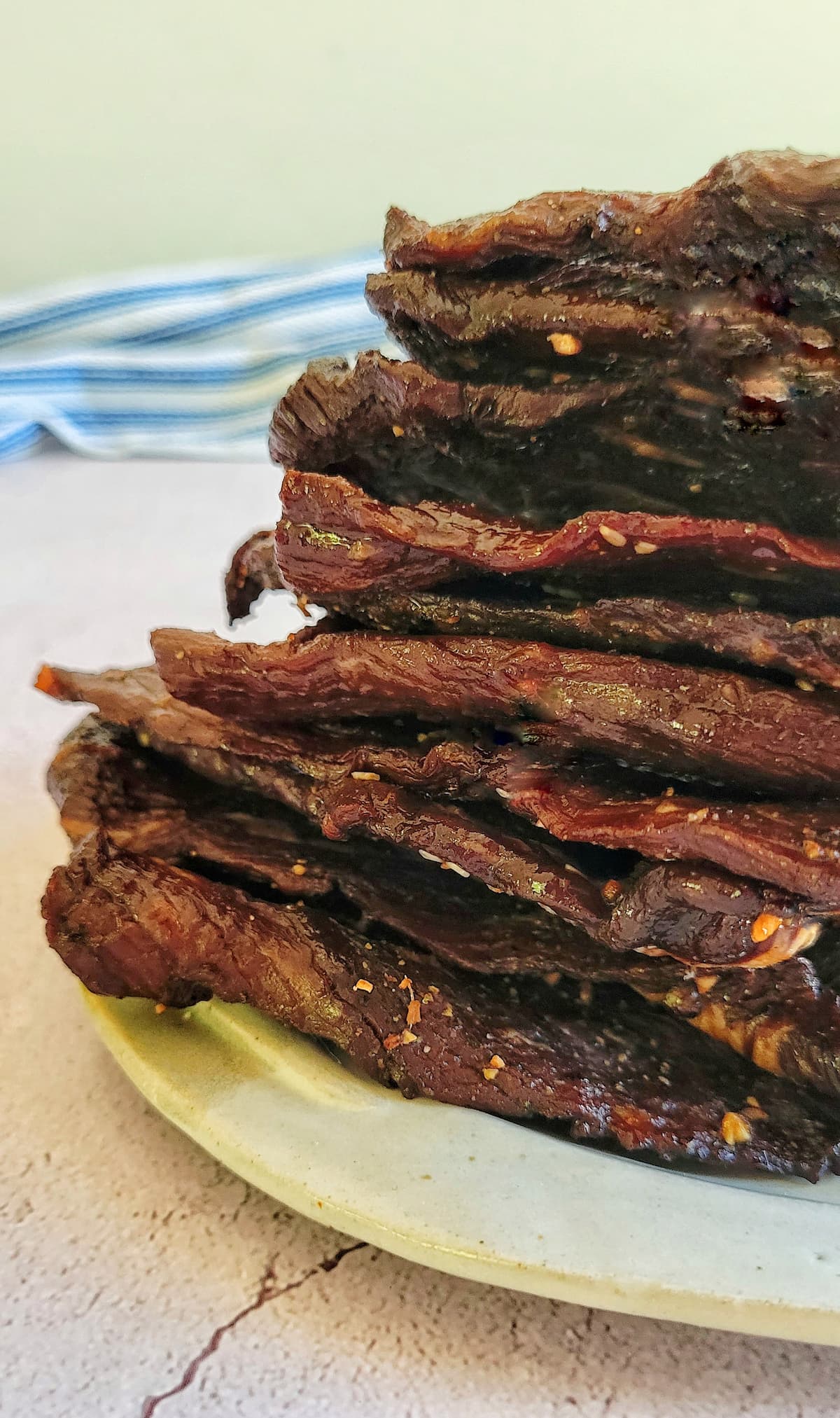
Classic Beef Jerky Recipe (Dehydrator Method)
A simple, flavorful beef jerky recipe that uses a dehydrator for quick and even drying. Perfect for a protein-packed snack or meal prep.
🥘Ingredients
- 2 lbs (900g) lean beef (top round, flank steak, or sirloin)
- 1 tbsp kosher salt
- 1 tbsp black pepper
- 1 tbsp garlic powder
- 1 tbsp onion powder
- 1 tsp smoked paprika
- 1 tsp cayenne pepper (optional)
- ½ cup soy sauce (or tamari for gluten-free)
- ¼ cup Worcestershire sauce
- ¼ cup maple syrup or brown sugar
- 2 tbsp apple cider vinegar
- 1 tbsp liquid smoke
- 1 tbsp onion powder
- 1 tbsp garlic powder
- 1 tsp black pepper
- 1 tsp dried thyme
- 1 tsp dried rosemary
👨🍳Directions
-
1
Slice beef thinly against the grain into ¼-inch thick strips. Ensure even thickness for even drying. -
2
In a large bowl, combine all marinade ingredients and mix well. Add beef strips and coat evenly. Cover and refrigerate for at least 4 hours (or overnight for best flavor). -
3
Preheat dehydrator to 160°F (71°C). Line trays with parchment paper or dehydrator mats for easy cleanup. -
4
Remove beef from marinade, letting excess drip off. Arrange strips in a single layer on dehydrator trays without overlapping. -
5
Dehydrate at 160°F (71°C) for 6-8 hours, flipping halfway through if needed, until beef is completely dry and chewy.
🔧Equipment
- Dehydrator
- Sharp knife and cutting board
- Mixing bowls
- Food-safe plastic wrap or ziplock bags
- Paper towels
- Measuring cups and spoons
📊Nutrition Facts (per serving)
📝Notes
Tips
- For extra tenderness, marinate overnight in the fridge.
- Ensure beef is fully dry before dehydrating to prevent bacterial growth.
- Store in an airtight container at room temperature for up to 2 weeks or freeze for longer storage.
- Adjust spice levels to taste; add more cayenne for heat or reduce for milder flavor.
Variations
- Try adding 1 tbsp of honey or maple syrup to the marinade for a sweeter twist.
- Experiment with different spices like cumin, chili powder, or red pepper flakes.
Watch Video Of How Classic Beef Jerky Recipe (Dehydrator Method) Works
❓ Frequently Asked Questions About Beef Jerky (Dehydrator Method)
What is the best temperature setting for dehydrating beef jerky in a dehydrator?
The ideal temperature for dehydrating beef jerky in a dehydrator is typically between 160°F (71°C) and 175°F (80°C). This range helps preserve the meat’s flavor while ensuring proper drying without overcooking or making it tough. Most dehydrators have a setting for “meat” or “jerky,” which usually falls within this range.
—
How long does it usually take to dehydrate beef jerky in a dehydrator?
The drying time for beef jerky depends on factors like thickness, moisture content, and dehydrator settings, but it generally takes 4 to 8 hours. For thin strips, aim for 4 to 6 hours, while thicker cuts may require 6 to 8 hours. Check frequently to avoid over-drying, which can make jerky brittle.
—
Can I use any type of beef for making jerky, or are there specific cuts that work best?
Not all beef cuts are ideal for jerky—lean, low-fat cuts work best to prevent excess moisture and greasiness. Popular choices include:
– Top round
– Bottom round
– Eye of round
– Sirloin (trimmed of fat)
Avoid fatty cuts like ribeye or chuck, as they can make jerky soggy or greasy. Pre-cut into thin strips (¼-inch thick) for even drying.
—
What are the essential steps to ensure jerky stays safe and flavorful?
To make safe, high-quality jerky, follow these key steps:
1. Trim excess fat and marinate in a spicy, tangy sauce (e.g., soy sauce, garlic, smoked paprika, brown sugar) for at least 4 hours (overnight is best).
2. Slice thinly (¼-inch) to speed drying and prevent mold.
3. Dehydrate at 160–175°F until dry but still pliable (test by bending—it should snap but not crumble).
4. Cool completely before storing to prevent moisture buildup.
5. Store in an airtight container at room temperature (lasts 1–2 months) or refrigerate/freeze for longer shelf life.
—
How do I troubleshoot common issues like dryness, stickiness, or mold?
– Too dry? Jerky may crack or be brittle—lower the temperature slightly (e.g., 155°F) and extend drying time by 10–15 minutes.
– Sticky or mushy? Likely over-drying or fat retention—check for grease spots and reduce fat in marinade; slice thinner next time.
– Mold? Indicates improper drying or contamination. Discard immediately—prevent by ensuring 100% dryness, using fresh meat, and storing properly.

