
old fashioned pickled eggs recipe

The Best old fashioned pickled eggs recipe
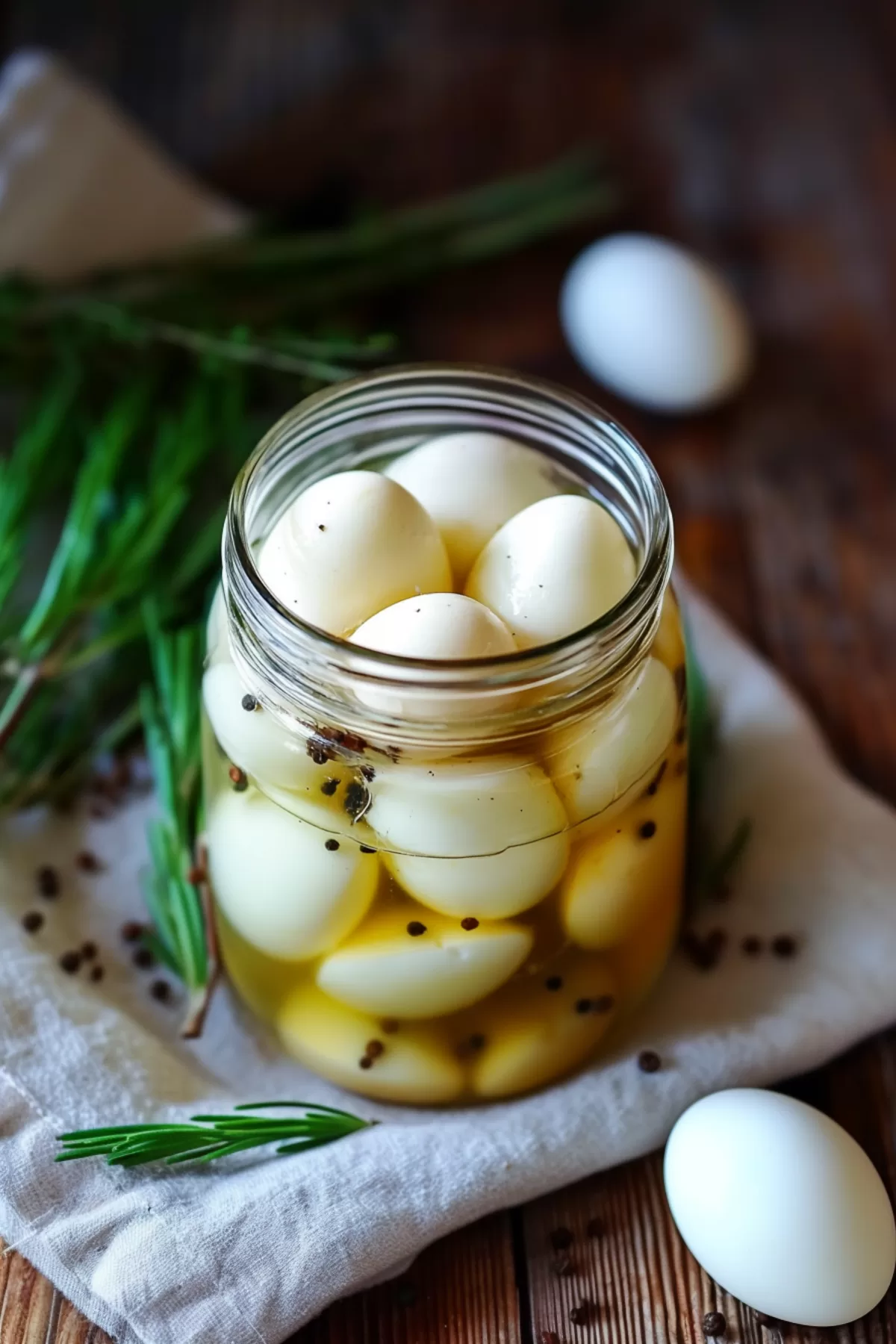
Classic Old Fashioned Pickled Eggs
A tangy, briny treat that adds a delightful crunch to salads, sandwiches, or as a standalone snack. These pickled eggs are simple yet flavorful, perfect for any occasion.
🥘Ingredients
- 12 large eggs
- 1 cup white vinegar
- 1 cup water
- 1 tbsp salt
- 1 tbsp black peppercorns
- 1 tsp mustard seeds
- 1 tsp whole cloves
- 1 tsp dill seeds
- 1 bay leaf
- 1 cup pickling brine (or 1 cup water + 1 cup white vinegar)
- 1 tbsp sugar
- 1 tsp garlic powder
- 1 tsp onion powder
- ½ tsp paprika
👨🍳Directions
-
1
Rinse eggs under cold water and place them in a bowl. Cover with cold water and add 1 tbsp vinegar. Let soak for 15 minutes. -
2
Drain the water and rinse eggs again under cold water. Place eggs in a clean jar or baking dish. -
3
In a mixing bowl, combine vinegar, water, salt, peppercorns, mustard seeds, cloves, dill seeds, and bay leaf. Pour this mixture over the eggs, ensuring they are fully submerged. -
4
Cover the jar with a lid or wrap with a clean cloth. Let the eggs sit at room temperature for 24 hours. -
5
After 24 hours, prepare the pickling solution by mixing water, vinegar, sugar, garlic powder, onion powder, and paprika. Pour this over the eggs again and refrigerate for at least 24 hours before serving.
🔧Equipment
- Large pot
- Clean jars or a deep baking dish
- Slotted spoon
- Mixing bowl
- Chef’s knife
- Cutting board
📊Nutrition Facts (per serving)
📝Notes
- For extra tang, add a pinch of cayenne pepper to the pickling solution.
- Ensure eggs are fully submerged in the brine to prevent spoilage. If using a baking dish, cover tightly with foil.
- These eggs can be stored in the refrigerator for up to 2 weeks.
Watch Video Of How Classic Old Fashioned Pickled Eggs Works
❓ Frequently Asked Questions About Old Fashioned Pickled Eggs
1. What is the traditional method for making old-fashioned pickled eggs, and why does it involve a brine solution?
Old-fashioned pickled eggs are typically made using a brine solution of vinegar, water, salt, and sometimes sugar. The vinegar acts as a natural preservative and acidifies the environment, preventing bacterial growth. The salt helps to draw out moisture and enhance flavor, while the sugar adds a slight sweetness and balances the acidity. The brine solution also helps to tenderize the eggs by breaking down the proteins over time.
—
2. How long does it take to pickle eggs using this classic recipe, and what factors can affect the cooking time?
Classic pickled eggs usually require about 10–15 minutes of boiling in salted water before being submerged in the vinegar brine. The exact time can vary slightly based on:
– Egg freshness (older eggs may take longer to cook evenly).
– Water temperature (hotter water cooks faster).
– Brine acidity (a well-balanced vinegar-to-water ratio ensures proper preservation).
– Salt and sugar levels (too much salt can slow down the cooking process).
For best results, use fresh eggs (within 1–2 weeks of laying) and cook them gently to avoid overcooking.
—
3. Can you substitute vinegar for another acid in the recipe, and if so, what are the best alternatives?
While white vinegar is the traditional choice for pickling eggs, you can experiment with other mild acids as long as the ratio remains balanced:
– Apple cider vinegar (slightly sweeter, works well if using less sugar).
– Balsamic vinegar (adds depth but may require less salt to prevent bitterness).
– Lemon juice (can be used in smaller amounts, as it’s less concentrated; mix with water first to avoid cloudiness).
Avoid strong acids like wine vinegar or red wine vinegar, as they can make the eggs taste overly sharp. Always ensure the brine reaches at least 4.6 pH (acidic enough to prevent spoilage) by testing with vinegar strips or a pH meter.
—
4. Why do some recipes call for mustard seeds, peppercorns, or spices in the brine, and how do they enhance flavor?
Adding mustard seeds, peppercorns, bay leaves, or whole spices to the brine infuses the eggs with subtle, aromatic flavors without overpowering them. These ingredients:
– Mustard seeds – Provide a mild, slightly peppery kick that enhances the vinegar’s tang.
– Peppercorns – Add warmth and a hint of spice, balancing the acidity.
– Bay leaves – Contribute a gentle herbal note that softens the brine’s sharpness.
– Garlic cloves (optional) – Deepens the flavor if finely chopped and included before adding eggs.
The spices should be added to the brine before the eggs are submerged and removed after 1–2 days (or after the eggs are fully pickled) to prevent bitterness. A classic ratio is 1 tsp mustard seeds + 1 tsp peppercorns per quart of brine.
—
5. How do you know when pickled eggs are fully cooked and ready to be submerged in the vinegar? What are the signs?
Pickled eggs are ready when they float to the top of the brine after cooking. Here’s how to check:
– Floating test: After boiling for 10–15 minutes, gently place the eggs in cold water. If they float, they’re done; if they sink, cook for another 1–2 minutes.
– Yolk firmness: The yolk should be set but still slightly creamy (not rubbery). Overcooking can make them dry or watery.
– Brine clarity: If the brine is cloudy, the eggs may have absorbed too much water; adjust by adding a pinch of salt or letting them sit longer in the vinegar.
Once floating, place them in the vinegar brine immediately—they should stay submerged for at least 4 hours (or overnight) to fully pickle. Store in an airtight container in the fridge for up to 2 weeks.


