
bone in prime rib recipe

The Best bone in prime rib recipe
I love this recipe because it’s simple enough to pull off without stress, but it still comes out perfect every time. The slow roasting brings out the natural juices and tenderness, making every bite feel luxurious. Plus, it’s a great way to use up a whole rib roast—you can serve it with all the trimmings, and it’s always a hit. And honestly, it’s not just about the taste; it’s about the memories. There’s nothing like a big, juicy prime rib with crispy bacon-wrapped asparagus and a fresh salad to make you feel like you’re living in a different time—one where food is celebrated, not rushed. It’s a recipe that works for both special occasions and everyday meals, and honestly, that’s what makes it perfect. Plus, the leaner cuts of beef in this recipe mean you can enjoy it without feeling guilty, which is always a win.
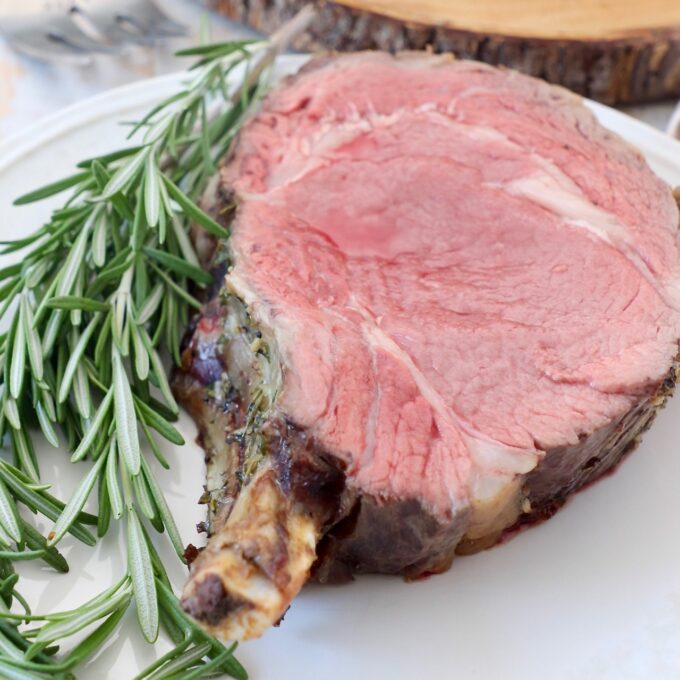
Prime Rib with Classic Horseradish Sauce
A rich, tender bone-in prime rib recipe that is perfect for a special occasion. The succulent meat is paired with a creamy horseradish sauce for an unforgettable dining experience.
🥘Ingredients
- 1 (12–14 lb) bone-in prime rib roast (center-cut)
- 2 tbsp olive oil
- 2 tbsp kosher salt
- 2 tbsp freshly ground black pepper
- 2 tbsp coarse kosher salt
- 2 tbsp coarse black pepper
- 2 tbsp garlic powder
- 2 tbsp onion powder
- 2 tbsp dried rosemary
- 2 tbsp dried thyme
- 2 tbsp dried sage
- 2 tbsp dried oregano
- 1 cup mayonnaise
- ½ cup sour cream
- ½ cup finely grated fresh horseradish (adjust to taste)
- 1 tbsp Dijon mustard
- 1 tbsp lemon juice
- 1 tsp honey or sugar
- Salt and freshly ground black pepper to taste
👨🍳Directions
-
1
Preheat oven to 325°F (165°C). Place a rack in the center of the oven and position the roasting pan on it. -
2
Pat the prime rib dry with paper towels. Rub the outside with olive oil, then generously season both sides with kosher salt, black pepper, garlic powder, onion powder, dried rosemary, thyme, sage, and oregano. -
3
Place the roast in the roasting pan, bone-side up. Roast uncovered for about 2 hours and 15 minutes, or until the internal temperature reaches 115°F (46°C) for medium-rare. -
4
For the final 15 minutes, tent the roast loosely with foil to keep it warm. Remove the bone and set it aside. Use a sharp knife to cut through the connective tissue between the meat and bone, then carefully remove the bone. -
5
Let the meat rest for 30 minutes before slicing against the grain. -
6
While the meat rests, prepare the horseradish sauce: Whisk together mayonnaise, sour cream, grated horseradish, Dijon mustard, lemon juice, honey, salt, and pepper until smooth. -
7
Slice the prime rib into ½-inch thick slices and serve with the horseradish sauce on the side.
🔧Equipment
- Roasting pan
- Oven
- Meat thermometer
- Mixing bowls
- Whisk
- Cutting board
- Sharp knife
📊Nutrition Facts (per serving)
📝Notes
Tips
- For a more tender cut, consider using a center-cut rib roast, which is less likely to dry out.
- Adjust the horseradish to taste—some prefer it milder, while others love a stronger kick.
- Resting the meat is crucial for retaining juices. Skipping this step can result in a drier roast.
- You can add a splash of red wine or beef broth to the pan drippings for extra flavor during roasting.
Variations
- For a vegetarian option, replace the prime rib with marinated portobello mushrooms or a mushroom and lentil stew.
Watch Video Of How Prime Rib with Classic Horseradish Sauce Works
❓ Frequently Asked Questions About Prime Rib with Horseradish Sauce
How do I choose the right bone-in prime rib cut for the best results?
The best bone-in prime rib cut is typically the prime rib bone-in (also called a ribeye or rib roast) from the short rib section of the cow, specifically the prime rib bone-in (12 to 16 ribs, including the bone). Look for a cut with visible rib bones and a well-marbled fat layer (about 1 inch thick) for juiciness. Avoid overly lean cuts, as they won’t render fat effectively during cooking.
—
What’s the ideal doneness level for bone-in prime rib, and how do I check it?
Bone-in prime rib is best cooked to medium-rare to medium (125–135°F internal temp) for the thickest parts, with slightly higher temps toward the edges. Use a meat thermometer to check:
– Thickest part (eye of the rib): 125°F (medium-rare) to 135°F (medium).
– Thin ends: Can be slightly higher (140°F) since they cook faster.
Avoid overcooking, as bone-in cuts dry out quickly. Rest for 30–60 minutes before slicing to redistribute juices.
—
Why does my prime rib crack or split the bone, and how can I prevent it?
Cracking or splitting occurs when the bone expands too much during cooking, pushing the meat apart. To prevent this:
1. Don’t overcook—stop at 125–135°F for the thickest section.
2. Use a high-heat pan (like cast iron) to sear quickly, then transfer to a lower oven temp (325°F) to finish cooking slowly.
3. Rest the rib after cooking—this helps the meat firm up naturally.
4. Avoid pressing the meat while resting—this can cause cracks.
If it does crack, trim the edges and serve as-is; the meat will still be tender.
—
Should I brine the bone-in prime rib, and if so, how long and with what?
Browning bone-in prime rib is optional but enhances flavor and tenderness. A simple dry brine (salt only) is best:
– Method: Rub the cut with 1–2 tbsp coarse kosher salt (or ½ tsp salt per pound) and let it sit at room temperature for 4–12 hours (no refrigeration).
– Alternative (if short on time): Use a wet brine (1 quart water + 1 cup salt + 1 cup sugar + 1 tbsp black pepper, 2 hours at room temp).
Avoid over-brining, as it can make the meat mushy. Skip brining if you prefer a more natural flavor.
—
What’s the best way to slice bone-in prime rib for serving?
Slice thinly against the grain (perpendicular to the rib bones) for maximum tenderness. Here’s how:
1. Rest the rib for 30–60 minutes after cooking to firm up.
2. Use a sharp chef’s knife and slice ¼-inch thick for easy handling.
3. Cut against the grain of the muscle fibers (look for the direction of the muscle streaks).
4. Serve immediately—bone-in rib is best fresh to prevent drying.
For presentation, arrange slices on a platter with butter, horseradish cream, or a honey-glazed sauce.

