
thin crust pizza recipe

The Best thin crust pizza recipe
I also love how it’s a great way to use up whatever veggies or meats are on hand. Last week, we had extra mushrooms and bell peppers from the garden, so I tossed them in, and it turned out even better than usual. It’s not just about the taste—it’s about the ease. No fancy dough, no complicated steps, just a few ingredients that come together in a way that feels indulgent but isn’t. My husband swears by it too, always saying it’s the only pizza he’ll eat when we’re out, and honestly? I get why. It’s crispy, it’s cheesy, and it’s got that satisfying crunch that makes you want seconds. And the best part? It’s healthier than deep-dish pizza because it’s lighter on the crust and still packed with flavor. My kids don’t realize how good it is for them, but I do—it’s got fiber from the crust, protein from the toppings, and way less grease than you’d find in a boxed slice. Plus, it’s a great way to get everyone to eat their veggies without them even realizing it. It’s the kind of recipe that’s as comforting as it is convenient, and that’s what makes it my go-to.
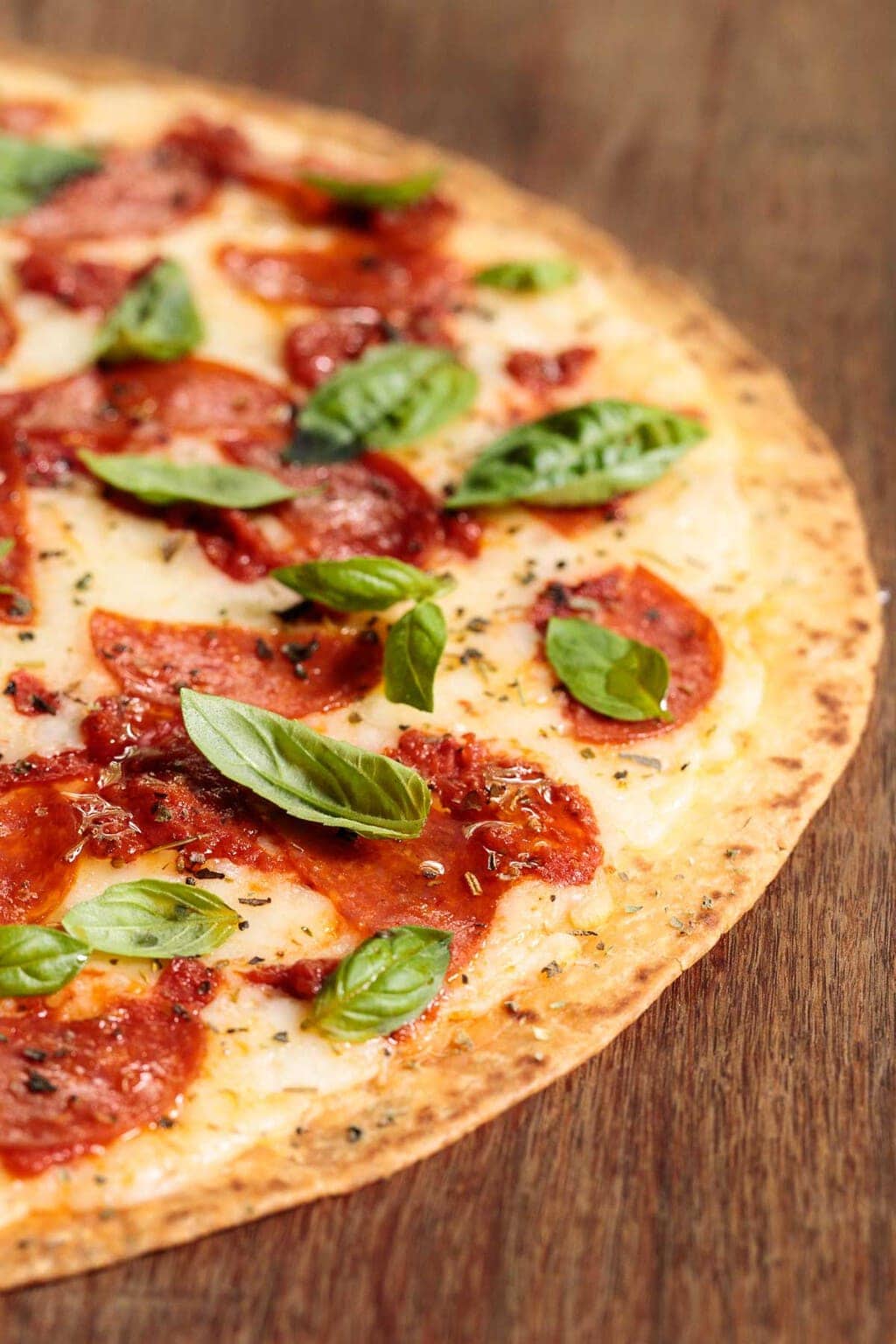
Ultra-Thin Crust Pizza Recipe
A crispy yet delicate thin crust pizza perfect for those who love a lighter yet flavorful take on classic pizza. This recipe is a must-try for any occasion.
🥘Ingredients
- 1 ½ cups all-purpose flour (plus extra for dusting)
- 1 tsp salt
- 1 tsp sugar
- 1 packet (7g) active dry yeast
- ½ cup warm water (~110°F)
- 2 tbsp olive oil
- ½ cup tomato sauce (or marinara)
- 1 clove garlic, minced
- 1 tbsp olive oil
- ½ tsp dried oregano
- ¼ tsp red pepper flakes (optional)
- 1 cup shredded mozzarella cheese
- ½ cup diced bell peppers
- ¼ cup sliced mushrooms
- ¼ cup diced ham or pepperoni
- Fresh basil leaves (for garnish)
👨🍳Directions
-
1
In a bowl, dissolve yeast and sugar in warm water. Let sit for 5 minutes until foamy. -
2
In another bowl, mix flour and salt. Gradually add yeast mixture and olive oil, then knead for 8-10 minutes until smooth and elastic. Cover and let rise for 1 hour. -
3
Preheat oven to 475°F (410°C). Roll out dough thinly on a floured surface (about ⅛-inch thick). Transfer to a parchment-lined baking sheet. -
4
Preheat pizza stone or baking sheet in the oven for 10 minutes. Spread tomato sauce evenly over the dough, then sprinkle cheese and toppings. -
5
Slide pizza onto the preheated stone or baking sheet. Bake for 8-10 minutes until crust is golden and cheese is bubbly. Garnish with fresh basil.
🔧Equipment
- Mixing bowl
- Stand mixer or kitchen aid (or hands for kneading)
- Rolling pin
- Pizza peel or parchment paper
- Baking sheet
- Oven
📊Nutrition Facts (per serving)
📝Notes
- For extra crispiness, brush the dough with olive oil before baking.
- Use a pizza stone or metal baking sheet for even heat distribution.
- Adjust toppings based on preference—keep it simple for a lighter crust.
- Store leftovers in an airtight container for up to 3 days or freeze for longer storage.
Watch Video Of How Ultra-Thin Crust Pizza Recipe Works
❓ Frequently Asked Questions About Ultra-Thin Crust Pizza
1. What is the secret to achieving a thin, crispy crust for my homemade pizza?
The secret lies in using a well-leavened dough with a lower hydration ratio (around 60-65%) and a quick rise with high temperatures. Start with a simple all-purpose flour (or a mix of all-purpose and bread flour for extra chewiness), water at room temperature, salt, and a small amount of yeast (or active dry yeast). For a thin crust, roll the dough out thinly (about 1/8-inch thick) and bake at 500°F (260°C) or higher for a crispy exterior. Pre-bake the untopped crust for 5-7 minutes to set it before adding toppings to prevent a soggy crust.
—
2. Can I use a different type of flour for a thin crust pizza, and if so, which one?
Yes! While all-purpose flour works well, for a thinner, crispier crust, consider:
– Bread flour (12-14% protein) – Gives a chewier, slightly crispier texture.
– Type 00 flour – Common in Italian pizza, it’s fine-grained and absorbs moisture well, resulting in a tender yet crisp crust.
– Whole wheat flour (blended with all-purpose or bread flour) – Adds nuttiness but may require extra hydration and longer proofing.
For best results, mix 70% bread flour + 30% all-purpose flour or 100% Type 00 flour for a traditional Neapolitan-style thin crust.
—
3. How do I prevent my thin crust pizza from being soggy, especially with heavy toppings?
A soggy crust happens when toppings release moisture before the crust is fully baked. To avoid this:
– Pre-bake the crust for 5-7 minutes at 500°F (260°C) before adding toppings. This sets the crust and removes excess moisture.
– Use a pizza peel or parchment paper to transfer the pizza to the oven to minimize direct contact with the oven rack, which can steam the crust.
– Choose lighter toppings (e.g., fresh basil, mushrooms, olives) or pat them dry before adding them. Avoid sauces with high water content (like marinara) until the last minute.
– Reduce oven temperature slightly (475–495°F) if your oven struggles with high heat, but still bake uncovered for crispiness.
– Add toppings in stages—start with cheese, then add saucy ingredients last (e.g., pepperoni or marinara) for a crispy exterior.
—
4. What’s the best way to handle the dough if I want a perfectly even thin crust?
For a consistently thin, even crust, follow these steps:
– Knead the dough lightly (just until smooth) to avoid overworking, which can make it dense. Let it rest for 30 minutes before rolling.
– Use a thin rolling pin (or a wooden dowel) and roll the dough very thinly—aim for 1/8-inch (3mm) thickness. Start with a slightly larger circle than your pizza pan to avoid stretching.
– Roll in stages: Roll one side, then the other, then fold and roll again to ensure even thickness. For a true thin crust, consider using a pizza stone or steel (preheated) and pressing the dough directly onto it before adding toppings.
– Use a pizza cutter or sharp knife to trim excess dough neatly, then use the trimmings to create a well (for sauce) or extra toppings.
– Proof the dough briefly (10–15 minutes) before baking to relax the gluten slightly, but don’t overproof—this can make the crust gummy.
—
5. How do I achieve a golden-brown, perfectly crispy thin crust without burning the cheese?
Achieving a crispy crust with melted cheese requires precise timing and oven control:
– Pre-bake the crust for 5–7 minutes at 500°F (260°C) until the edges are golden and the base is firm. This prevents the cheese from steaming the crust.
– Add toppings (except cheese) first and bake for 1–2 minutes, then add cheese and bake 1–2 minutes more (or until the cheese is bubbly).
– Use a high-heat oven (500°F+). If your oven struggles, consider using a pizza stone or steel, which conducts heat better than a metal pan.
– Broil (or “blister”) for 30–60 seconds at the end if the cheese isn’t bubbling enough—this gives a slight char to the crust while melting the cheese.
– Watch closely: Thin crust burns faster than thick crust. If the crust starts browning too quickly, reduce heat slightly or cover with foil.
– Adjust cheese thickness: Use shredded cheese (not blocks) and sprinkle it lightly—thick layers can steam the crust. A thin layer of cheese (about 1/4-inch) works best.
—
6. Can I make a thin crust pizza without a pizza stone or steel, and if so, what’s the best alternative?
Yes! You can achieve a crispy thin crust without a pizza stone or steel with these alternatives:
– Heavy metal baking sheet (preheated): Line a dark metal baking sheet (like a cast-iron skillet) with parchment paper. Preheat it to 500°F (260°C) for at least 30 minutes. Roll the dough directly onto the parchment and bake.
– Convection oven: Use a convection oven (if available) for faster, more even crisping. Preheat to 475°F (245°C) and bake for 10–12 minutes (uncovered).
– Oven-safe pizza pan (with non-stick coating): A lightweight pizza pan (or a non-stick baking sheet) can work, but it may not be as crispy. Preheat to 500°F (260°C) and bake uncovered.
– Air fryer (for a crispy alternative): Use an air fryer set to 375°F (190°C) for 3–4 minutes, flipping halfway. This gives a lightly crispy crust but not as thickly baked as a traditional oven.
Pro tip: Place the pizza on a wire rack above the baking sheet to allow air circulation, which helps crisp the crust more evenly.
—
7. What’s the best way to store leftover thin crust pizza for future use?
To keep your thin crust pizza fresh and crispy:
– Cool completely before storing—hot pizza releases moisture, making the crust soggy.
– Store in an airtight container (glass or metal) with parchment paper or aluminum foil between layers to prevent sogginess.
– Wrap individually in parchment paper or plastic wrap if reheating multiple pieces to avoid cross-contamination.
– Freeze for later: Wrap each slice in plastic wrap, then place in a freezer bag. Label with the date (best within 2–3 months).
– Reheat properly:
– Oven: Bake at 375°F (190°C) for 5–8 minutes until crispy.
– Toaster oven: Use a low setting (350°F/175°C) for 2–3 minutes.
– Air fryer: Cook at 320°F (160°C) for 2–3 minutes to revive the crust.
– Avoid microwaving—it steams the crust and makes it soggy. If you must microwave, cover with a damp paper towel to retain moisture, then crisp under the broiler afterward.

