
gluten free bagel recipe

The Best gluten free bagel recipe
What really sets this recipe apart is how easy it is to make while still delivering that rich, satisfying flavor. I’ve tried so many gluten-free bagel mixes that either taste like cardboard or require too much work, but this one is foolproof. My husband and I have tested it a few times, and even my picky 10-year-old son will eat it straight from the oven without complaint. Plus, the health benefits make it a no-brainer for our family. Gluten-free doesn’t mean sacrificing flavor or texture—this recipe keeps things light but still indulgent, with whole grains and natural sweeteners that give it extra nutrition without overpowering the taste. It’s a great way to include more fiber and antioxidants in our diet without feeling like we’re eating something artificial. And because it’s homemade, we know exactly what’s going into it—no mystery ingredients or preservatives. It’s the kind of recipe that feels like a treat but also makes sense for everyday eating, whether it’s a quick weeknight meal or a showstopper for a family gathering.
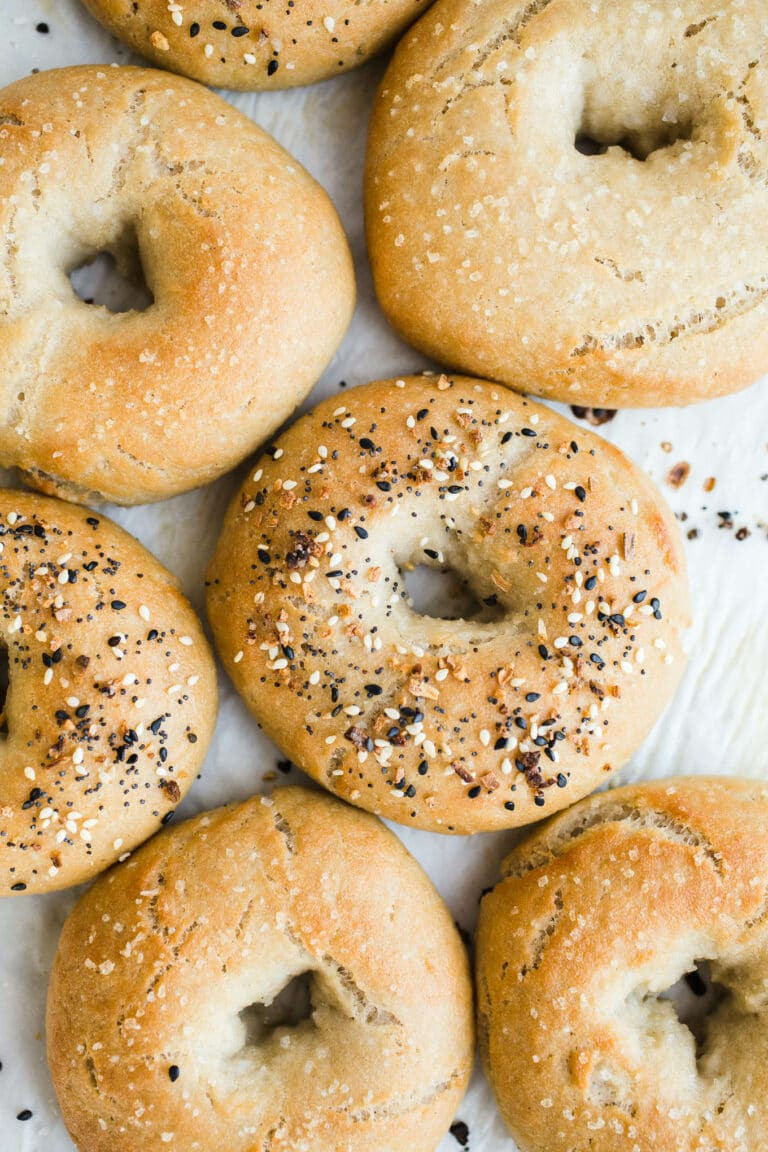
Gluten-Free Bagel Recipe
A delicious and fluffy gluten-free bagel recipe that uses almond flour and psyllium husk for a satisfying texture. Perfect for breakfast, brunch, or snacking with your favorite toppings.
🥘Ingredients
- 3 cups almond flour
- 1 cup psyllium husk powder
- 2 tsp salt
- 1 tsp baking soda
- 1 tsp black salt (kala namak) for an eggy flavor (optional)
- 1 tbsp olive oil
- 1 cup warm water
- Sesame seeds
- Poppy seeds
- Everything bagel seasoning
- Butter or cream cheese
- Fresh herbs (chives, parsley)
👨🍳Directions
-
1
Preheat oven to 375°F (190°C). Line a baking sheet with parchment paper. -
2
In a large bowl, mix almond flour, psyllium husk powder, salt, baking soda, and black salt (if using). Add olive oil and warm water, then stir until a dough forms. It will be sticky—this is normal. -
3
Let the dough rest for 10 minutes to thicken. Knead lightly for 2 minutes to ensure it holds shape. -
4
Divide dough into 8 equal portions. Roll each portion into a ball, then flatten into a circle about 1/4-inch thick. -
5
Press sesame or poppy seeds onto each bagel. Use a bagel press or roll a bagel mold to shape them. -
6
Bake for 20-25 minutes until golden brown. Allow cooling for 10 minutes before serving.
🔧Equipment
- Mixing bowl
- Stand mixer or hand mixer
- Rolling pin
- Bagel press or parchment paper
- Baking sheet
- Oven
📊Nutrition Facts (per serving)
📝Notes
- For extra flavor, brush bagels with melted butter or cream cheese before baking.
- Store in an airtight container for up to 5 days or freeze for longer storage.
- Substitute psyllium husk with 1 cup gluten-free all-purpose flour blend if needed.
- Ensure all ingredients are certified gluten-free to avoid cross-contamination.
Watch Video Of How Gluten-Free Bagel Recipe Works
❓ Frequently Asked Questions About Gluten-Free Bagel
What is the key difference between this gluten-free bagel recipe and traditional bagel recipes?
The key difference lies in the ingredients and texture. Traditional bagels rely on a high-protein wheat flour mixture that forms a chewy, elastic dough, while this gluten-free version uses a blend of gluten-free flours (like almond flour, rice flour, and psyllium husk) and a binding agent (like xanthan gum) to mimic that structure. Additionally, gluten-free bagels often require a longer proofing time to achieve the same rise and chewiness.
Why do some gluten-free bagels turn out dense or crumbly instead of light and airy?
Several factors can cause gluten-free bagels to be dense or crumbly:
1. Insufficient hydration – Gluten-free flours absorb moisture differently; ensure the dough is moist enough but not overly wet.
2. Missing binding agents – Xanthan gum or guar gum are crucial for structure; skip them, and the bagels may lack cohesion.
3. Incorrect proofing time – Gluten-free doughs rise slower; underproofing can lead to a dense texture.
4. Overmixing – Gluten-free doughs can become tough if overworked; handle gently during mixing.
5. Flour blend quality – Some GF flours (like rice flour) absorb more water; adjust ratios if needed.
Can I substitute the almond flour in this recipe with another type of flour?
Yes, but results may vary. For best texture, keep the almond flour (20%) because it adds moisture and a slightly chewy bite. If you must swap it:
– Oat flour (20%) – Works but may make the bagel denser.
– Buckwheat flour (20%) – Adds nutty flavor but can be grittier.
– Chickpea flour (20%) – Adds protein but may require extra xanthan gum.
Always adjust hydration and proofing time accordingly.
How do I ensure my gluten-free bagels don’t turn out too dry or crumbly on the outside?
To keep your bagels moist and prevent a dry crust:
1. Add 1–2 tbsp of yogurt or applesauce to the dough for extra moisture.
2. Brush with melted butter or olive oil after baking to seal the crust.
3. Use a higher oven temperature (425°F/220°C) for the initial bake to crisp the surface quickly, then reduce to 375°F (190°C) for even cooking.
4. Let them cool slightly before slicing—this prevents a gummy texture.
5. Store in an airtight container with a slice of bread or a damp paper towel to retain moisture.
Why do my gluten-free bagels crack or split during baking?
Cracks or splits in gluten-free bagels typically happen due to:
– Overproofing – The dough expands too much before baking, causing tension.
– Poor hydration – Too dry a dough can’t stretch evenly, leading to cracks.
– Incorrect proofing time – Too long or too short can disrupt structure.
– Underbaking – If the bagels aren’t fully cooked, steam pressure builds, causing splits.
Solutions:
– Shape the bagels tightly and let them rest before baking.
– Brush with water before baking to help them hold shape.
– Bake at a slightly lower temperature (375°F/190°C) for 12–15 minutes instead of jumping to high heat.
– Use a baking stone or tray to promote even browning and reduce steam.

