
recipe with ssamjang


The Best recipe with ssamjang
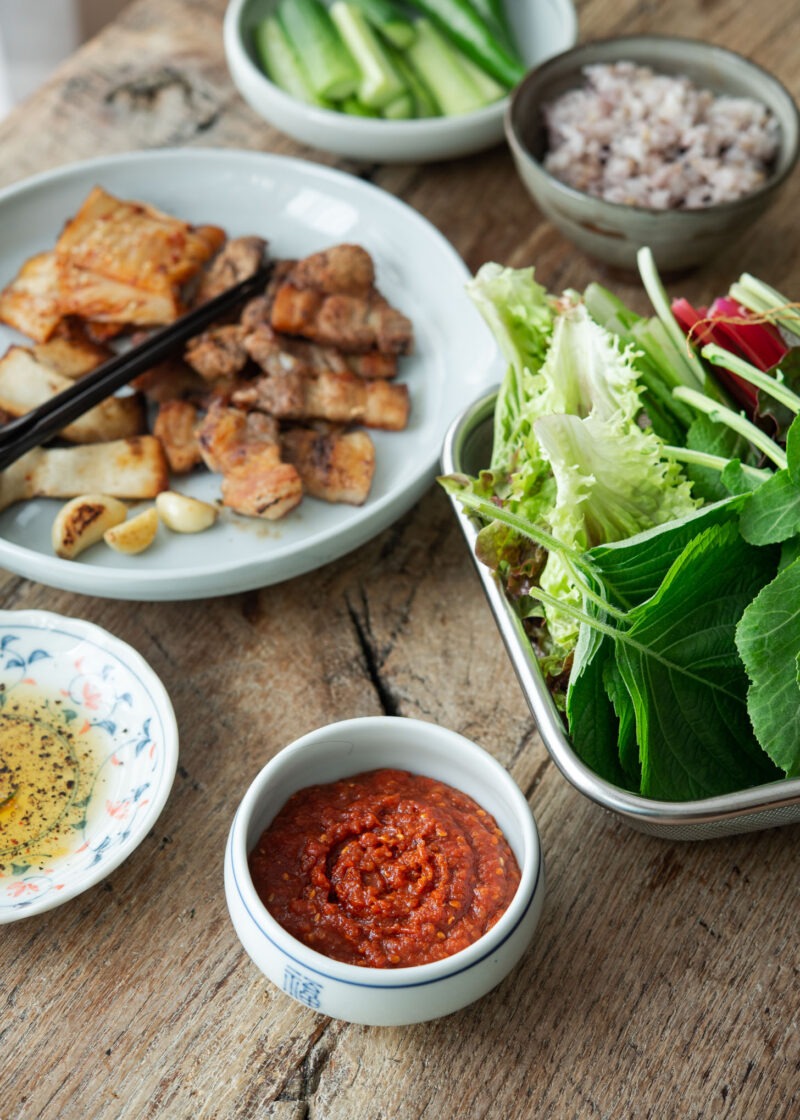
Korean BBQ Samgyeopsal with Homemade ssamjang
A flavorful Korean pork flatbread served with tangy ssamjang sauce, perfect for a quick weeknight meal. The crispy edges and juicy center make this a crowd-pleaser.
🥘Ingredients
- 2 cups all-purpose flour
- 1 tsp salt
- 1/4 cup warm water
- 1/2 tsp active dry yeast
- 1 cup ssamjang (store-bought or homemade)
- 1 tbsp gochujang (optional, for heat)
- 1 tbsp soy sauce
- 1 tbsp sesame oil
- 1.5 lbs pork shoulder (cut into 1-inch thick slices)
- 1 tbsp vegetable oil
👨🍳Directions
-
1
Activate the yeast by mixing warm water, yeast, and a pinch of salt. Let sit for 5 minutes until foamy. -
2
In a large bowl, combine flour and salt. Pour in the yeast mixture and stir until a shaggy dough forms. Knead for 5 minutes until smooth and elastic. -
3
Divide dough into 8 equal pieces. Roll each into a thin, rectangular sheet about 1/8-inch thick. -
4
Heat oil in a skillet over medium-high heat. Cook pork slices for 2–3 minutes per side until browned and cooked through (145°F internal temp). Set aside. -
5
Preheat oven to 425°F. Arrange rolled dough on a baking sheet. Bake for 10–12 minutes until golden brown and crispy. -
6
Mix ssamjang, gochujang, soy sauce, and sesame oil in a bowl. Serve pork slices on the dough, drizzle with sauce, and enjoy!
🔧Equipment
- Mixing bowl
- Kitchen scale (optional)
- Rolling pin
- Cutting board
- Oven
📊Nutrition Facts (per serving)
📝Notes
Watch Video Of How Korean BBQ Samgyeopsal with Homemade ssamjang Works
❓ Frequently Asked Questions About Korean BBQ Samgyeopsal with ssamjang
Can I substitute soy sauce for ssamjang?
Yes, you can use a mix of soy sauce and a small amount of gochujang (Korean red pepper paste) to approximate ssamjang. Start with 1 tablespoon of gochujang per cup of soy sauce, then adjust to taste—ssamjang has a sweeter, slightly tangy depth that soy sauce alone lacks.
What if I don’t have ssamjang in my pantry?
Skip it entirely. A simple ssamjang substitute is a blend of 1 cup soy sauce, 2 tablespoons sugar, 1 tablespoon rice vinegar, and 1 teaspoon sesame oil. Stir well before using. The vinegar adds brightness, and the sugar balances saltiness.
How do I know ssamjang is ready before adding it to the marinade?
Let it sit for at least 15 minutes at room temperature. The sauce thickens slightly and develops a glossy sheen—this is normal. If you’re in a hurry, use it immediately after mixing, but resting it enhances flavor.
Can I make ssamjang ahead of time?
Yes, but adjust the sugar slightly. Reduce it by ½ teaspoon if storing for more than 2 days to prevent crystallization. Keep refrigerated and stir before each use—it thickens over time.
What if my ssamjang tastes too salty?
Balance it with 1–2 tablespoons of water or rice vinegar per cup of sauce. For a sweeter touch, add ½ teaspoon sugar. Taste as you go—ssamjang is meant to be bold, but you can dial down if needed.
