
and potato soup recipe

The Best and potato soup recipe
What I love most about this recipe is how flexible it is. You can keep it basic with just potatoes, broth, and a little cream, or dress it up with bacon, cheese, or fresh herbs if you’re feeling fancy. It’s also packed with good stuff—potatoes are a great source of potassium and vitamin C, and if you leave the skins on, you get extra fiber. Plus, it’s one of those meals that reheats beautifully, so leftovers are never a problem. My husband always says it’s like a warm hug in a bowl, and I have to agree. It’s the kind of dish that brings everyone to the table, no matter how crazy the day has been.
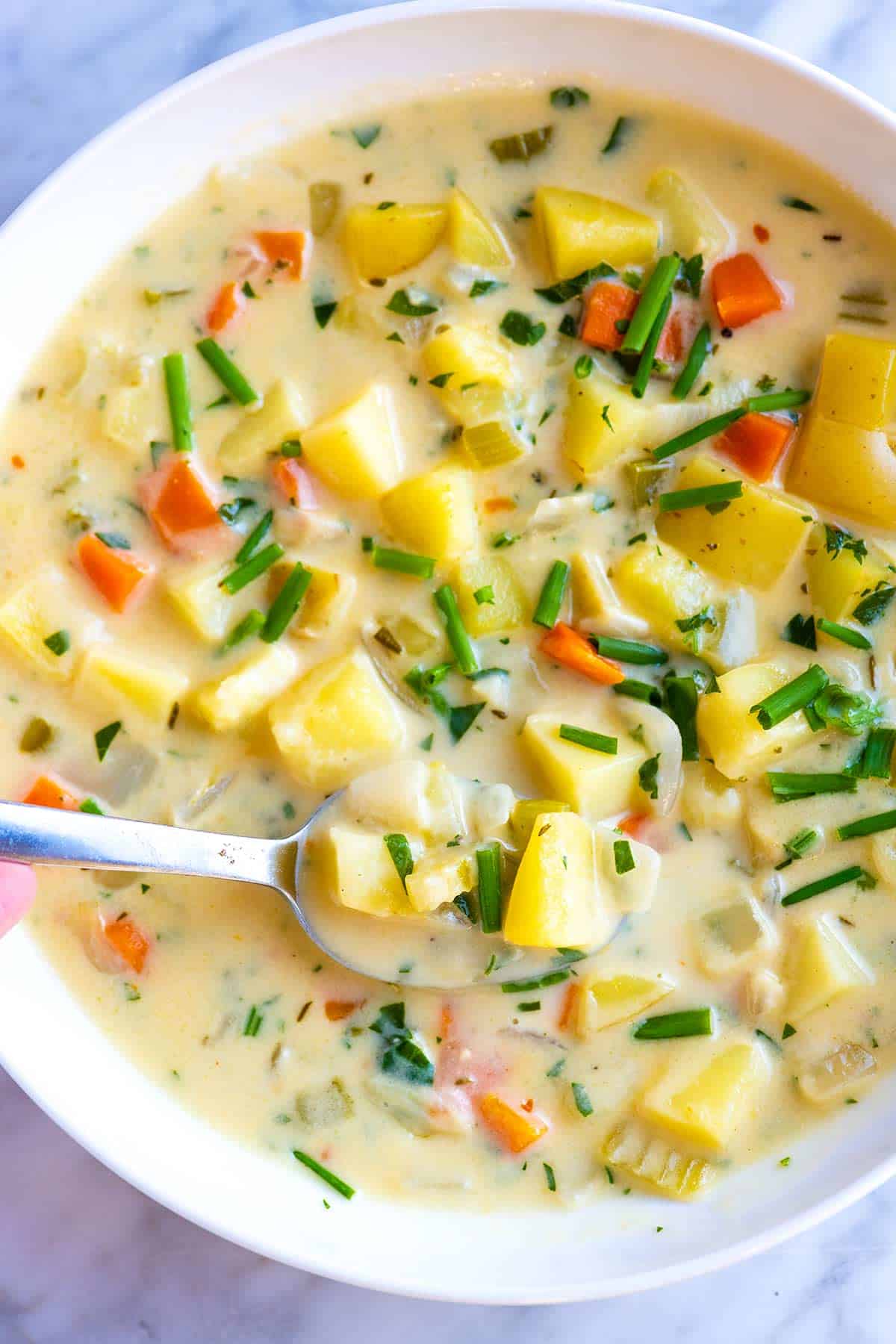
Creamy Potato Soup
A rich and comforting potato soup with a velvety texture, perfect for chilly days. This easy-to-make recipe combines tender potatoes, savory broth, and a touch of cream for a satisfying meal.
🥘Ingredients
- 2 lbs (900g) russet or Yukon Gold potatoes, peeled and diced
- 1 large onion, chopped
- 3 cloves garlic, minced
- 4 cups (950ml) chicken or vegetable broth
- 1 cup (240ml) heavy cream or half-and-half
- 4 tbsp (60g) unsalted butter
- 2 tbsp (30ml) olive oil
- 1 tsp salt, or to taste
- ½ tsp black pepper
- 1 tsp dried thyme or 1 tbsp fresh thyme leaves
- ½ cup (50g) shredded cheddar cheese
- 3 slices cooked bacon, crumbled
- 2 green onions, sliced
- 1 tbsp fresh parsley, chopped
- Sour cream or Greek yogurt
👨🍳Directions
-
1
Heat the olive oil and butter in a large pot or Dutch oven over medium heat. Add the chopped onion and cook for 5 minutes, stirring occasionally, until softened. -
2
Add the minced garlic and cook for another 1 minute, stirring constantly to prevent burning. -
3
Stir in the diced potatoes, broth, salt, pepper, and thyme. Bring the mixture to a boil, then reduce the heat to low, cover, and simmer for 20-25 minutes, or until the potatoes are fork-tender. -
4
Use an immersion blender to puree the soup directly in the pot until smooth. Alternatively, transfer the soup in batches to a regular blender, blend until smooth, and return it to the pot. -
5
Stir in the heavy cream or half-and-half and heat the soup over low heat for an additional 5 minutes, stirring occasionally. Do not boil. -
6
Taste and adjust the seasoning with more salt and pepper if needed. Ladle the soup into bowls and top with your choice of toppings, such as cheese, bacon, green onions, or parsley.
🔧Equipment
- Large pot or Dutch oven
- Cutting board
- Chef’s knife
- Wooden spoon
- Immersion blender or regular blender
- Measuring cups and spoons
📊Nutrition Facts (per serving)
📝Notes
Watch Video Of How Creamy Potato Soup Works
❓ Frequently Asked Questions About Creamy Potato Soup
1. Can I make potato soup in a slow cooker?
Yes! To make potato soup in a slow cooker, add all your ingredients (potatoes, broth, onions, celery, garlic, etc.) and cook on low for 6-8 hours or on high for 3-4 hours. Blend if you prefer a creamier texture, then stir in dairy (like milk or cream) and seasonings at the end.
2. How can I thicken my potato soup?
There are several ways to thicken potato soup:
– Mash some potatoes directly in the pot for a chunkier texture.
– Blend a portion of the soup and stir it back in.
– Make a roux (butter + flour) and whisk it into the soup.
– Add instant mashed potato flakes or cornstarch mixed with water.
– Simmer uncovered to reduce the liquid.
3. Can I freeze potato soup?
Yes, but with some considerations. Potato soup freezes best if it’s dairy-free (skip milk/cream before freezing). If it contains dairy, it may separate when thawed—reheat gently and stir well. Freeze in airtight containers for up to 3 months. Thaw in the fridge overnight before reheating.
4. What are the best potatoes for potato soup?
Starchy or all-purpose potatoes work best for creamy soups:
– Russet potatoes (high starch, fluffy texture when cooked).
– Yukon Gold potatoes (creamy, slightly waxy, great for blending).
– Avoid waxy potatoes (like red or new potatoes) if you want a smooth soup—they hold their shape too well.
5. How do I keep potato soup from turning gray?
Potato soup can darken due to oxidation or overcooking. To prevent this:
– Add a splash of lemon juice or vinegar (½ tsp) to the cooking water.
– Avoid overcooking—potatoes should be tender but not mushy.
– Use stainless steel or enameled pots (aluminum can react with acids and cause discoloration).
– Store leftovers properly—cool quickly and refrigerate in airtight containers.
