
arroz con gandules recipe

- The Best arroz con gandules recipe
- Arroz con Gandules (Puerto Rican Pilaf with Pigeon Peas)
- 🥘Ingredients
- 👨🍳Directions
- 🔧Equipment
- 📊Nutrition Facts (per serving)
- 📝Notes
- Watch Video Of How Arroz con Gandules (Puerto Rican Pilaf with Pigeon Peas) Works
- ❓ Frequently Asked Questions About Arroz con Gandules (Puerto Rican Pilaf with Pigeon Peas)
The Best arroz con gandules recipe
The thing I love most about this recipe is how it balances flavors so well. The sweetness of the rice, the smoky depth from the spices, and the rich, tender pigeon peas all come together in a way that feels indulgent but still nourishing. My kids don’t even realize they’re eating something healthy—they just think it’s the best food ever. And honestly, it’s great for everyday meals too. It’s not too heavy, but it’s not light either. It’s that perfect balance of warmth and satisfaction, whether you’re feeding a crowd or just a family of four. Plus, the pigeon peas are packed with fiber and plant-based protein, which makes it a great dish for keeping energy steady. It’s not just food—it’s a way to bring people together, and that’s what makes it special.
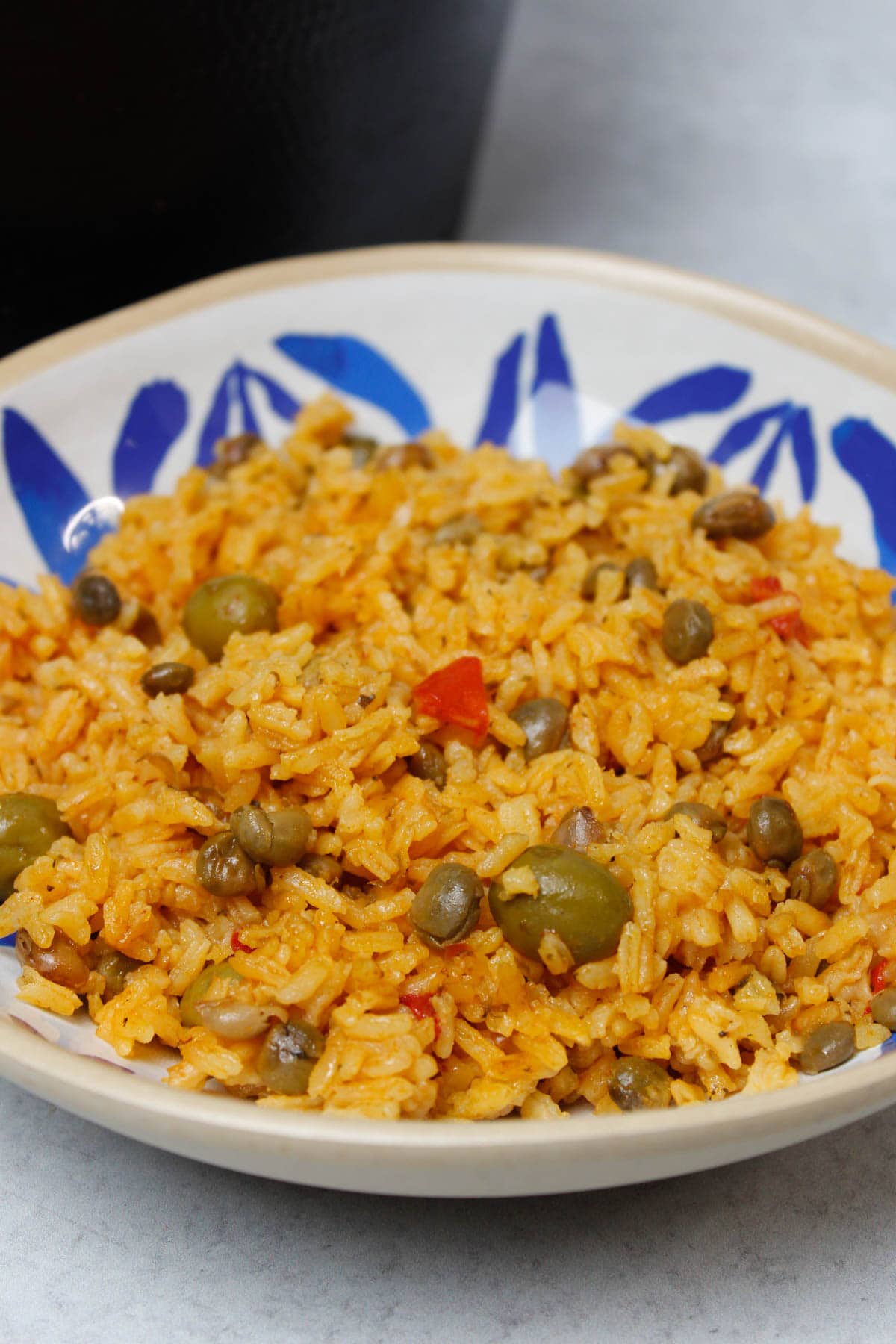
Arroz con Gandules (Puerto Rican Pilaf with Pigeon Peas)
A flavorful Puerto Rican dish featuring tender rice cooked with sweet pigeon peas, tomatoes, and aromatic spices. Perfect for a hearty meal with a touch of Caribbean warmth.
🥘Ingredients
- 2 cups long-grain white rice, rinsed
- 1 can (15 oz) pigeon peas (gandules), drained and rinsed
- 1 cup chicken or vegetable broth
- 1 small onion, finely chopped
- 3 cloves garlic, minced
- 1 bell pepper, diced
- 1 cup diced tomatoes (canned or fresh)
- 1 tsp ground cumin
- 1 tsp dried oregano
- ½ tsp smoked paprika
- ½ tsp black pepper
- ½ tsp salt (adjust to taste)
- 1 cup tomato sauce
- 1 tbsp olive oil
- 1 tbsp butter
- 1 tsp sugar (optional, for balance)
- 1 bay leaf
- Fresh cilantro, chopped
- 1 avocado, sliced
- 1 lime, cut into wedges
👨🍳Directions
-
1
In a large pot, heat olive oil over medium heat. Sauté onion, garlic, and bell pepper until softened (about 5 minutes). Add diced tomatoes, cumin, oregano, smoked paprika, black pepper, and salt. Cook for 2 minutes. -
2
Add rinsed rice, pigeon peas, broth, and bay leaf. Stir gently to combine. Bring to a boil, then reduce heat to low, cover, and simmer for 20 minutes. -
3
In a separate skillet, melt butter and tomato sauce over medium heat. Stir in sugar (if using) and simmer for 3-4 minutes until slightly thickened. -
4
After 20 minutes, carefully remove the bay leaf. Increase heat to medium-high, stir occasionally, and cook for another 10-15 minutes until rice is tender and liquid is absorbed. -
5
Off heat, pour the tomato sauce mixture over the rice and peas, stirring gently to coat evenly. Let it sit for 5 minutes to meld flavors. -
6
Garnish with chopped cilantro, avocado slices, and lime wedges before serving.
🔧Equipment
- Large pot or Dutch oven
- Medium skillet
- Wooden spoon
- Measuring cups and spoons
- Knife and cutting board
📊Nutrition Facts (per serving)
📝Notes
Tips
- For extra richness, stir in 1 tbsp of coconut milk or a splash of cream at the end.
- If using fresh tomatoes, reduce the amount slightly since they are juicier.
- Ensure rice is fully cooked and liquid is absorbed to avoid a soggy dish.
- Adjust salt and spices to taste, as flavors can vary by preference.
Substitutions
- Substitute pigeon peas with white beans or chickpeas for a variation.
- Use brown rice for a healthier twist.
Watch Video Of How Arroz con Gandules (Puerto Rican Pilaf with Pigeon Peas) Works
❓ Frequently Asked Questions About Arroz con Gandules (Puerto Rican Pilaf with Pigeon Peas)
What is the key difference between arroz con gandules and regular rice dishes like paella or risotto?
Arriz con gandules is distinct from other rice dishes because it features pilaf-style rice cooked with a rich, spiced broth that includes gandules (plump pigeon peas), a staple in Puerto Rican cuisine. Unlike paella (which often uses seafood or mixed ingredients) or risotto (which relies on slow-stirring with butter and Parmesan), this dish emphasizes the sweet-savory balance of the pigeon peas, sofrito, and a touch of sweetness from the broth. The dish also incorporates hard-boiled eggs, olives, and sometimes chorizo or bacon, setting it apart from simpler rice preparations.
—
Why does the recipe call for sofrito, and what ingredients should I use?
Sofrito is the aromatic base that forms the flavor foundation of arroz con gandules. It typically includes:
– Onions (finely chopped)
– Bell peppers (any color, diced)
– Garlic (minced)
– Tomatoes (optional, for depth)
– Cilantro (freshly chopped, for garnish)
The key is to cook these ingredients slowly until they soften and release their flavors, creating a savory, slightly sweet foundation. Too much heat can burn the sofrito, so low and steady cooking is essential.
—
How do I ensure the gandules (pigeon peas) are tender and not mushy?
Pigeon peas can be tricky—they must be cooked just until tender to avoid mushiness. Here’s how to do it right:
1. Soak them overnight (or at least 4+ hours) to reduce cooking time and improve texture.
2. Use a small pot—gandules expand significantly when cooked, so a pot with a tight lid is ideal.
3. Cook gently: Simmer the peas in the broth for 20–25 minutes (they’ll absorb liquid). Stir occasionally to prevent sticking.
4. Check doneness: They should be plump but still hold their shape—resist the urge to overcook them.
5. Adjust seasoning: If the broth is too thin, add a splash of water or broth, but don’t overdo it; the peas should be moist, not watery.
—
Can I substitute other beans or legumes for gandules, and if so, which ones work best?
While gandules are the traditional choice, you can experiment with other beans if they’re cooked properly—but keep in mind that their texture and flavor will differ. The best substitutes (ranked by closeness to the original) are:
– Red kidney beans: Hold shape well but lack the natural sweetness of gandules.
– Black-eyed peas: Similar to gandules in texture but may be slightly earthier.
– Chickpeas: Work but can be grittier; soak longer (6+ hours) and cook until very tender.
Avoid: White beans or lentils—they’ll turn mushy and absorb too much liquid.
—
Why does the recipe sometimes include chorizo or bacon, and can I skip it?
Chorizo or bacon adds smoky, fatty richness that complements the dish, enhancing the umami and depth of flavors. However, it’s optional—many traditional versions skip it for a lighter take. If you omit it:
– Use extra sofrito to compensate for the fat.
– Add a pinch of smoked paprika or a splash of fish sauce (for a Puerto Rican twist) to mimic the smokiness.
The dish will still be delicious, but the texture and flavor profile will be slightly different.

