
beef liver recipe

The Best beef liver recipe
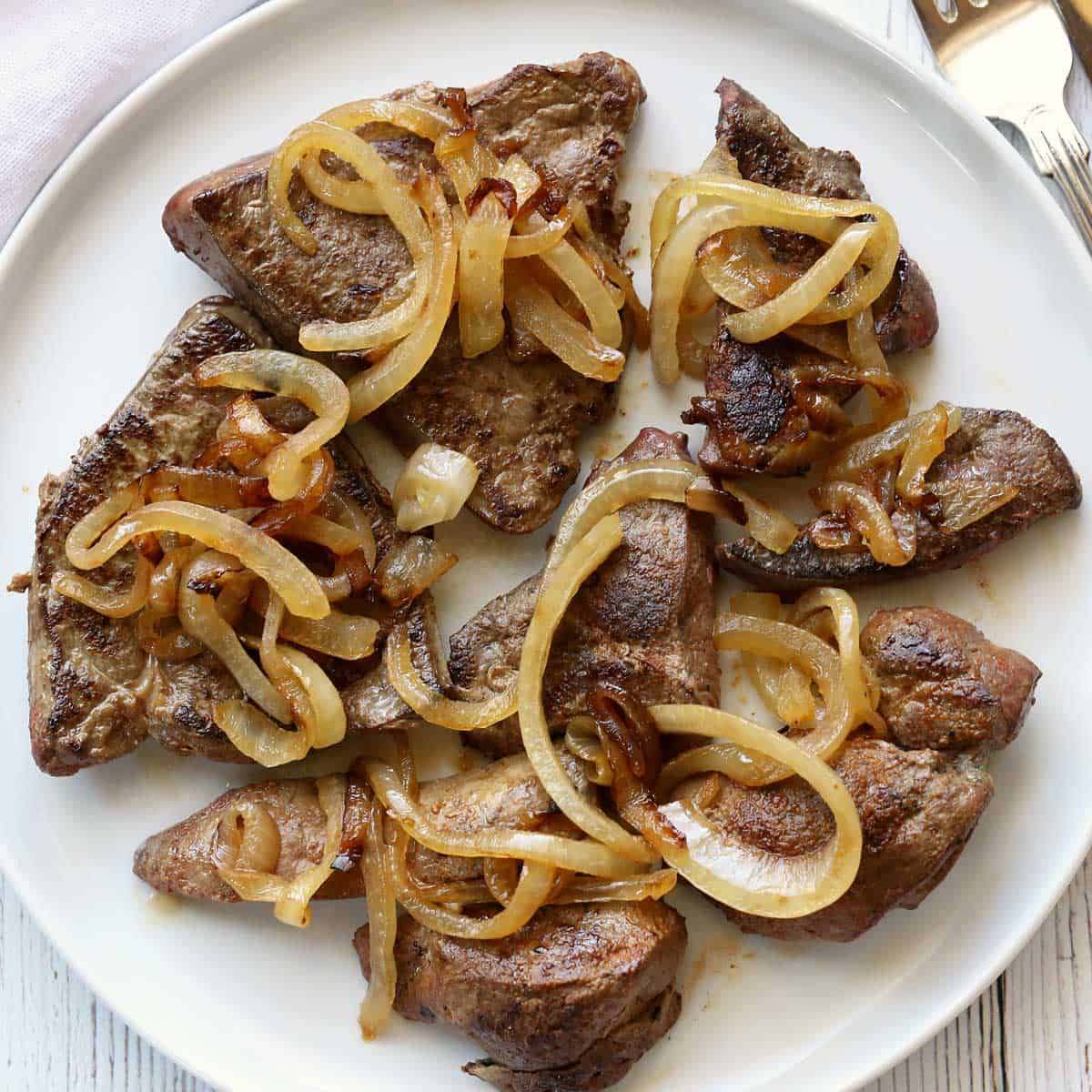
Pan-Seared Beef Liver with Garlic Butter
A rich and flavorful dish featuring tender beef liver cooked to perfection with garlic butter, served with a tangy tomato sauce. This recipe is a must-try for any occasion.
🥘Ingredients
- 8 oz beef liver, sliced thinly
- 2 tbsp olive oil
- 1 tsp salt
- 1 tsp black pepper
- 1 tsp smoked paprika
- 4 tbsp unsalted butter
- 4 cloves garlic, minced
- 1 tbsp fresh parsley, chopped
- 1 cup tomato sauce
- 1 tbsp balsamic vinegar
- ½ tsp red pepper flakes (optional)
👨🍳Directions
-
1
Pat liver slices dry with paper towels and season with salt, pepper, and smoked paprika. -
2
Heat olive oil in a skillet over medium-high heat. Cook liver for 2–3 minutes per side until golden brown. -
3
In a separate pan, melt butter over medium heat. Add minced garlic and cook for 30 seconds until fragrant. Stir in parsley. -
4
Pour tomato sauce into the skillet with liver. Simmer for 5 minutes. Add balsamic vinegar and red pepper flakes (if using). -
5
Spoon garlic butter over the liver and sauce. Serve hot with crusty bread or roasted vegetables.
🔧Equipment
- Skillet (cast iron recommended)
- Mixing bowl
- Knife and cutting board
- Measuring spoons
📊Nutrition Facts (per serving)
📝Notes
Tips
- For extra tenderness, slice liver thinly and cook quickly.
- Use fresh herbs like thyme or rosemary for added depth.
- Pair with a crisp white wine or red wine reduction.
Substitutions: {“liver”:”Substitute with beef heart if unavailable.”,”butter”:”Use olive oil for a lighter option.”}
Watch Video Of How Pan-Seared Beef Liver with Garlic Butter Works
❓ Frequently Asked Questions About Pan-Seared Beef Liver with Garlic Butter
1. What are the best types of beef liver to use in a recipe, and how do they differ in flavor and texture?
The best types of beef liver for recipes are calf’s liver, beef liver, or lamb liver. Calf’s liver is mild and tender, making it ideal for delicate dishes like pâté or smooth sauces. Beef liver, especially from younger cattle, has a slightly richer, bolder flavor and a firmer texture, perfect for stir-fries or well-done preparations. Lamb liver is more robust and slightly gamey, best suited for hearty dishes like braised liver or in stews. Texture-wise, younger livers are more tender, while older livers can be tougher but still flavorful.
—
2. How should I prepare beef liver before cooking to ensure it’s safe and flavorful?
To prepare beef liver safely and enhance its flavor, start by trimming excess fat (though some fat adds richness—leave a thin layer if desired). Rinse under cold water to remove any blood or impurities, then pat dry thoroughly. For tenderizing, you can marinate in olive oil, garlic, lemon juice, or herbs for 30 minutes to an hour before cooking. If using raw, ensure it’s from a trusted source (fresh, frozen, or vacuum-sealed) to avoid contamination. For extra tenderness, lightly pan-sear or braise before finishing in a high-heat method like grilling or sautéing.
—
3. Why does beef liver sometimes have a strong or bitter taste, and how can I reduce this?
Beef liver can taste strong or bitter due to its high iron content, which can develop a metallic or gamey flavor if not handled properly. To reduce bitterness, trim off excess fat and connective tissue, as these can concentrate bitter compounds. Cooking methods like pan-searing, braising, or slow-cooking help break down these flavors. Adding acidic ingredients like lemon juice, vinegar, or wine while cooking neutralizes bitterness. For a milder taste, opt for younger liver (calf’s or young beef) or pair it with strong flavors like onions, garlic, or herbs to balance its intensity.
—
4. What are the best cooking methods for beef liver, and which works best for different dishes?
The best cooking methods for beef liver vary by dish:
– Pan-searing or sautéing (high heat) works best for quick-cooked dishes like liver pâté, liver and onions, or stir-fries. The Maillard reaction creates a crispy exterior while cooking the liver through.
– Braising or slow-cooking (low heat) is ideal for tenderizing tougher cuts or dishes like beef liver stew or liver and wine sauce. This method also enhances flavors through reduction.
– Grilling or roasting works well for whole livers (e.g., British-style beef liver with mustard sauce) or large pieces, adding a smoky depth.
– Poaching or simmering is great for smooth sauces or liver dumplings, as it keeps the texture delicate.
– Blending into pâté or liver spread requires minimal cooking—just finely chop, mix with fat, and chill.
—
5. Can beef liver be eaten raw, and if so, what are the risks and precautions?
Beef liver can be eaten raw in small amounts (e.g., in certain cuisines like Japanese wagyu liver dishes or French foie gras), but it carries serious health risks if not handled properly. The main concerns are:
– Parasites (e.g., Toxoplasma gondii or Echinococcus), which can cause severe illness or even death if ingested.
– High iron content can lead to iron overload in sensitive individuals.
– Blood contamination if the liver isn’t properly cleaned or sourced from verified, pasteurized suppliers.
Precautions if consuming raw:
– Only use high-quality, fresh, or pasteurized liver from reputable sources (e.g., specialty butchers or frozen, vacuum-sealed cuts).
– Freeze the liver at -20°C (-4°F) for at least 7 days to kill parasites.
– If unsure, cook thoroughly (internal temp of 71°C/160°F) to eliminate risks.
– Avoid raw liver if pregnant, immunocompromised, or with known parasite sensitivities.

