
beef noodle soup recipe

The Best beef noodle soup recipe
My family loves it because it’s flexible—you can make it with extra veggies if the kids want more, or just serve it plain if they’re not big on extra ingredients. It’s also something I can make in bulk and reheat easily, so it’s great for meal prep on busy weeknights. Plus, it’s not just about taste; it’s good for you too. The lean beef provides protein, the whole wheat noodles give you fiber, and the vegetables add vitamins and minerals. It’s filling enough to keep you going without being too heavy, which makes it a perfect meal for everyday eating or even special occasions—like a simple family dinner or a cozy night in. There’s nothing quite like a bowl of hot, hearty beef noodle soup to make you feel like you’re right back home.
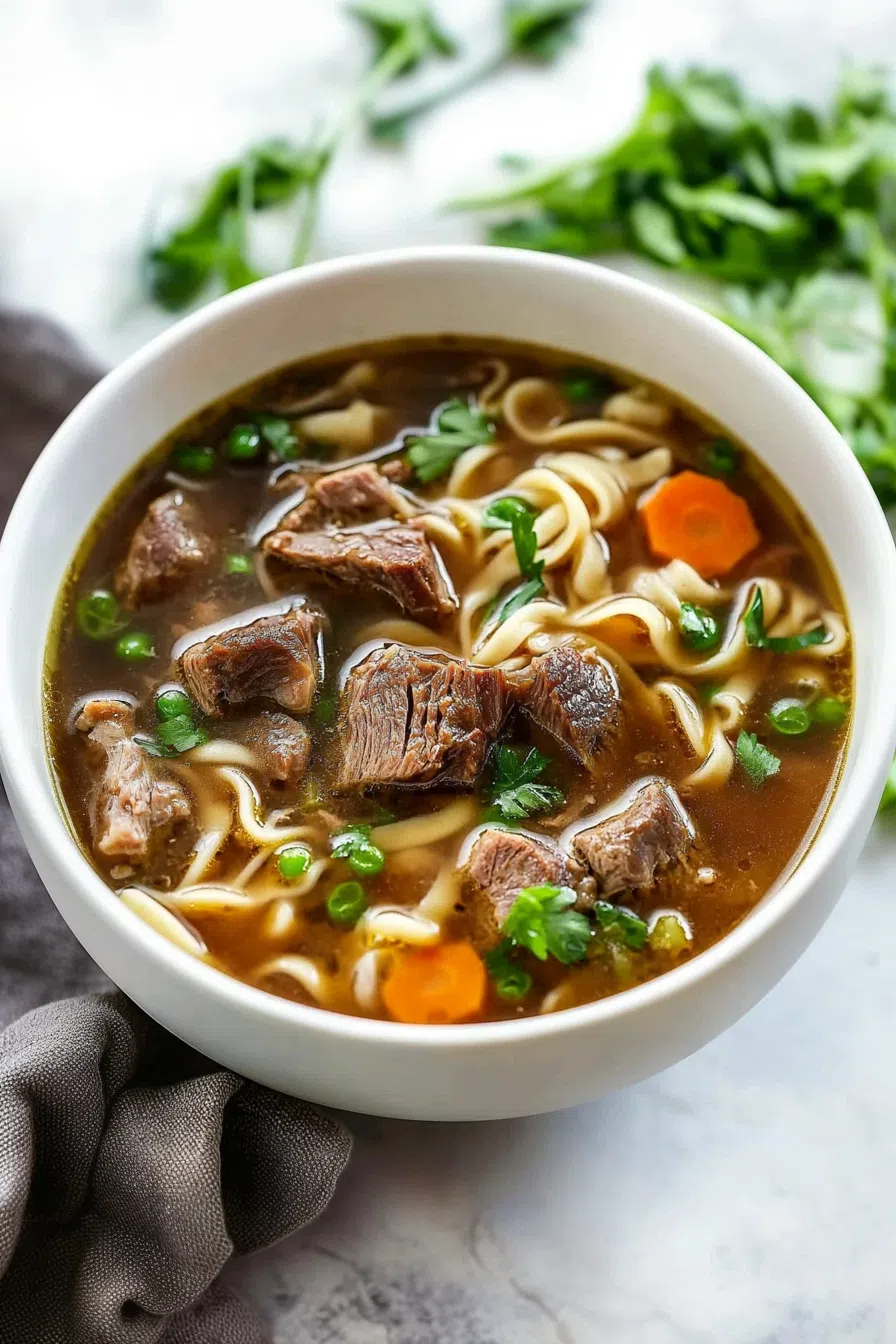
Classic Beef Noodle Soup
A comforting and hearty soup featuring tender beef, fresh noodles, and aromatic vegetables. Perfect for cold days or a cozy meal.
🥘Ingredients
- 1 lb (450g) beef chuck, cut into bite-sized pieces
- 2 tbsp olive oil
- 1 tbsp soy sauce
- 1 tbsp cornstarch
- 1 cup beef broth
- 8 oz (225g) egg noodles or wheat noodles
- 1 tbsp butter
- 1 tbsp vegetable oil
- 1 large onion, diced
- 3 cloves garlic, minced
- 1 carrot, sliced
- 1 celery stalk, sliced
- 1 cup frozen peas
- 1 cup corn kernels (fresh or frozen)
- 1 cup diced tomatoes (canned or fresh)
- 1 tsp dried thyme
- 1 tsp dried rosemary
- 1 bay leaf
- 1 tsp black pepper
- 1 tsp salt (adjust to taste)
👨🍳Directions
-
1
In a large pot, heat olive oil over medium-high heat. Add beef chuck pieces and brown on all sides. Remove beef and set aside. -
2
In the same pot, sauté onion, garlic, carrot, and celery until softened (about 5 mins). Stir in soy sauce, cornstarch, and beef broth. Simmer for 5 minutes. -
3
Return beef to the pot. Add thyme, rosemary, bay leaf, black pepper, and salt. Bring to a boil, then reduce heat to low. Simmer for 20-25 minutes until beef is tender. -
4
In a separate pot, boil water with salt. Cook noodles according to package instructions until al dente. Drain and rinse with cold water to stop cooking. -
5
In a small pan, melt butter and heat vegetable oil. Sauté peas and corn for 2-3 minutes. Add diced tomatoes and simmer for 3 minutes. -
6
In the beef broth, stir in the sautéed vegetables. Return noodles to the pot, ensuring they are submerged in the broth. Cook for another 5 minutes. -
7
Discard the bay leaf. Taste and adjust seasoning if needed. Serve hot with extra broth or garnishes like fresh parsley or green onions.
🔧Equipment
- Large pot
- Medium saucepan
- Wooden spoon
- Knife and cutting board
- Measuring cups and spoons
- Slotted spoon
📊Nutrition Facts (per serving)
📝Notes
- For extra richness, add a splash of beef stock or a dash of Worcestershire sauce.
- Substitute noodles with ramen or udon noodles for a quicker option.
- Ensure beef is fully cooked to avoid foodborne illness.
Watch Video Of How Classic Beef Noodle Soup Works
❓ Frequently Asked Questions About Beef Noodle Soup
What is the key difference between traditional beef noodle soup and regional variations like Sichuan or Cantonese styles?
In traditional Chinese beef noodle soup (like the classic Jianbing-inspired or Beef Noodle Soup from Sichuan), the broth is usually clear and rich, often made with beef marrow, bones, and vegetables. Sichuan-style versions may include chili oil, Sichuan peppercorns, and a spicier, numbing flavor profile, while Cantonese versions might be lighter with less fat and more emphasis on herbs like cilantro or garlic. Regional variations also differ in noodle type—thick wheat noodles in Sichuan vs. thin rice noodles in Cantonese.
Why does the soup sometimes turn cloudy or murky, and how can I avoid it?
Cloudiness in beef noodle soup often comes from fat, collagen, or improperly simmered broth. To avoid it:
– Use beef bones (not just meat) for a clearer broth—simmer them with water, garlic, and ginger for 2–3 hours before adding meat.
– Skim excess fat from the surface during cooking.
– Avoid overcooking the meat, which can break down proteins into a murky mess.
– For a clearer finish, strain the broth through a fine-mesh sieve or cheesecloth before adding noodles.
Can I substitute beef broth for a lighter or more flavorful option?
Yes! While beef broth is traditional, you can enhance flavor with:
– Dashi (Japanese-style): Use kombu (dried kelp) and bonito flakes for umami depth.
– Vegetable broth: Blend it with a splash of beef broth for a less fatty option.
– Homemade stock: Simmer beef bones with onions, carrots, and celery for a richer, less processed taste.
– Spices: Add star anise, cinnamon, or a pinch of MSG to compensate for missing beefy notes.
How do I prevent the noodles from getting mushy or overcooked?
Overcooked noodles happen when they absorb too much liquid or are left in the broth too long. To keep them firm:
– Cook noodles al dente in cold water (boil 2–3 minutes max) and rinse under cold water before adding to the soup.
– Use a noodle pot or pot with a tight lid to trap steam and prevent sogginess.
– Avoid stirring the noodles constantly—they’ll break and absorb broth faster.
– If the soup is too thick, add a splash of water or broth to loosen it before serving.
What are the best cuts of beef to use for the most tender and flavorful soup?
For the most tender and richly flavorful beef noodle soup, use:
1. Beef marrow bones (best for broth—marrow gives the soup a creamy, buttery texture).
2. Short ribs or chuck roast (falls apart easily when braised, adding deep flavor).
3. Beef brisket or flank steak (sliced thinly and braised, retains juiciness).
4. Ground beef (works for quick versions but lacks depth—marinate in soy sauce, garlic, and ginger first).
Avoid: Lean cuts like sirloin or flank steak unless pre-marinated and slow-cooked to tenderize. For broth, always use bones!


