
beef shank recipe

The Best beef shank recipe
I love that beef shank is both a daily meal and a showstopper. It’s hearty enough to fill you up without being too heavy, and the flavors are simple but bold—just salt, pepper, and a little garlic and onion. My family thinks it’s the perfect comfort food, especially on a cold night or around holidays when we want something substantial. The kids love the way the meat gets so tender that they can almost eat it with their hands, and the broth that’s left over is so rich they’ll drink it straight from the pot. I also love how it’s packed with nutrients. Lean beef shank is a great source of protein, iron, and zinc, and the slow cooking process helps retain those nutrients while making the meat so much easier to digest. It’s not just a meal; it’s a way to feed your family well, whether you’re making it for a big family dinner or just a cozy weeknight meal. Plus, the fact that it’s affordable and so versatile makes it a staple in my kitchen.
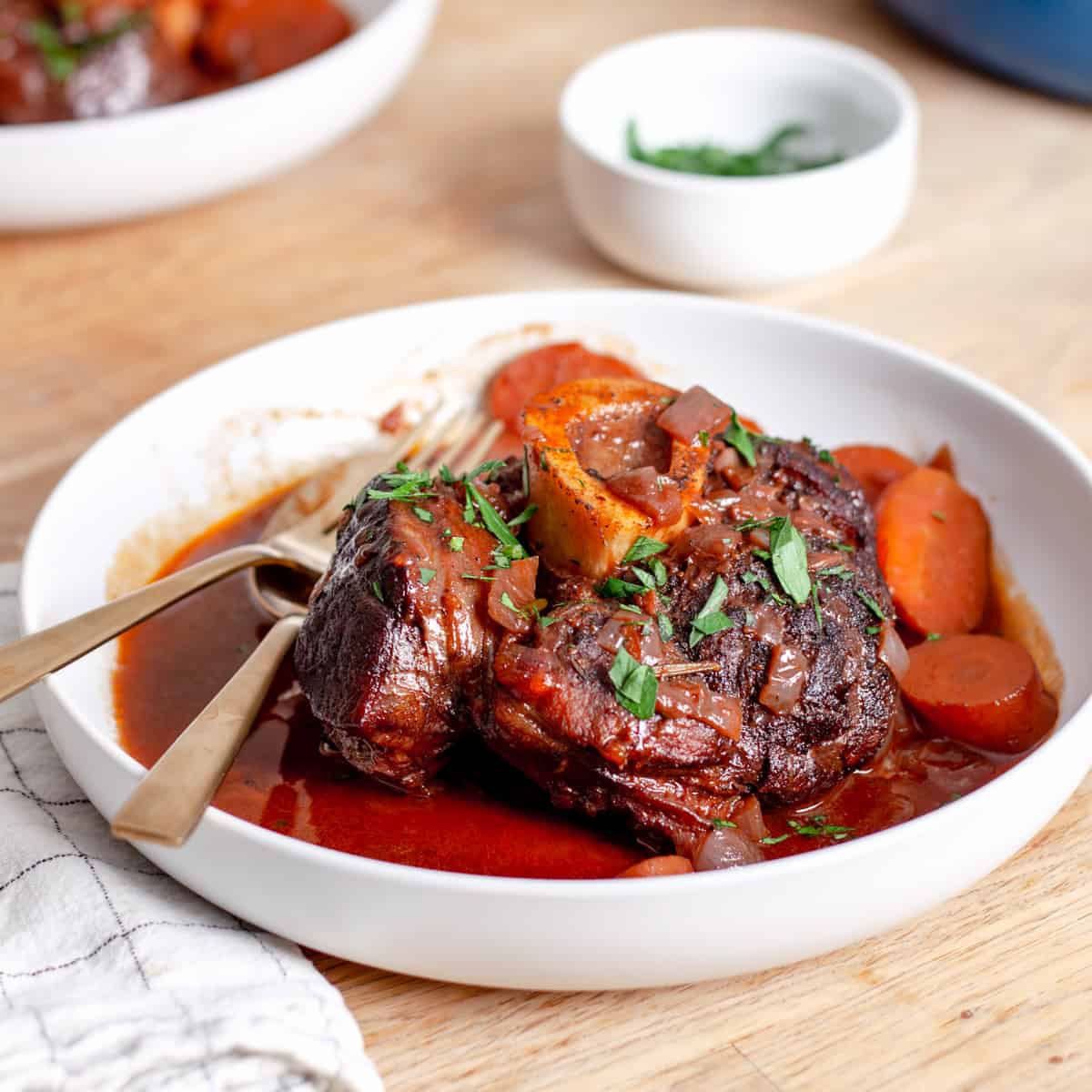
Slow-Cooked Beef Shank with Red Wine Reduction
Tender beef shanks braised in a rich red wine sauce, perfect for a hearty and comforting meal. Ideal for potlucks or family gatherings.
🥘Ingredients
- 4 beef shanks (about 1.5 lbs each)
- 2 tbsp olive oil
- 2 tbsp kosher salt
- 1 tbsp black pepper
- 2 tbsp garlic powder
- 2 tbsp onion powder
- 4 cups beef broth
- 1 bottle (750ml) dry red wine
- 1 large onion, sliced
- 4 carrots, sliced
- 4 celery stalks, sliced
- 4 garlic cloves, minced
- 2 bay leaves
- 1 tsp thyme
- 1 tsp rosemary
- 1 tsp smoked paprika
- 1 cup red wine
- 1 cup beef broth
- 1 tbsp tomato paste
- 1 tsp Dijon mustard
- 1 tsp Worcestershire sauce
- Salt and pepper to taste
👨🍳Directions
-
1
Pat the beef shanks dry and season generously with salt, pepper, garlic powder, and onion powder. -
2
Heat olive oil in a Dutch oven or slow cooker over medium-high heat. Brown the beef shanks on all sides (about 5 minutes per side). Remove and set aside. -
3
In the same pot, add sliced onion, carrots, celery, and garlic. Cook for 5 minutes until softened. -
4
Pour in the beef broth, red wine, bay leaves, thyme, rosemary, and smoked paprika. Return the beef shanks to the pot. Bring to a simmer, then reduce heat to low. -
5
Cover and cook on low for 3 hours, or until the beef is tender and easily shreds with a fork. Remove beef shanks and set aside. -
6
Strain the braising liquid through a fine-mesh sieve, discarding solids. Return the liquid to the pot and reduce it by half on the stove over medium heat. -
7
Add red wine, beef broth, tomato paste, Dijon mustard, and Worcestershire sauce. Simmer for another 10 minutes until the sauce thickens. -
8
Shred the beef shanks and mix them into the sauce. Adjust seasoning with salt and pepper if needed.
🔧Equipment
- Slow cooker or Dutch oven
- Cutting board
- Knife
- Large pot
- Wooden spoon
📊Nutrition Facts (per serving)
📝Notes
Watch Video Of How Slow-Cooked Beef Shank with Red Wine Reduction Works
❓ Frequently Asked Questions About Slow-Cooked Beef Shank with Red Wine Reduction
What is the best way to prepare beef shank for slow cooking?
The best way to prepare beef shank for slow cooking is to first trim off any excess fat and make sure it’s evenly cut into 1- to 2-inch pieces. You can also score the surface lightly with a knife to help tenderize the meat. Before slow cooking, season generously with salt, pepper, and your choice of herbs or spices (like garlic powder, onion powder, or smoked paprika). For extra flavor, you can also marinate the shank in a mixture of beef broth, Worcestershire sauce, soy sauce, and a splash of vinegar for a few hours before cooking.
How long should I cook beef shank in a slow cooker?
For a slow cooker, beef shank typically takes 6–8 hours on low or 4–5 hours on high, depending on the size of the pieces and your desired tenderness. If you’re using a Dutch oven or stovetop method, cook it over low heat for 3–4 hours, then transfer to a 325°F (165°C) oven for another 1–2 hours until fork-tender. Always check the meat’s internal temperature—it should reach 195°F (90°C) for fall-apart tenderness.
What are the best ingredients to pair with beef shank for a flavorful dish?
A great beef shank dish benefits from a rich, aromatic base. Classic pairings include:
– Sauces: Red wine reduction, beef consommé, or a tangy gravy made with beef stock, flour, and butter.
– Vegetables: Potatoes, carrots, onions, and celery (the classic “mirepoix”) for a hearty stew.
– Herbs & Spices: Thyme, rosemary, bay leaves, garlic, and a touch of black pepper or cayenne for depth.
– Acid: A splash of tomato paste, vinegar, or citrus juice (like lemon) to brighten flavors.
– Cheese: Gruyère or sharp cheddar melted into the dish for extra richness.
Can I make beef shank ahead of time and reheat it later?
Yes! You can prepare beef shank in advance, but it’s best to reheat it gently to avoid drying out the meat. Store cooked shank in an airtight container in the fridge for 3–4 days or freeze for up to 3 months. To reheat:
– Slow cooker: Add a splash of beef broth or water, cover, and reheat on low for 1–2 hours.
– Stovetop: Warm in a pot with a little broth, covered, over low heat until steaming.
– Oven: Place in a baking dish with broth, covered, at 300°F (150°C) for 30–45 minutes.
Always check for doneness before serving—it may need a little extra time.
Why does my beef shank turn out tough instead of tender?
Several factors can make beef shank tough, but the most common reasons are:
1. Overcooking – The meat needs time to break down collagen. Use a meat thermometer to ensure it reaches 195°F (90°C) before removing.
2. Cutting against the grain – If you slice against the muscle fibers, the meat will be chewier. Instead, cut across the fibers for tenderness.
3. Not enough moisture – Dry cooking (like grilling or pan-searing) can make shank tough. Slow cooking or braising in liquid keeps it moist.
4. Skipping the braising step – If you’re not searing the shank first, it won’t develop flavor and may cook unevenly.
5. Using the wrong cut – While shank is forgiving, very tough cuts (like the “long shank” from the shoulder) may need extra patience. For extra tenderness, consider using beef short ribs or brisket if you’re struggling.

