
boneless short rib recipe

- The Best boneless short rib recipe
- Caramelized Boneless Short Ribs with Red Wine Reduction
- 🥘Ingredients
- 👨🍳Directions
- 🔧Equipment
- 📊Nutrition Facts (per serving)
- 📝Notes
- Watch Video Of How Caramelized Boneless Short Ribs with Red Wine Reduction Works
- ❓ Frequently Asked Questions About Caramelized Boneless Short Ribs with Red Wine Reduction
The Best boneless short rib recipe
My family adores it because it’s so versatile. We serve it over mashed potatoes with a side of roasted carrots, or we just eat it straight from the pan with crusty bread and a simple green salad. The kids especially love how it’s tender, not tough like some ribs can be, and the sauce sticks to their plates like a good hug. It’s also a great way to use up extra ingredients—those onions, that garlic, the herbs—everything gets used up, and there’s no waste. And honestly? It’s healthier than you’d think. The leaner cuts of short rib (like the top blade or the silverside) are packed with iron and protein, and the slow cooking breaks down the collagen, making it easier to digest. It’s the kind of meal that feels indulgent but isn’t, and that’s why I keep it in my rotation.
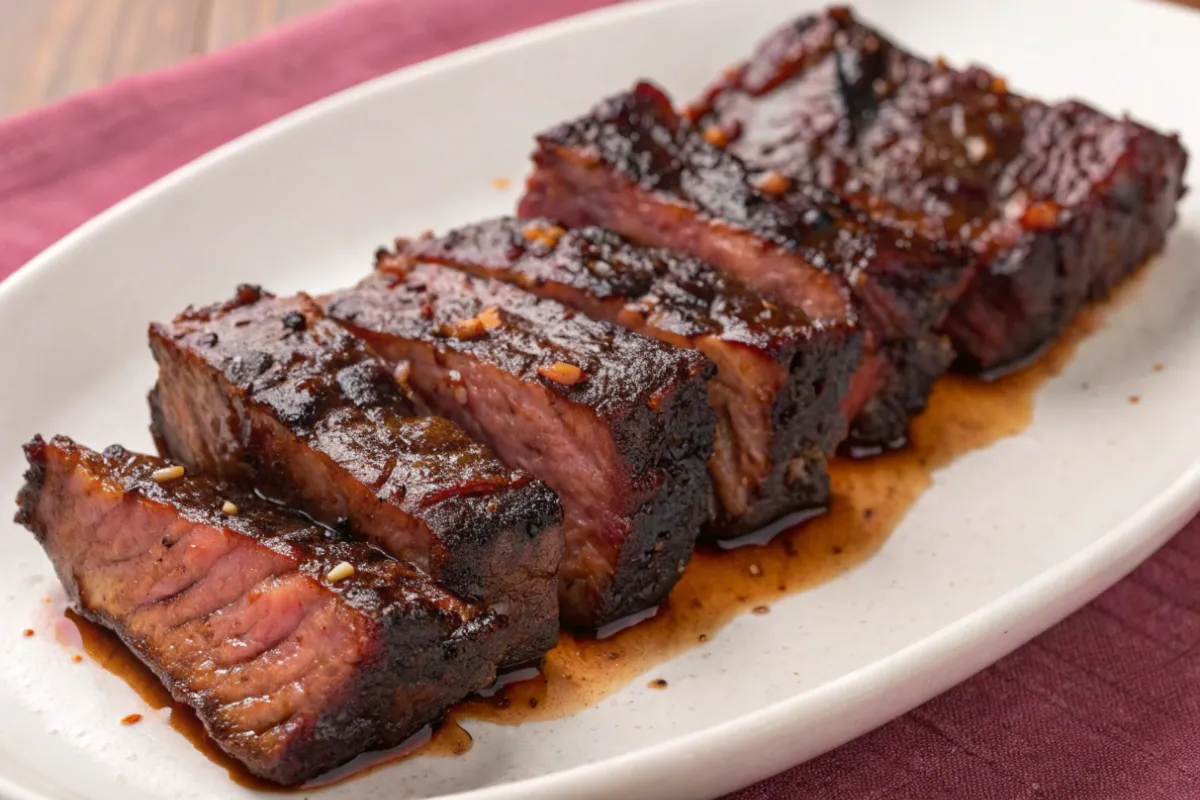
Caramelized Boneless Short Ribs with Red Wine Reduction
Tender boneless short ribs slow-cooked in a rich, savory sauce with garlic, herbs, and a touch of red wine for a restaurant-quality dish. This recipe is a must-try for any occasion.
🥘Ingredients
- 2 lbs boneless short ribs
- 2 tbsp olive oil
- 2 tbsp balsamic vinegar
- 2 cloves garlic, minced
- 1 tbsp fresh rosemary, chopped
- 1 tbsp fresh thyme, chopped
- 1 tsp salt
- 1 tsp black pepper
- 1 cup beef broth
- 1/2 cup red wine
- 1/4 cup beef broth
- 1 tbsp tomato paste
- 1 tbsp butter
- 1 tsp Dijon mustard
- 1/2 tsp smoked paprika
- Salt and pepper to taste
👨🍳Directions
-
1
Preheat oven to 325°F (165°C). In a large Dutch oven, heat olive oil over medium-high heat. Season the short ribs with salt, pepper, garlic, rosemary, and thyme. -
2
Sear the ribs on all sides until browned (about 5 minutes per side). Remove ribs from the pot and set aside. In the same pot, add balsamic vinegar and beef broth, scraping up any browned bits. Simmer for 5 minutes. -
3
Return the ribs to the pot, add the red wine and beef broth mixture, and bring to a simmer. Cover and transfer to the preheated oven. Cook for 1 hour 15 minutes, or until ribs are tender. -
4
Remove ribs from the pot and set aside. In the same pot, reduce the liquid by half by simmering until thickened. Stir in tomato paste, butter, Dijon mustard, and smoked paprika. Season with salt and pepper. -
5
Return the ribs to the sauce, simmer for another 10 minutes to coat them in the sauce. Adjust seasoning if needed.
🔧Equipment
- Large Dutch oven or heavy pot
- Knife and cutting board
- Mixing bowls
- Measuring spoons
- Oven
- Wooden spoon
📊Nutrition Facts (per serving)
📝Notes
- For extra tenderness, let the ribs rest for 10 minutes before serving.
- Substitute red wine with a good-quality vegetable broth if wine is not preferred.
- Serve with mashed potatoes, crusty bread, or a fresh salad.
Watch Video Of How Caramelized Boneless Short Ribs with Red Wine Reduction Works
❓ Frequently Asked Questions About Caramelized Boneless Short Ribs with Red Wine Reduction
What is the best way to prepare boneless short ribs for a tender and flavorful dish?
The best way to prepare boneless short ribs is to first trim off any excess fat and then marinate them in a mixture of olive oil, garlic, soy sauce, Worcestershire sauce, and a touch of brown sugar for at least 4 hours (or overnight). After marinating, sear the ribs in a hot pan or grill until browned, then braise in a flavorful liquid such as beef broth, red wine, or tomato sauce for about 1.5 to 2 hours at a low temperature. Adding a splash of apple cider vinegar or a bay leaf can enhance the tenderness and depth of flavor.
—
How long should I cook boneless short ribs for optimal tenderness?
For optimal tenderness, boneless short ribs should be cooked for about 1.5 to 2.5 hours in a slow cooker or oven at a low temperature (around 275°F/135°C). If using a stovetop method, simmer them uncovered for roughly 1.5 hours, then reduce to a simmer and add more liquid if needed. The ribs are done when they reach an internal temperature of 195–203°F (90–95°C)—they should be fork-tender and easily shred with a fork.
—
What are the key ingredients I should include in the braising liquid for the best flavor?
The best braising liquid for boneless short ribs includes:
– Base liquid: Beef broth, red wine, or a mix of both (for depth and richness).
– Aromatics: Onion, garlic, carrots, celery (a classic Mirepoix), and a bay leaf.
– Acidity: A splash of red wine vinegar, apple cider vinegar, or a splash of balsamic vinegar to brighten flavors.
– Umami boosters: Worcestershire sauce, soy sauce, or a dash of fish sauce.
– Sweetness: Brown sugar, maple syrup, or a touch of honey.
– Herbs: Fresh thyme, rosemary, or parsley (optional but recommended).
– Spices: Black pepper, smoked paprika, or a pinch of cinnamon for warmth.
—
Can I use boneless short ribs in a slow cooker, and if so, what’s the best method?
Yes, boneless short ribs are excellent for slow cooking! Here’s the best method:
1. Prep: Trim excess fat, place ribs in the slow cooker, and add 2 cups of liquid (beef broth, red wine, or a mix).
2. Season: Sprinkle with salt, pepper, garlic powder, and a splash of vinegar or Worcestershire sauce.
3. Cook: Set to LOW for 6–8 hours or HIGH for 4–5 hours (they’ll keep cooking while warming). For extra tenderness, add 1 cup of water or broth halfway through.
4. Finish: Shred the meat and mix with the juices, then adjust seasoning. Serve over rice, mashed potatoes, or in a salad.
—
How do I know when boneless short ribs are fully cooked and tender?
Boneless short ribs are fully cooked and tender when:
– They reach an internal temperature of 195–203°F (90–95°C) on a meat thermometer.
– The meat easily shreds with a fork, separating into delicate strands.
– The bones are slightly flexible but not brittle.
– The braising liquid has reduced slightly, and the ribs are coated in a glossy, flavorful sauce.
If they’re still chewy, let them cook longer (or add more liquid and simmer). Overcooking can dry them out, so patience is key!


