
bread and butter pudding recipe


The Best bread and butter pudding recipe
I started making bread and butter pudding because I had half a loaf going stale and no plan for it. The first version came out of the oven with a crisp top and a soft custard middle, and my kids asked for it again the next night. That settled it. Now it is one of the recipes I keep in rotation because it takes about 15 minutes of actual work and the oven does the rest. You butter slices of bread, layer them with raisins and a little cinnamon, pour a milk and egg custard over the top, and let it bake until the edges pull away from the dish. Nothing about it is fussy.
My family eats this one year round. It shows up on Sunday after church, at Thanksgiving next to the pie, and on random Tuesdays when someone needs something warm after dinner. My youngest picks the raisins out and eats them first. My oldest asks for a spoonful of vanilla ice cream on top while it is still hot, and I usually say yes. It works for a holiday table because you can double it in a bigger dish and it holds up fine if dinner runs late. It works for a normal weeknight because the ingredients are already in the fridge.
I do not call this a health food, but it is not empty either. The custard brings eggs and milk, which means protein and calcium along with the sugar. Raisins add a little iron and fiber, and if you use a whole grain loaf you get more from the bread itself. The whole thing is baked, not fried, and you control how much sugar goes in. I serve it in smaller portions with fruit on the side, and it still feels like a real dessert. That balance is the reason it stays in my recipe box instead of coming out twice a year.
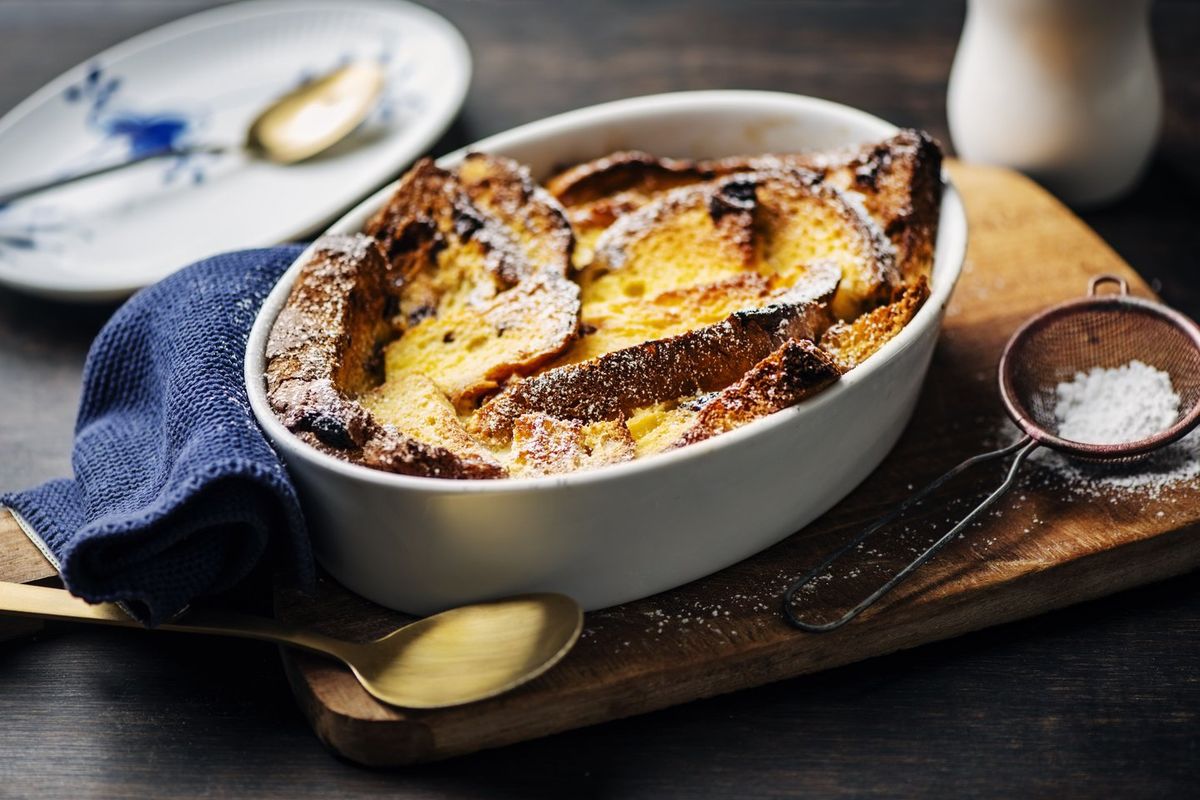
Classic Bread and Butter Pudding
Day-old bread, softened butter, and plump raisins baked in a vanilla-scented custard until the top turns golden and crisp. It is a frugal, comforting dessert that comes together with pantry staples and a short soak before baking.
🥘Ingredients
For the Pudding
For the Topping
👨🍳Directions
🔧Equipment
📊Nutrition Facts (per serving)
📝Notes
Watch Video Of How Classic Bread and Butter Pudding Works
I make this bread and butter pudding whenever I need something everyone at the table will actually eat, and it never lets me down. It feeds a crowd without much fuss, uses ingredients I already have, and works just as well for a holiday dinner as it does for a regular Sunday with the family. If you want a dessert that feels like home and takes very little effort, this is the one I reach for.
❓ Frequently Asked Questions About Bread and Butter Pudding
1. Can I use any type of bread for bread and butter pudding?
Yes, but the results vary. Stale bread works best because dry slices soak up the custard without turning mushy. White sandwich bread, brioche, challah, and panettone all work well. Dense whole-grain loaves absorb less custard, so slice them thinner and give the pudding a little extra soaking time before baking.
2. Do I have to butter the bread, or can I skip it?
Buttering each slice is traditional and adds flavor, richness, and a slightly crisp top layer. You can reduce the amount if you want a lighter pudding, but skipping it entirely changes the texture. A thin, even spread is enough. Softened butter spreads more easily without tearing delicate bread.
3. How do I know when the pudding is fully baked?
The center should be set with a slight wobble when you gently shake the dish, and the top should be golden brown. A knife inserted near the middle should come out mostly clean, with perhaps a little custard clinging to it. If the custard still looks liquid and loose, bake another five to 10 minutes and check again.
4. Can I prepare bread and butter pudding ahead of time?
You can assemble it up to a few hours ahead and keep it covered in the refrigerator, which actually helps the bread absorb the custard. Let the dish sit at room temperature for about 20 minutes before baking so it cooks evenly. Leftovers keep covered in the refrigerator for two to three days and reheat well in a low oven.
5. Can I add raisins, chocolate, or other mix-ins?
Yes, it is a flexible recipe. Raisins, currants, or chopped dried apricots are classic additions, and citrus zest or a pinch of cinnamon works well in the custard. Chocolate chips or a layer of jam also work. Keep additions modest so the custard-to-bread ratio stays balanced, and scatter them between the bread layers rather than on top, where they may burn.


