
buckwheat noodles recipe

- The Best buckwheat noodles recipe
- Classic Buckwheat Noodles with Garlic Butter Sauce
- 🥘Ingredients
- 👨🍳Directions
- 🔧Equipment
- 📊Nutrition Facts (per serving)
- 📝Notes
- Watch Video Of How Classic Buckwheat Noodles with Garlic Butter Sauce Works
- ❓ Frequently Asked Questions About Buckwheat Noodles with Garlic Butter Sauce
The Best buckwheat noodles recipe
What really makes these noodles special is how they work in so many different ways. I use them for quick meals when I’m short on time, like a one-pan stir-fry with chicken, bell peppers, and a simple soy-ginger sauce. They also shine in a heartier dish, like a bowl of pho or a rich miso ramen, where their earthy flavor balances out the richness. And if you’re serving them for a holiday or a get-together, they’re a crowd-pleaser because they’re lighter than regular noodles but still satisfying. My family loves them because they’re easy to customize—add some sesame seeds for crunch, a drizzle of peanut sauce, or just a simple sprinkle of green onions to brighten things up. They’re not just a meal; they’re a way to eat well without overcomplicating things.
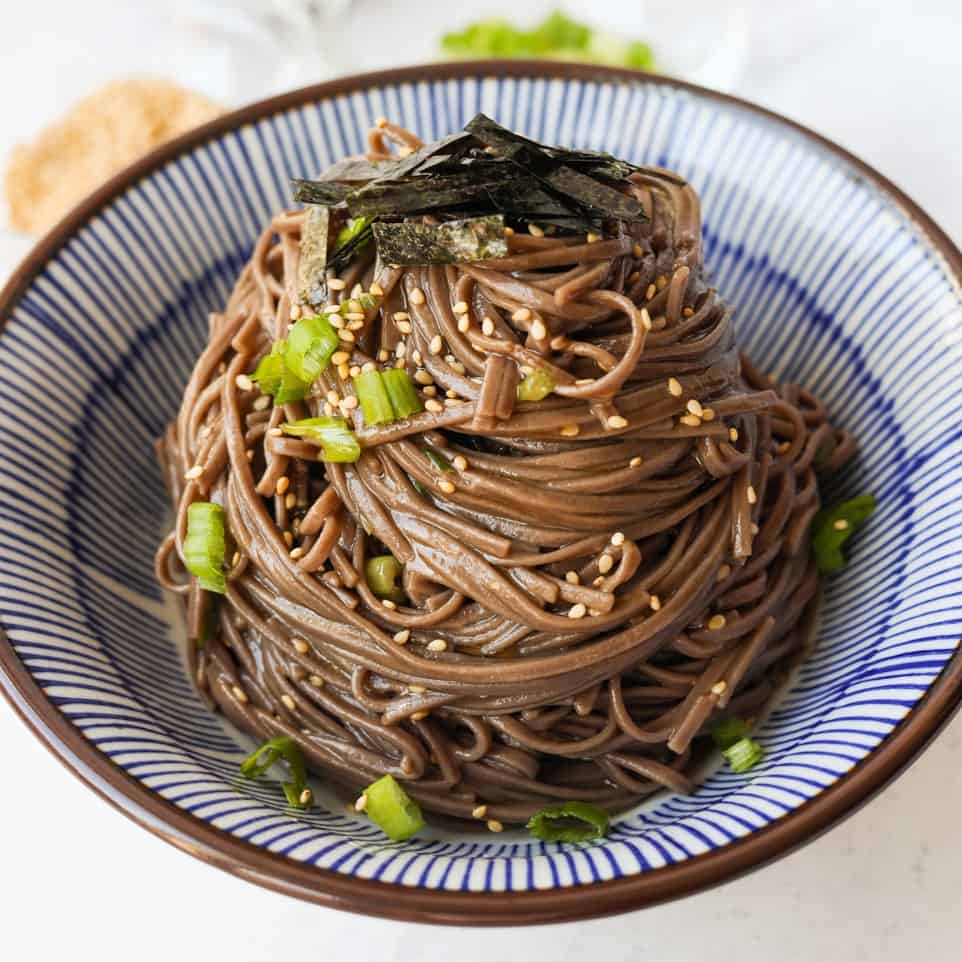
Classic Buckwheat Noodles with Garlic Butter Sauce
A hearty dish featuring nutty buckwheat noodles cooked in a savory garlic butter sauce, perfect for a quick and wholesome meal. This recipe is a must-try for any occasion.
🥘Ingredients
- 2 cups buckwheat flour
- 1 cup all-purpose flour
- 1 tsp salt
- 1 tsp sugar
- 1 large egg
- 1/2 cup warm water
- 2 tbsp unsalted butter
- 4 cloves garlic, minced
- 1/2 cup heavy cream
- 1/2 cup grated Parmesan cheese
- 1 tbsp lemon juice
- Salt and pepper to taste
- 1 cup cooked chicken or shrimp
- 1/2 cup sliced mushrooms
- 1/4 cup chopped fresh parsley
👨🍳Directions
-
1
In a large bowl, combine buckwheat flour, all-purpose flour, salt, sugar, and egg. Gradually add warm water while mixing until a soft dough forms. -
2
Knead the dough for about 5 minutes until smooth and elastic. Cover with a damp towel and let rest for 30 minutes. -
3
Roll the dough thinly on a lightly floured surface, cutting into 1-inch wide strips. -
4
Boil a pot of salted water and cook the noodles for 2-3 minutes until al dente. Drain and set aside. -
5
In a skillet, melt butter over medium heat. Add minced garlic and sauté for 30 seconds until fragrant. Pour in heavy cream and simmer for 2 minutes. Stir in Parmesan, lemon juice, salt, and pepper. -
6
If using, add cooked chicken, mushrooms, or other add-ins to the sauce and heat through. Toss cooked noodles in the sauce until evenly coated. -
7
Optional: For crispy noodles, spread noodles on a baking tray, sprinkle with a little Parmesan, and bake at 375°F (190°C) for 10-12 minutes until golden.
🔧Equipment
- Mixing bowls
- Rolling pin
- Cutting board
- Knife
- Large skillet
- Oven-safe baking tray
📊Nutrition Facts (per serving)
📝Notes
- Tips: For extra flavor, add a pinch of red pepper flakes or fresh herbs like basil or thyme.
- You can substitute buckwheat flour with whole wheat flour if needed.
- Store cooked noodles in an airtight container for up to 5 days or freeze for longer storage.
Watch Video Of How Classic Buckwheat Noodles with Garlic Butter Sauce Works
❓ Frequently Asked Questions About Buckwheat Noodles with Garlic Butter Sauce
1. What is the main difference between buckwheat noodles and regular wheat noodles?
Buckwheat noodles are made from buckwheat flour, which is gluten-free and contains more protein and fiber compared to traditional wheat noodles. They have a distinct nutty flavor and a chewier texture. Regular wheat noodles, on the other hand, are made from wheat flour and have a softer, more delicate texture.
2. Can I substitute regular wheat flour for buckwheat flour in buckwheat noodles?
No, you cannot substitute regular wheat flour for buckwheat flour in buckwheat noodles. Buckwheat noodles are specifically made with buckwheat flour, which gives them their unique taste and texture. Using wheat flour will result in a different and less authentic flavor and consistency.
3. How do I store buckwheat noodles properly to keep them fresh?
Buckwheat noodles should be stored in an airtight container in a cool, dry place. Once opened, they can last for about 1 month. If you want to extend their shelf life, you can freeze them. To freeze, spread them out on a baking sheet to prevent clumping, then transfer them to a freezer bag once they are frozen solid. Frozen buckwheat noodles can last up to 6 months. Always ensure they are completely dry before freezing.
4. What are some common cooking methods for buckwheat noodles?
Buckwheat noodles can be cooked in several ways:
– Boiling: Cook in salted water until al dente, usually around 3-5 minutes.
– Stir-frying: Quickly sauté in a hot pan with oil and other ingredients for a quick meal.
– Steaming: Useful for maintaining their texture and color.
– Baking: They can be baked in a dish with other ingredients for a hearty meal.
5. Why do buckwheat noodles sometimes turn out mushy or undercooked?
Buckwheat noodles can turn mushy if they are overcooked, as they absorb water quickly and can become gummy. To avoid this, check them frequently during cooking and remove them from the boiling water as soon as they reach the desired tenderness. If they seem undercooked, they can usually be finished off in a pan with a little oil or butter to help them cook further. Ensure you use the correct amount of water and maintain consistent boiling to achieve even cooking.

