
cacio e pepe recipe

The Best cacio e pepe recipe
What I love most about cacio e pepe is how it balances rich and light at the same time. The pecorino and Parmesan pack a salty, nutty punch, but the pepper gives it just enough kick to keep things interesting. Plus, it’s made with pantry staples—pasta, cheese, pepper, and a little pasta water—so I can throw it together even when the fridge is looking bare. It’s also a great way to get a little protein and calcium into our meals without relying on heavy sauces or meat. Whether it’s a quick dinner after soccer practice or a cozy meal when we’re all home on a Friday night, this dish never disappoints.
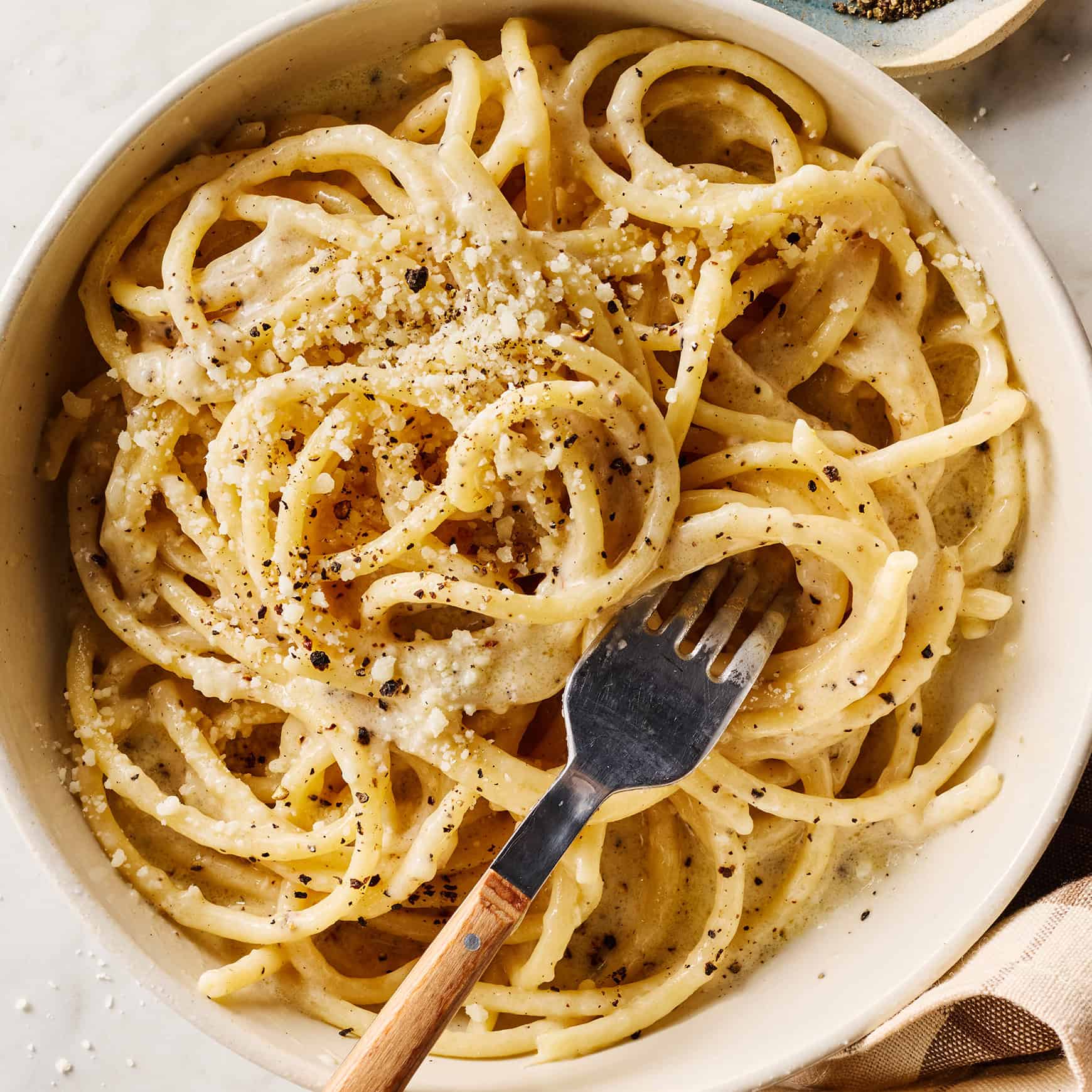
Classic Cacio e Pepe
A simple yet luxurious Roman pasta dish featuring sharp Pecorino Romano cheese and freshly cracked black pepper. This creamy, peppery pasta comes together in minutes with just a few high-quality ingredients.
🥘Ingredients
- 12 oz (340g) spaghetti or tonnarelli pasta
- 1 tbsp kosher salt (for pasta water)
- 1 ½ cups (150g) finely grated Pecorino Romano cheese (plus extra for garnish)
- 1 ½ tsp freshly cracked black pepper (plus extra for garnish)
- ½ cup reserved pasta water (plus more as needed)
- 2 tbsp unsalted butter (optional, for creaminess)
👨🍳Directions
-
1
Bring a large pot of water to a rolling boil. Add 1 tbsp kosher salt and the pasta. Cook according to package instructions until al dente (about 1 minute less than directed). Reserve ½ cup of pasta water before draining the pasta. -
2
While the pasta cooks, toast the black pepper in a large skillet over medium-low heat for 1-2 minutes until fragrant. Add 2 tbsp of the reserved pasta water to the skillet and let it simmer for 30 seconds. -
3
Add the drained pasta to the skillet with the pepper and water. Toss to coat, then reduce heat to low. Add the grated Pecorino Romano in small batches, tossing constantly and adding splashes of pasta water as needed to create a creamy, emulsified sauce (about ¼ cup at a time). -
4
If using, add the butter and toss until fully melted and incorporated. The sauce should cling to the pasta without being dry or soupy. Taste and adjust seasoning with more cheese or pepper if needed. -
5
Serve immediately, garnished with extra grated Pecorino and freshly cracked black pepper. Enjoy with a glass of crisp white wine.
🔧Equipment
- Large pot for pasta
- Colander
- Large skillet or deep sauté pan
- Microplane or fine grater
- Tongs or pasta fork
- Measuring cups and spoons
- Pepper mill
📊Nutrition Facts (per serving)
📝Notes
Watch Video Of How Classic Cacio e Pepe Works
❓ Frequently Asked Questions About Cacio e Pepe
1. What is the secret to making perfect cacio e pepe?
The key to perfect cacio e pepe lies in technique and ingredient quality. Use freshly cracked black pepper for the best flavor, and finely grate high-quality Pecorino Romano cheese (avoid pre-shredded cheese, as it contains anti-caking agents that prevent melting). Cook the pasta in well-salted water until al dente, and reserve some pasta water to help emulsify the sauce. The sauce should be creamy, not clumpy—add pasta water gradually while tossing the pasta off the heat to prevent the cheese from seizing.
2. Why does my cacio e pepe turn out grainy or clumpy?
Grainy or clumpy sauce usually happens when the cheese is added too quickly or the heat is too high. To fix this, remove the pan from direct heat before adding the cheese, and temper it by mixing in a little pasta water first to create a smooth base. Gradually incorporate the grated cheese while stirring constantly, adding more pasta water as needed to maintain a silky texture. Overheating can cause the cheese to separate, so keep the heat low and work efficiently.
3. Can I use Parmesan instead of Pecorino Romano?
While Pecorino Romano is traditional for cacio e pepe (it’s saltier and tangier), you can substitute Parmesan for a milder flavor. However, Parmesan has a lower fat content, so the sauce may not be as creamy. To compensate, use a mix of Parmesan and Pecorino, or add a small pat of butter to help emulsify the sauce. Keep in mind that the dish will taste different—less sharp and more nutty.
4. Do I need to toast the black pepper before adding it to the pasta?
Toasting the black pepper enhances its aroma and depth of flavor, but it’s not strictly necessary. If you choose to toast it, heat the peppercorns in a dry pan over medium-low heat for about 1–2 minutes until fragrant, then crush or grind them. This step adds a nutty, slightly smoky note to the dish. If you skip toasting, the pepper will still provide heat and flavor, just in a more straightforward way.
5. What type of pasta works best for cacio e pepe?
The best pasta shapes for cacio e pepe are long, thin varieties like spaghetti, tonnarelli, or bucatini. These shapes hold the creamy sauce well and allow the pepper and cheese to cling evenly. Avoid short or ridged pasta, as they don’t coat as smoothly. If using spaghetti, break it in half before cooking to make tossing with the sauce easier. The pasta should be cooked al dente to stand up to the rich sauce.

