
canned salmon burger recipe

The Best canned salmon burger recipe
I love this canned salmon burger recipe because it’s the kind of meal that feels like a treat without the fuss. It’s hearty enough to hold up against all the kid-friendly sides—like crispy roasted sweet potatoes or a simple fresh salad—but it’s also light enough to balance out heavier dishes if you’re serving it alongside something richer. Plus, it’s easy to double the batch and freeze half for another day, so you’re not stuck with leftovers that end up in the fridge for weeks. My family’s favorite part? The way it turns out juicy and flavorful every time, with just a few simple steps. It’s the kind of recipe that feels like a no-brainer, but it’s always a hit when we make it.
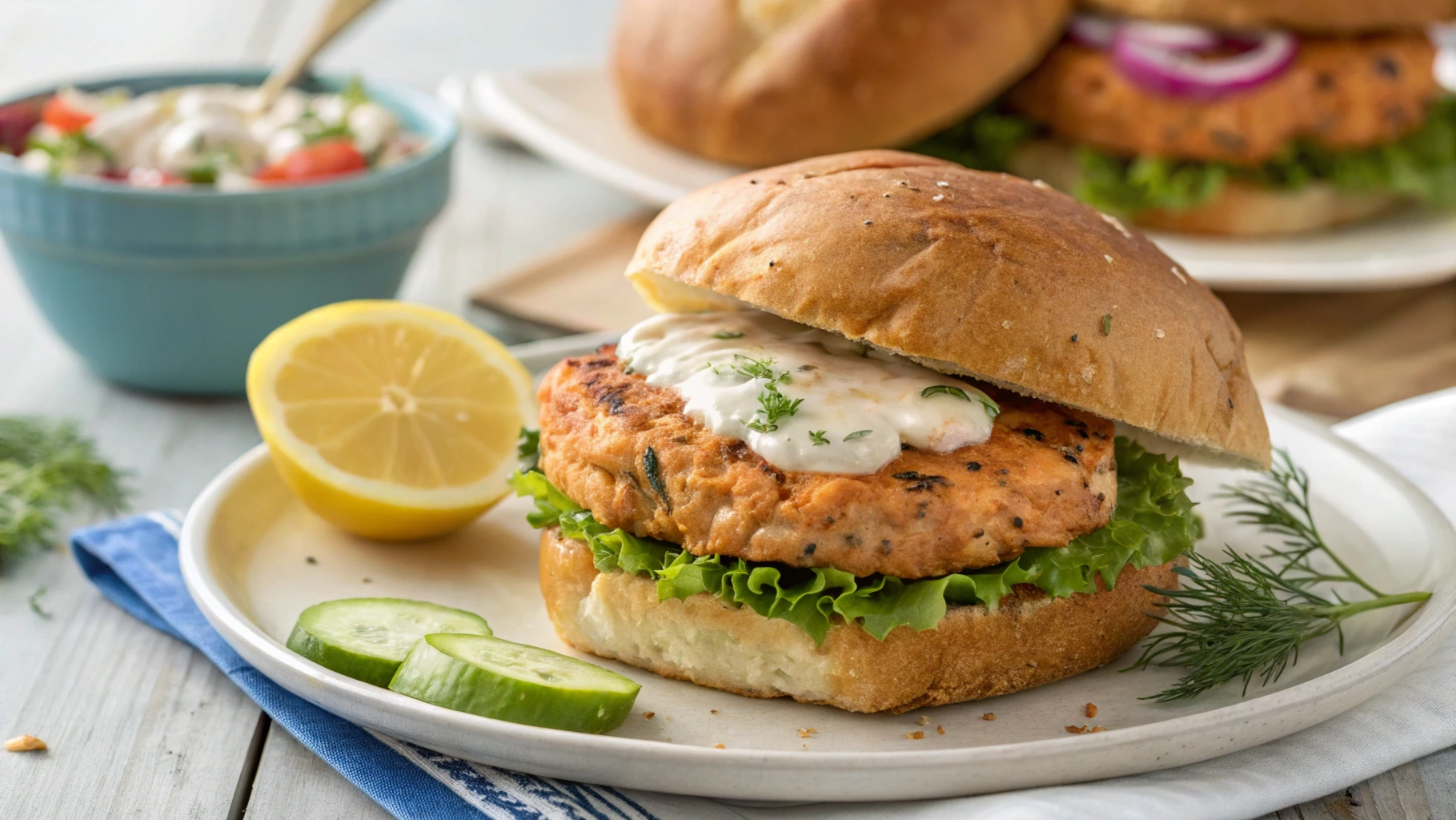
Canned Salmon Burger with Fresh Herbs
A simple, flavorful burger made with canned salmon, fresh herbs, and a light tomato sauce. Perfect for a quick weeknight meal.
🥘Ingredients
- 1 (5 oz) can salmon, drained
- 1 egg
- 1 tbsp fresh dill, chopped
- 1 tbsp fresh parsley, chopped
- 1 tsp lemon juice
- ½ tsp garlic powder
- ½ tsp salt
- ¼ tsp black pepper
- 1 cup all-purpose flour
- 1 tsp baking powder
- ½ tsp salt
- ½ cup cold water
- ½ cup mayonnaise
- 1 tbsp lemon juice
- 1 tsp Dijon mustard
- 1 tsp fresh dill, chopped
👨🍳Directions
-
1
Preheat oven to 400°F (200°C). Line a baking sheet with parchment paper. -
2
In a bowl, mix drained salmon with egg, dill, parsley, lemon juice, garlic powder, salt, and pepper until well combined. -
3
In another bowl, combine flour, baking powder, and salt. Gradually add cold water to form a soft dough. Knead lightly and let rest for 5 minutes. -
4
Roll the dough into 4 equal patties, about ½-inch thick. Place on the prepared baking sheet. -
5
Preheat a skillet over medium heat. Cook patties for 3–4 minutes per side until golden brown and cooked through. -
6
While patties cook, mix mayo, lemon juice, Dijon mustard, and dill for the sauce. -
7
Serve patties on buns with the homemade sauce and fresh herbs.
🔧Equipment
- Mixing bowls
- Baking sheet
- Measuring spoons
- Burger press or hands
📊Nutrition Facts (per serving)
📝Notes
Watch Video Of How Canned Salmon Burger with Fresh Herbs Works
❓ Frequently Asked Questions About Canned Salmon Burger with Fresh Herbs
1. How do I choose the right canned salmon for this burger?
Use high-quality canned salmon packed in water or light olive oil. Look for a firm texture and avoid any that have an off smell or slimy appearance. If possible, opt for brands that specify a net weight of at least 4 ounces per can to ensure you have enough protein for the burger.
2. Can I substitute fresh salmon for canned salmon in this recipe?
Yes, you can use fresh salmon, but it requires a different approach. Pat the salmon fillets dry, season with salt and pepper, and cook them in a pan with a bit of oil over medium heat until they reach an internal temperature of 145°F (63°C). Let them cool before using them in the burger patties. Fresh salmon may also need extra binding if you’re not using breadcrumbs.
3. How long should I cook the salmon patties?
Cook the salmon patties on a lightly oiled skillet over medium heat for about 4 to 5 minutes per side, or until they’re golden brown and the internal temperature reaches 160°F (71°C). Press gently with a spatula to ensure they cook evenly. If the pan isn’t hot enough, the patties may not set properly.
4. What if my canned salmon is too soft or mushy?
If the salmon feels too soft, it may be overcooked or of poor quality. To fix this, drain it well and pat it dry with a paper towel before using. You can also blend it briefly with a fork or food processor to break it down further, then mix in a little breadcrumbs or crushed crackers to help bind the patties better. Avoid over-processing to keep the texture tender.
5. Can I make these salmon burgers ahead of time and reheat them?
Yes, you can assemble the patties and store them in the fridge for up to 24 hours. Reheat them gently in a skillet over low heat with a little oil, pressing down slightly to help them hold their shape. If you’re serving them cold, they’ll still taste great, but the texture might be slightly less firm.


