
citrus vinaigrette recipe

The Best citrus vinaigrette recipe
I love how this recipe works for so many things—salads, grain bowls, grilled chicken, even roasted veggies. It’s versatile enough to be a staple in my kitchen but also feels special when you’re hosting a little get-together. And the best part? It’s packed with healthy stuff—vitamins from the citrus, fiber from the herbs, and just enough fat to keep things satisfying without being greasy. My husband swears by it too, and the kids always ask for seconds when they try it. It’s that kind of recipe that feels effortless but makes a real difference in how your food tastes. Plus, it’s got that bright, refreshing quality that makes you feel good about eating clean without feeling deprived.
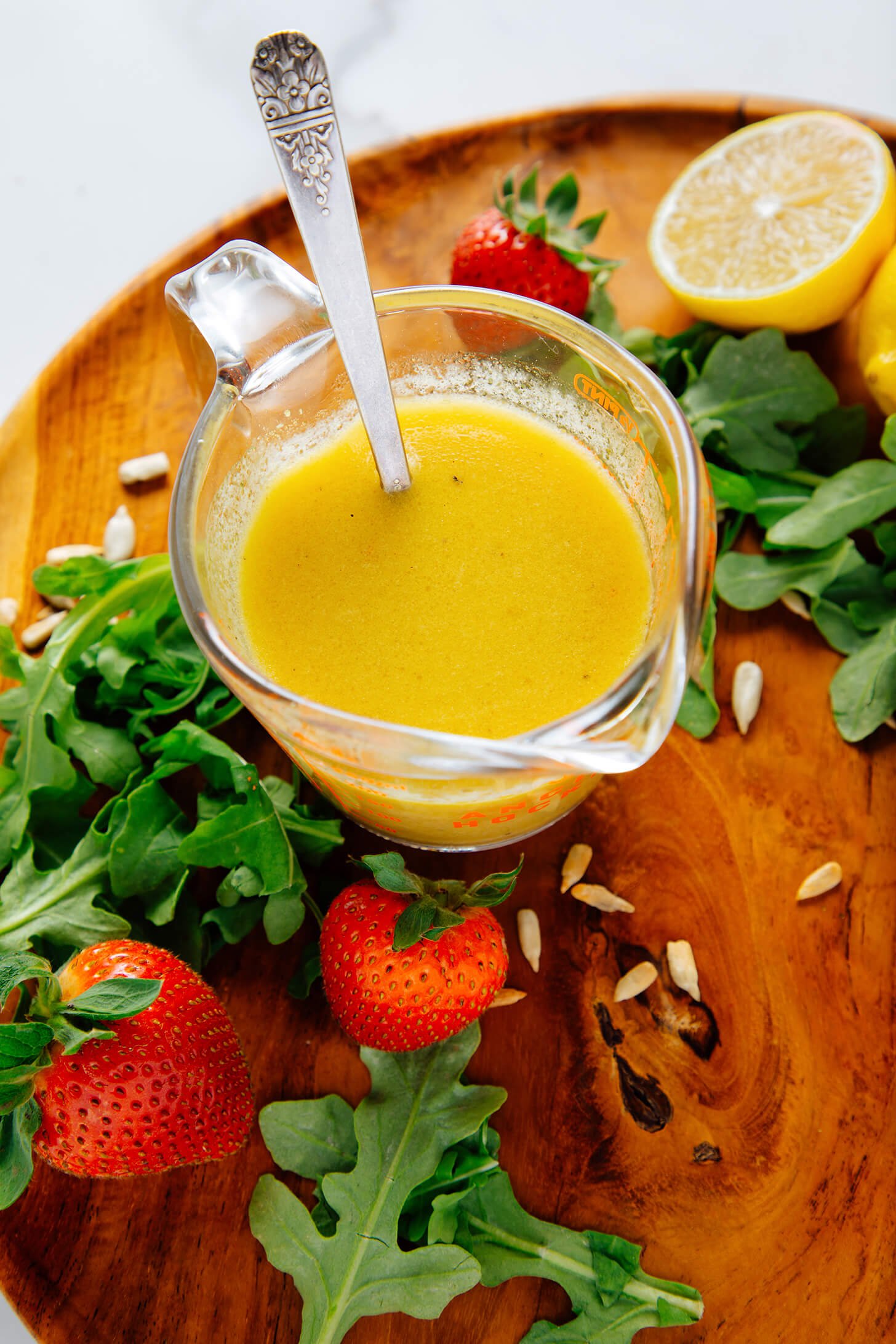
Citrus Vinaigrette Dressing
A bright and tangy dressing perfect for salads, grilled vegetables, or as a marinade for proteins. The zesty blend of citrus juices and vinegar adds a refreshing twist to any dish.
🥘Ingredients
- 3 tablespoons extra-virgin olive oil
- 2 tablespoons red wine vinegar
- 1 tablespoon lemon juice
- 1 tablespoon orange juice
- 1 small shallot, finely minced
- 1 teaspoon Dijon mustard
- 1 teaspoon honey or maple syrup
- ½ teaspoon salt
- ¼ teaspoon black pepper
- 1 teaspoon fresh thyme leaves (optional)
👨🍳Directions
-
1
In a mixing bowl, combine olive oil, red wine vinegar, lemon juice, orange juice, shallot, Dijon mustard, honey/maple syrup, salt, and black pepper. -
2
Whisk everything together until all ingredients are well combined and the dressing is smooth. -
3
For a smoother texture, strain the dressing through a fine-mesh sieve if desired. Store in an airtight container in the refrigerator for up to 1 week.
🔧Equipment
- Mixing bowl
- Whisk
- Fine-mesh strainer (optional)
📊Nutrition Facts (per serving)
📝Notes
Tips
- Adjust the sweetness by adding more honey or reducing the vinegar slightly.
- For a deeper flavor, add a pinch of smoked paprika or a splash of balsamic vinegar.
- Use this dressing on mixed greens, grilled chicken, roasted vegetables, or over a simple grain salad.
Watch Video Of How Citrus Vinaigrette Dressing Works
❓ Frequently Asked Questions About Citrus Vinaigrette Dressing
What is the primary purpose of using citrus in a vinaigrette?
Citrus in a vinaigrette serves multiple purposes: it adds a bright, refreshing acidity that balances rich or heavy flavors in dressings, enhances the natural sweetness of the vinegar, and introduces a zesty, aromatic profile that can elevate the taste of salads, grains, or even roasted vegetables.
Can I substitute lemon juice for lime juice in this recipe?
Yes, you can substitute lemon juice for lime juice, but the flavor profile will differ slightly. Lemon juice will provide a more pronounced citrus tang with a slightly less floral and more acidic taste, while lime juice adds a brighter, more tropical note. If you prefer a milder acidity, lemon works well; if you want a sharper, more complex flavor, lime is ideal.
How should I adjust the ratio of oil to vinegar if I prefer a thicker or thinner dressing?
For a thicker dressing, reduce the vinegar slightly (e.g., use 3 parts oil to 1 part vinegar instead of 4:1) and add more citrus juice for brightness. For a thinner dressing, increase the vinegar (e.g., 3:2 ratio) and ensure the citrus is well incorporated. Taste as you go—adjust gradually to reach your desired consistency.
Why is it important to whisk the dressing thoroughly?
Whisking thoroughly ensures the oil and vinegar emulsify properly, preventing a separation that can make the dressing grainy or watery over time. Citrus vinaigrettes rely on emulsification to create a smooth, stable dressing. A quick whisk at the start and a final mix before serving help maintain texture and flavor consistency.
Can I make this dressing ahead of time, and if so, how should I store it?
Yes, you can prepare citrus vinaigrette in advance, but it’s best consumed within 3–4 days for best flavor. Store it in an airtight container in the refrigerator. Shake or stir well before use to re-emulsify, as the dressing may separate slightly upon cooling. Avoid freezing, as it can alter the texture.
