
daikon vegetable recipe

- The Best daikon vegetable recipe
- Crispy Roasted Daikon and Carrot Stir-Fry with Peanut Sauce
- 🥘Ingredients
- 👨🍳Directions
- 🔧Equipment
- 📊Nutrition Facts (per serving)
- 📝Notes
- Watch Video Of How Crispy Roasted Daikon and Carrot Stir-Fry with Peanut Sauce Works
- ❓ Frequently Asked Questions About Crispy Roasted Daikon and Carrot Stir-Fry with Peanut Sauce
The Best daikon vegetable recipe
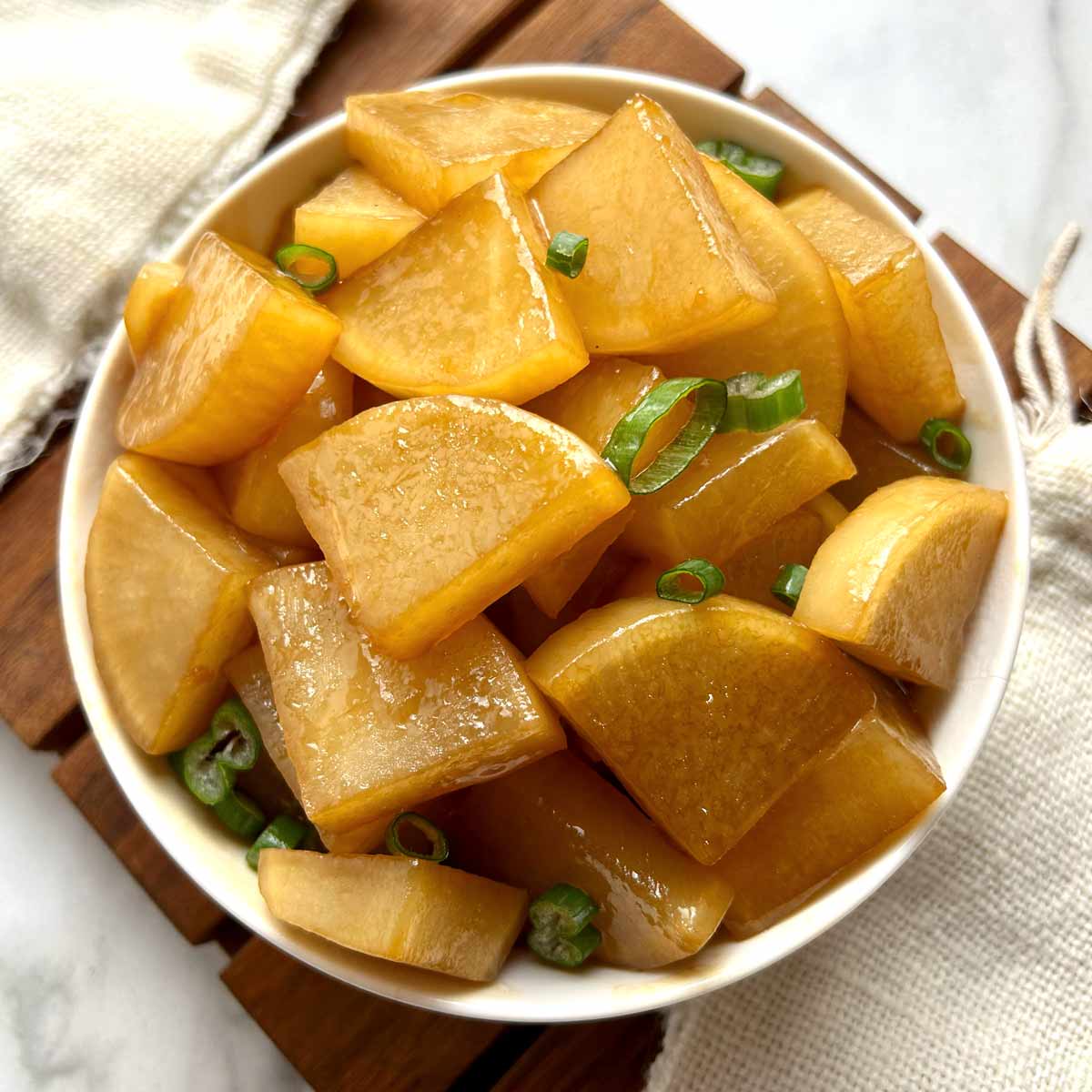
Crispy Roasted Daikon and Carrot Stir-Fry with Peanut Sauce
A light yet flavorful dish featuring crispy roasted daikon and carrot strips paired with a creamy peanut sauce. Perfect for a healthy meal!
🥘Ingredients
- 1 medium daikon radish, julienned (~2 cups)
- 1 large carrot, julienned (~1.5 cups)
- 2 tbsp olive oil
- 1 tsp salt
- ½ tsp black pepper
- 1 tsp dried ginger
- 3 tbsp natural peanut butter
- 2 tbsp soy sauce
- 1 tbsp honey or maple syrup
- 1 tbsp rice vinegar
- 1 clove garlic, minced
- 1 tsp sriracha (optional)
- 1 tbsp sesame oil
- 1 tbsp chopped cilantro
👨🍳Directions
-
1
Preheat oven to 400°F (200°C). Line a baking sheet with parchment paper. -
2
Toss julienned daikon and carrot with 1 tbsp olive oil, salt, black pepper, and dried ginger. Spread evenly on the baking sheet. -
3
Roast for 20-25 minutes until crispy and golden. Let cool slightly. -
4
In a small saucepan, heat sesame oil and sauté garlic for 30 seconds. Remove from heat. -
5
Whisk in peanut butter, soy sauce, honey, rice vinegar, and sriracha. Stir until smooth. -
6
Combine roasted vegetables with peanut sauce. Garnish with cilantro.
🔧Equipment
- Cutting board
- Sharp knife
- Mixing bowl
- Baking sheet
- Oven
- Small saucepan
- Whisk
📊Nutrition Facts (per serving)
📝Notes
Tips
- For extra crunch, bake at higher heat (425°F/220°C) for 15 minutes before reducing to 400°F.
- Substitute sesame oil with coconut oil if preferred.
- Add shredded cabbage or snap peas for extra veggies.
Variations
- Use tofu or chickpeas for a protein boost.
- Swap peanut butter for almond butter or cashew butter.
Watch Video Of How Crispy Roasted Daikon and Carrot Stir-Fry with Peanut Sauce Works
❓ Frequently Asked Questions About Crispy Roasted Daikon and Carrot Stir-Fry with Peanut Sauce
What is daikon radish and how is it different from regular radishes?
Daikon radish is a large, white, long-rooted vegetable belonging to the Brassicaceae family, similar to turnips but with a milder flavor. Unlike regular radishes, which are typically smaller, red, and spicier, daikon has a crisp, refreshing taste with a slight sweetness and a mild peppery kick. It’s often used in Asian cuisines for its versatility in soups, stir-fries, and salads.
How can I prepare daikon radish for cooking?
To prepare daikon radish, first peel the skin (if desired) using a vegetable peeler or knife. Cut it into desired shapes—such as julienned strips, cubes, or thin slices—depending on the recipe. For pickling, thinly slice it and soak in a vinegar-based brine. If using in soups or stews, you can chop it into chunks or grate it for a smooth texture.
What are the best ways to cook daikon radish, and are there traditional Asian dishes that feature it prominently?
Daikon is incredibly versatile and can be cooked in various ways, including:
– Steaming or boiling (for soups like daikon radish soup or miso soup).
– Stir-frying (with garlic, ginger, and soy sauce for a quick side dish).
– Raw in salads (thinly sliced with sesame dressing or in kimchi).
– Pickled (as a tangy condiment).
Traditional dishes include daikon radish salad (Japanese-style with sesame and vinegar), kimchi (Korean fermented veggie mix), and bokkeumbap (Korean fried rice with daikon).
Can daikon radish be used in place of other vegetables like carrots or potatoes in recipes?
Yes, daikon can substitute for some vegetables in certain dishes, but its texture and flavor differ:
– In soups/stews – It works well as a substitute for carrots or turnips but may require softer cooking to avoid a fibrous texture.
– In salads – It holds its shape better than carrots but lacks the sweetness of potatoes.
– In pickling – It’s a great alternative to cucumbers or radishes for a crisp, tangy bite.
However, for dishes where sweetness or starchiness is key (like mashed potatoes), daikon may not be ideal.
How should I store daikon radish to keep it fresh for longer?
To extend freshness:
– Refrigerate whole in a breathable bag or wrapped loosely in a damp towel to prevent drying.
– Remove from the root end to prevent spoilage.
– Avoid washing until ready to use to prevent moisture loss.
– Freeze in water (blanched for 2 minutes) if you won’t use it within a few days.
Daikon keeps well for 2–3 weeks in the fridge but can last longer if stored properly.
