
din tai fung cucumber recipe

- The Best din tai fung cucumber recipe
- Din Tai Fung Cucumber Rolls (Cucumber Rolls)
- 🥘Ingredients
- 👨🍳Directions
- 🔧Equipment
- 📊Nutrition Facts (per serving)
- 📝Notes
- Watch Video Of How Din Tai Fung Cucumber Rolls (Cucumber Rolls) Works
- ❓ Frequently Asked Questions About Din Tai Fung Cucumber Rolls (Cucumber Rolls)
The Best din tai fung cucumber recipe
What I love most about this recipe is how it’s packed with health benefits without feeling like a chore. Cucumbers are hydrating, rich in fiber, and full of vitamins that keep things running smoothly. The dressing is light on oil but still flavorful, thanks to the vinegar and a touch of sugar that makes it taste good without the guilt. My kids don’t even realize how good it is for them—it’s just something they think is fun to eat, which is the best kind of nutrition. And because it’s so adaptable, I can tweak it to suit what’s on hand. Need something sweeter? A little honey. Want it spicier? A pinch of chili. It’s that kind of dish that feels special on special occasions—like when we’re having a small get-together or just want to treat ourselves to something a little different—but it’s also so simple it’s great for everyday eating. My husband says it’s his go-to after a long day, and honestly, I think it’s because it’s the kind of dish that doesn’t demand much from you, but gives you a lot in return.
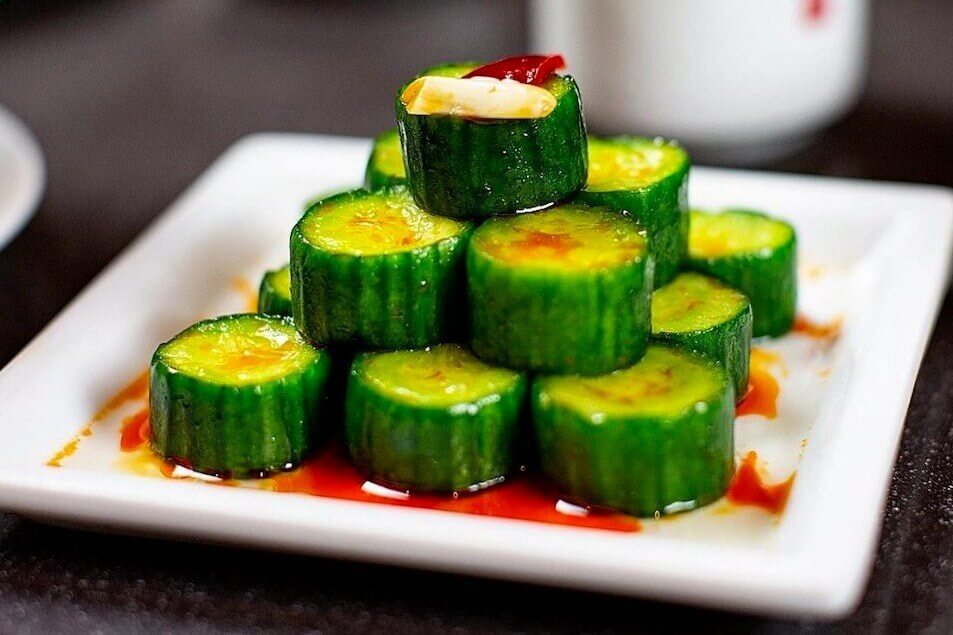
Din Tai Fung Cucumber Rolls (Cucumber Rolls)
A refreshing and crispy Asian-inspired dish featuring thinly sliced cucumbers rolled in a light, savory rice paper wrapper with a tangy sauce. Perfect for a light meal or appetizer.
🥘Ingredients
- 1 large English cucumber, thinly sliced
- 4 rice paper wrappers
- 1 tbsp rice vinegar
- 1 tsp sugar
- 1 clove garlic, minced
- 1 tsp fresh ginger, grated
- 1 tsp sesame oil
- 1 tsp soy sauce
- 1 tsp chili crisp (optional)
- 1 tbsp chopped cilantro
- 1 tbsp peanut butter
- 1 tbsp soy sauce
- 1 tsp rice vinegar
- 1 tsp honey or sugar
- 1 clove garlic, minced
- ½ tsp sriracha (optional)
- ½ tsp sesame oil
👨🍳Directions
-
1
Prepare the cucumber slices: Peel the cucumber and slice it into thin rounds (about 1/8-inch thick). Soak the slices in cold water for 5 minutes to remove excess bitterness, then drain and pat dry. -
2
Prepare the sauce: In a small saucepan, heat peanut butter, soy sauce, rice vinegar, honey/sugar, garlic, and sesame oil over low heat until smooth and slightly warmed. Remove from heat and let cool slightly. -
3
Assemble the cucumber rolls: Place one rice paper wrapper in a bowl of warm water until pliable (about 10 seconds). Remove and lay flat. Add 2-3 cucumber slices in the center, then gently fold the sides inward to form a half-moon shape. Roll tightly from the bottom up, sealing edges with a little water if needed. -
4
Dip and serve: Arrange cucumber rolls on a plate. Drizzle with the peanut sauce and sprinkle with chopped cilantro and chili crisp. Serve immediately with extra sauce for dipping.
🔧Equipment
- Cutting board
- Sharp knife
- Bowl for dipping
- Small saucepan
- Mixing spoon
- Plastic wrap (optional, for rolling)
📊Nutrition Facts (per serving)
📝Notes
Tips
- For extra crispiness, let cucumber slices sit in the fridge for 30 minutes before rolling.
- Adjust sauce sweetness by adding more honey or sugar if desired.
- Use a bamboo rolling mat if available for easier rolling.
- Substitute cucumber with zucchini or bell pepper slices for variety.
Storage: {“shortTerm”:”Store in an airtight container in the fridge for up to 2 days. Reheat gently in warm water before serving.”,”longTerm”:”Not recommended due to texture changes, but can be stored in the freezer for up to 1 month. Thaw and reheat as needed.”}
Watch Video Of How Din Tai Fung Cucumber Rolls (Cucumber Rolls) Works
❓ Frequently Asked Questions About Din Tai Fung Cucumber Rolls (Cucumber Rolls)
What is the key difference between Din Tai Fung’s cucumber recipe and other versions I’ve tried?
Din Tai Fung’s cucumber recipe is distinct because it uses a lightly sweet, umami-rich broth infused with fermented ingredients like fermented black beans and shiitake mushrooms, along with a fresh, crisp texture achieved by soaking cucumbers in a sugar syrup. Unlike simpler versions with just salt and vinegar, this method balances tangy, nutty, and slightly sweet flavors while maintaining a delicate crunch.
—
Why does the recipe call for fermented black beans, and how do they contribute to the dish?
Fermented black beans (also called douchi) add a deep, savory depth and a slightly salty, earthy richness that elevates the dish. They also enhance the fermentation profile, giving the cucumbers a complex, almost “umami” complexity similar to miso or soy sauce. Without them, the cucumbers might lack that signature Din Tai Fung bite.
—
Can I substitute the fermented black beans if I don’t have any on hand?
Yes, but the flavor will differ. You could use:
– Miso paste (white or red) – Mix 1 tbsp with 1 tbsp warm water to mimic the fermented depth.
– Soy sauce + a pinch of sugar – For a milder, saltier alternative.
– A splash of fermented soy sauce (like tamari or dashi) – Adds a similar fermented tang.
However, the authentic taste won’t be as rich, so if possible, use fermented black beans for the best result.
—
How long should I soak the cucumbers in the sugar syrup, and what happens if I over-soak them?
Soak the cucumbers in the sugar syrup for about 10–15 minutes (room temperature). If you over-soak (e.g., 30+ minutes), the cucumbers may become too soft, mushy, or develop a slightly sweet, watery texture. The goal is a firm, slightly translucent crunch—not a limp, over-sweetened result. For extra crispness, rinse briefly after soaking.
—
Is the recipe gluten-free, and how can I ensure no hidden gluten is present?
Yes, the basic sugar syrup, soy sauce, and fermented ingredients are gluten-free if using certified gluten-free soy sauce (like tamari). However, check:
– Fermented black beans (ensure they’re labeled gluten-free).
– Shiitake mushrooms (if dried, verify they’re not processed with gluten).
– Broth (Din Tai Fung’s original recipe traditionally uses a gluten-free broth, but if adapting, avoid soy-based broths unless gluten-free).
For extra safety, use a dedicated gluten-free kitchen if cross-contamination is a concern.
