
easy kimchi recipe

The Best easy kimchi recipe
What I love most about this recipe is how easy it is to make, yet it feels special enough for big occasions. Whether it’s a holiday dinner, a family gathering, or just a lazy Sunday where we’re all stuffed after a big meal, kimchi is always a hit. My kids think it’s the best part of any meal—no arguments there. And honestly, it’s so versatile. You can eat it plain with rice, mix it into soups, or even use it as a topping for burgers or eggs. The health benefits are another reason I’m obsessed. It’s packed with probiotics, which help your gut stay happy, and it’s full of vitamins that keep you feeling your best. Plus, it’s a great way to sneak some veggies into meals without anyone even noticing. My kids don’t even realize they’re eating their greens when they’re munching on that crunchy, flavorful goodness. It’s that kind of recipe that makes you feel good inside and out.
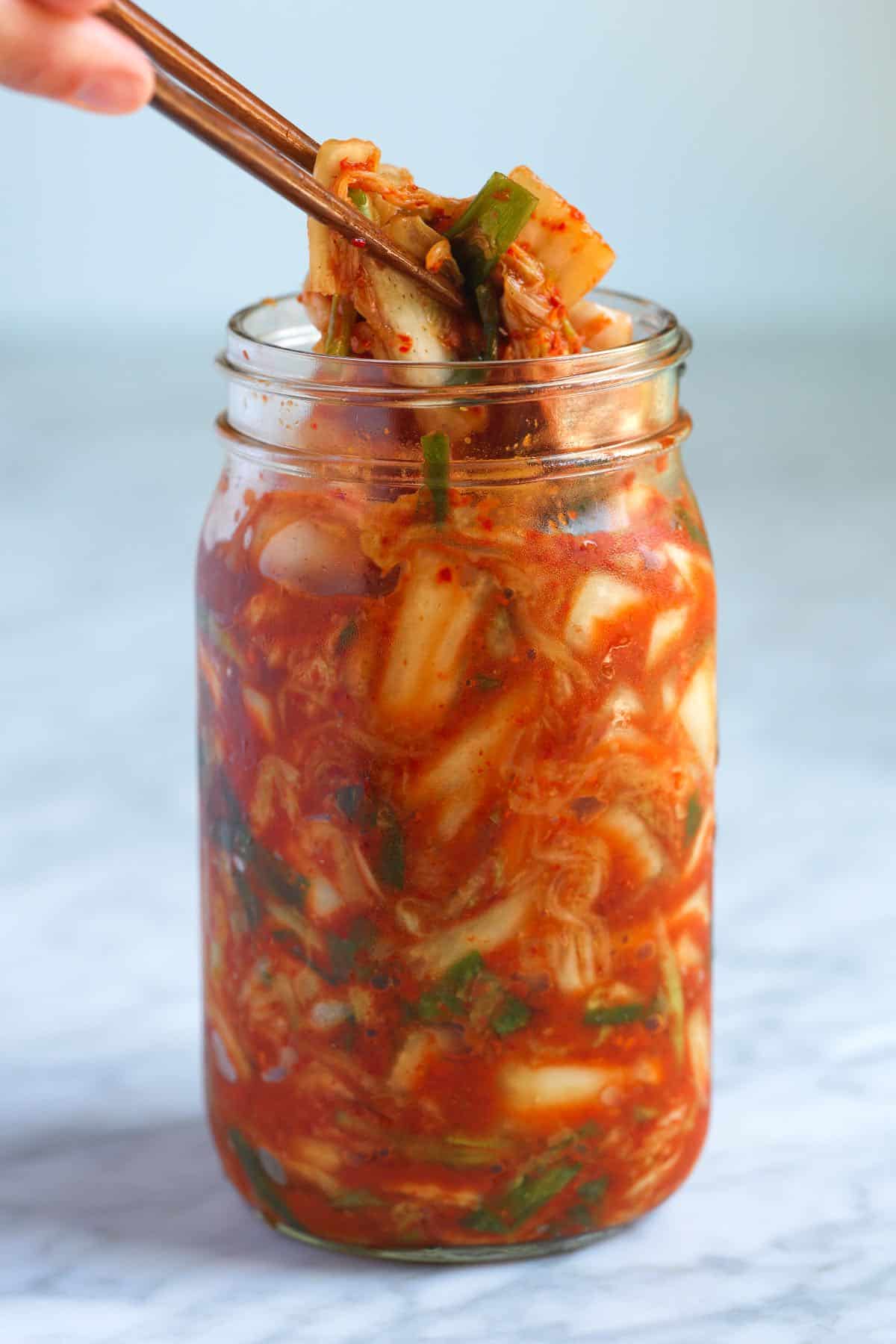
Easy Homemade Kimchi (Quick Version)
A simple, flavorful kimchi recipe using basic ingredients to ferment at home. Perfect for beginners and great for preserving extra vegetables.
🥘Ingredients
- 2 large Napa cabbages, thinly sliced
- 2 cups finely chopped daikon radish
- 2 cups finely chopped carrots
- 1 lb (450g) green onions, chopped
- 3 tbsp salt
- 2 tbsp gochugaru (Korean red pepper flakes)
- 2 tbsp sugar
- 1 tbsp minced garlic
- 1 tbsp minced ginger
- 1 tbsp fish sauce (or soy sauce for vegetarian)
- 1 tbsp rice vinegar
- 1 tbsp sesame oil
👨🍳Directions
-
1
Rinse the sliced Napa cabbage, daikon radish, and carrots thoroughly under cold water to remove dirt. Pat dry with a clean towel. -
2
In a large bowl, combine the sliced vegetables. Add green onions and mix gently. -
3
In a separate bowl, mix the salt, gochugaru, sugar, garlic, ginger, fish sauce, rice vinegar, and sesame oil until well combined. -
4
Pour the fermenting paste over the vegetables and stir well to ensure even coating. Let the mixture sit for 10 minutes. -
5
After 10 minutes, transfer the kimchi mixture into a clean plastic container. Press down gently to remove excess air bubbles. Seal the container tightly. -
6
Store the kimchi in the refrigerator and let it ferment for at least 2 days before eating. Taste and adjust seasoning if needed. For stronger flavor, ferment for up to 2 weeks.
🔧Equipment
- Large mixing bowl
- Clean plastic container with lid (1-gallon size)
- Fine-mesh strainer
- Wooden spoon or spatula
- Airtight container for storage
📊Nutrition Facts (per serving)
📝Notes
Tips
- Ensure the container is clean to prevent contamination.
- Use a weight (like a clean canning jar filled with water) on top of the kimchi to keep it submerged during fermentation.
- For a quicker fermentation, refrigerate the container immediately after sealing.
- Adjust the amount of gochugaru to suit your spice preference.
- If the kimchi develops mold, discard it immediately and start over.
Substitutions
- Replace fish sauce with soy sauce or a mix of soy sauce and a pinch of seaweed powder for a vegetarian option.
- Use a different type of cabbage (like red cabbage) if Napa cabbage is unavailable.
Watch Video Of How Easy Homemade Kimchi (Quick Version) Works
❓ Frequently Asked Questions About Kimchi (Quick Version)
1. What is the easiest way to make kimchi without any special equipment or tools?
The easiest method involves using a large bowl or jar and a spoon to mix the ingredients. Combine 2 cups of fermented napa cabbage (pre-cut and salted) with 1 cup of kimchi paste (store-bought or homemade), 2 tbsp of gochugaru (Korean red pepper flakes), 1 tbsp of minced garlic, 1 tbsp of minced ginger, 1 tbsp of fish sauce (or soy sauce for a vegetarian option), 1 tbsp of sugar or brown sugar, and 1 tbsp of sesame oil. Mix well, cover loosely with a cloth or lid, and let it ferment at room temperature for 1–2 days before refrigerating.
—
2. Why does my kimchi taste bland or sour after fermentation?
If your kimchi tastes bland, it might need more time to ferment (try 3–5 days in the fridge). If it’s too sour, you may have added too much gochugaru or salt initially. Adjust by reducing the red pepper flakes slightly or increasing the fermentation time. Ensure you’re using fresh cabbage and proper salt levels (about 1.5% salt for napa cabbage).
—
3. Can I make kimchi without using gochugaru (Korean red pepper flakes)?
Yes! You can substitute gochugaru with fresh chili powder, sriracha, or a mix of cayenne pepper and paprika for a milder or smokier flavor. For a traditional taste, blend fresh red chilies (like Thai bird’s eye) with garlic and ginger into a paste. Just ensure you add enough heat to balance the sweetness of the cabbage and fermented flavors.
—
4. How long should I ferment kimchi for the best texture and flavor?
The ideal fermentation time depends on taste preferences:
– Short fermentation (1–2 days): Mild, tangy, and easier to digest (best for quick meals).
– Medium fermentation (3–5 days): Balanced spice and sourness (classic kimchi flavor).
– Long fermentation (1+ weeks): Stronger sourness and deeper umami (great for marinating meats or soups).
Always check the texture—it should be soft but not mushy. Add more salt if it’s too soft.
—
5. What’s the best way to store homemade kimchi to keep it fresh longer?
Store kimchi in an airtight container in the fridge (lasts 2–3 weeks). For longer storage (up to 6 months), freeze it in portions—thaw in the fridge before use. To prevent mold, ensure the container is fully submerged in liquid (salty brine helps preserve it). If the kimchi develops a slimy layer, it’s safe to eat but may need discarding if it smells off.

