
filet chateaubriand recipe

The Best filet chateaubriand recipe
What I love most about this recipe is how it’s versatile. You can serve it as a centerpiece for a fancy dinner, but it’s also simple enough to make for a weeknight when everyone is starving. The filet is so forgiving—if you’re not perfect with the searing, it’ll still turn out tender, and the pan sauce is so easy to adjust. My family loves it because it’s something they can all enjoy, even if they’re not big meat lovers. And the health benefits? Well, lean beef is packed with protein and iron, which keeps everyone energized, and the vegetables we pair with it—like roasted asparagus or a fresh salad—add fiber and vitamins. It’s a dish that feels like a splurge but is actually pretty balanced, and honestly, that’s why I keep making it. It’s not just about the taste; it’s about the way it makes the whole meal feel right.
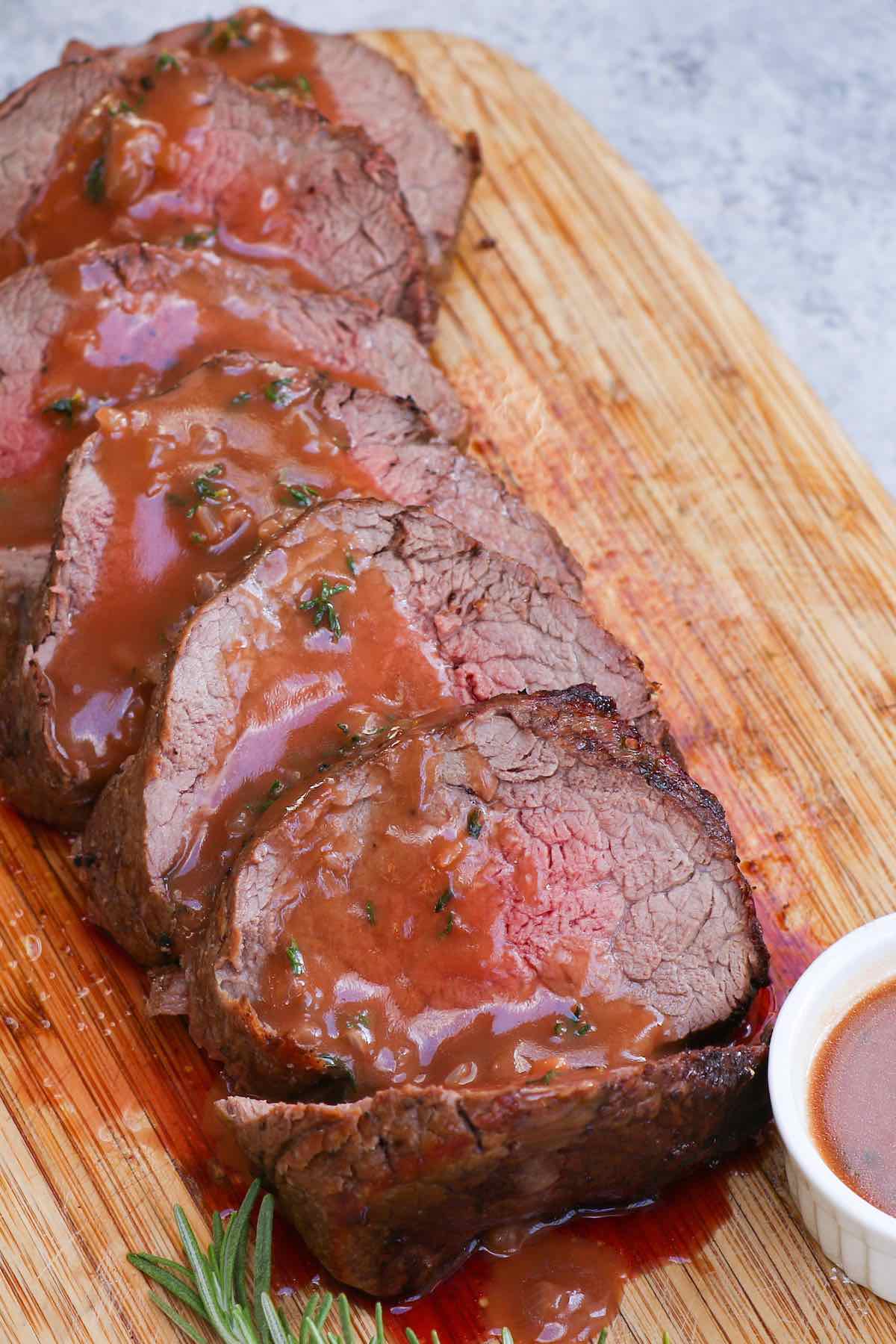
Filet Mignon à la Chateaubriand
A luxurious French classic featuring a perfectly seared tender cut of beef served with a rich red wine reduction sauce. This recipe is a must-try for any occasion.
🥘Ingredients
- 1.5 lbs (700g) filet mignon (center-cut)
- 1 tbsp kosher salt
- 1 tbsp black pepper
- 1 tbsp olive oil
- 2 tbsp unsalted butter
- 2 tbsp all-purpose flour
- 1 cup dry red wine (e.g., Cabernet Sauvignon)
- 1 cup beef stock
- 2 tbsp tomato paste
- 2 cloves garlic, minced
- 1 tbsp fresh thyme leaves
- 1 tbsp fresh rosemary, chopped
- 1 tbsp Dijon mustard
- Salt and pepper to taste
- 1 tbsp fresh parsley, chopped
- 1 tbsp butter (for finishing)
👨🍳Directions
-
1
Preheat oven to 400°F (200°C). Pat the filet mignon dry with paper towels and season generously with salt and pepper. -
2
Heat olive oil in a heavy skillet over high heat. Sear the beef for 2-3 minutes per side until deeply browned. Remove from skillet and set aside. -
3
In the same skillet, melt butter over medium heat. Sprinkle flour evenly over the bottom of the skillet and stir for 1 minute to form a roux. -
4
Pour in the red wine and simmer until reduced by half (about 3-4 minutes). Add beef stock, tomato paste, garlic, thyme, rosemary, and Dijon mustard. Stir well and bring to a gentle simmer. -
5
Return the seared beef to the skillet, spooning the sauce over it. Cover and transfer to the preheated oven. Bake for 8-10 minutes or until the internal temperature reaches 135°F (57°C) for medium-rare. -
6
Remove from oven and let rest for 5 minutes. Pour the sauce into a bowl, stir in a bit of butter for richness, and adjust seasoning with salt and pepper if needed. -
7
Slice the beef against the grain and serve with the sauce, garnished with fresh parsley and a drizzle of butter.
🔧Equipment
- Heavy-bottomed skillet (cast iron preferred)
- Oven-safe skillet or baking dish
- Measuring cups and spoons
- Knife and cutting board
- Mixing bowl
- Wooden spoon
- Tongs
📊Nutrition Facts (per serving)
📝Notes
Tips
- For an extra touch, add a splash of brandy or white wine to the sauce before simmering.
- Ensure your beef is center-cut for the best texture and flavor.
- Resting the beef is crucial for retaining juices; do not skip this step.
- Adjust wine quantity if needed to achieve the desired sauce consistency.
Variations
- Replace tomato paste with sautéed mushrooms and add a splash of cream for a richer sauce.
- Simply reduce the red wine further for a thicker sauce, ideal for a more traditional presentation.
Watch Video Of How Filet Mignon à la Chateaubriand Works
❓ Frequently Asked Questions About Filet Mignon à la Chateaubriand
What is the ideal thickness for filet mignon (filet chateaubriand) when preparing it?
Filet mignon should ideally be 1.5 to 2 inches (4–5 cm) thick for even cooking. This thickness ensures that the steak cooks through evenly without drying out, as thicker cuts may require longer cooking times. If your steak is slightly thicker, you can slice it into two pieces to avoid overcooking.
—
How do I choose the right cut of beef for filet chateaubriand?
Filet chateaubriand is made from the tenderloin steak, specifically the central portion of the beef tenderloin. Look for a cut labeled “filet mignon” or “filet chateaubriand” at the butcher. Avoid any cuts with visible marbling or excessive fat, as this can affect flavor and texture. A well-selected tenderloin should be firm, bright red, and free from dark discoloration.
—
What are the best cooking methods for filet chateaubriand, and which one is most recommended?
The most traditional and recommended methods for filet chateaubriand are:
– Sear in a hot pan (for a beautiful crust) followed by broiling or grilling (for even internal temperature).
– Sous vide (for precise, tender perfection) followed by a quick sear.
– Reverse sear (cooking low and slow in the oven, then searing for a crust).
For best results, pan-searing is ideal—first sear the steak in a hot, dry pan for 1–2 minutes per side to develop a flavorful crust, then finish in a preheated broiler or oven for medium-rare (125–130°F / 52–54°C internal temp).
—
How do I ensure my filet chateaubriand is cooked to the perfect medium-rare doneness?
To achieve medium-rare (the ideal doneness for tenderloin):
1. Use a meat thermometer—insert it into the thickest part, avoiding the bone.
2. Cook until the internal temperature reaches 125–130°F (52–54°C).
3. For a quick sear method, sear the steak for 1–2 minutes per side, then transfer to a preheated 400°F (200°C) oven for 5–8 minutes (depending on thickness).
4. Rest for 5–10 minutes before slicing to retain juices.
Avoid overcooking tenderloin, as it dries out quickly—this cut is best enjoyed rare to medium-rare.
—
What seasonings or sauces pair best with filet chateaubriand, and should I use butter?
Filet chateaubriand benefits from simple, elegant seasonings and sauces:
– Basic seasoning: A pinch of salt and freshly ground black pepper (no need for heavy seasoning, as the beef is naturally tender).
– Butter: A rich, melted butter (with garlic, thyme, or rosemary) is classic—brush it on the steak before searing or drizzle it over the finished steak.
– Sauces:
– Beurre Blanc (French white wine butter sauce)
– Red Wine Reduction (for a bold, savory touch)
– Pomegranate or fig sauce (for a modern twist)
– Chimichurri (for a herby, fresh contrast)
– Avoid overly spicy or acidic sauces, as they can overpower the delicate flavor of tenderloin. The steak itself should shine as the star.

