
german food recipe sauerbraten

The Best german food recipe sauerbraten
What I appreciate most about sauerbraten is how well it balances flavor and nutrition. The beef is packed with protein, and the marinade, which usually includes vinegar, spices, and a touch of sweetness, helps tenderize the meat without adding unhealthy fats. The gravy is made from the marinade itself, so it’s full of depth without being overly heavy. Plus, serving it with roasted vegetables or a simple side salad makes it a well-rounded meal. My kids love it with buttered egg noodles, and I love that it’s a dish that feels indulgent but is actually pretty wholesome. It’s one of those recipes that never gets old, no matter how many times I make it.
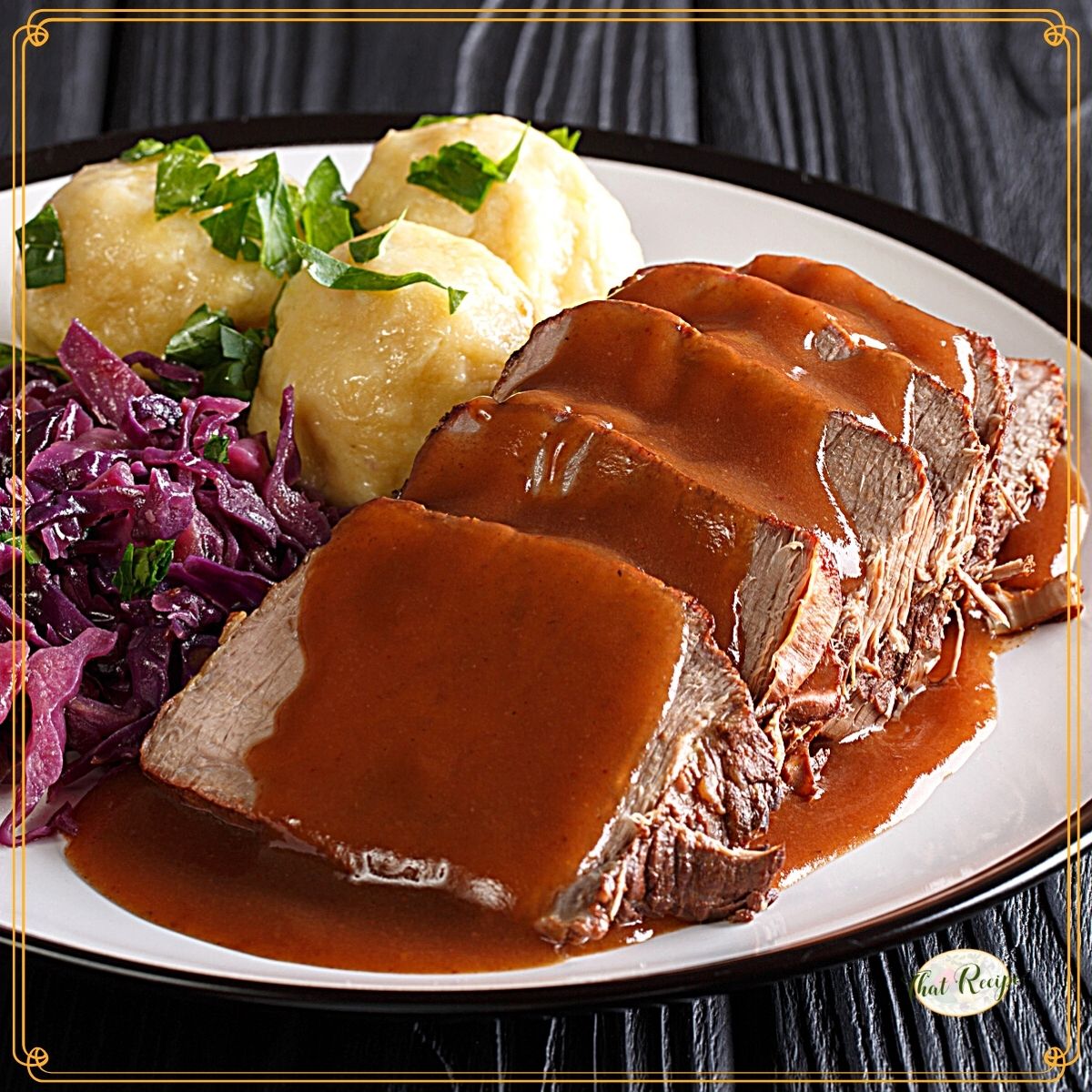
Classic German Sauerbraten
A traditional German pot roast marinated for days in a tangy vinegar and spice blend, then slow-cooked until tender. Served with a rich gravy and red cabbage, this dish is a hearty and flavorful centerpiece for any meal.
🥘Ingredients
- 1 (3-4 lb) beef roast (rump or chuck)
- 2 cups red wine vinegar
- 1 cup water
- 1 large onion, sliced
- 1 carrot, sliced
- 1 celery stalk, sliced
- 10 black peppercorns
- 5 cloves
- 3 bay leaves
- 1 tsp mustard seeds
- 1 tsp salt
- 1 tsp sugar
- 2 tbsp vegetable oil
- 1 large onion, chopped
- 2 tbsp all-purpose flour
- 1 cup beef broth
- 1/2 cup red wine (optional)
- 1/2 cup raisins (optional)
- 2 tbsp gingerbread crumbs or lebkuchen (optional, for thickening)
- Salt and pepper to taste
- Red cabbage (Rotkohl)
- Potato dumplings (Kartoffelklöße) or boiled potatoes
👨🍳Directions
-
1
Prepare the marinade: In a large bowl, combine vinegar, water, sliced onion, carrot, celery, peppercorns, cloves, bay leaves, mustard seeds, salt, and sugar. Stir well. -
2
Place the beef roast in the marinade, ensuring it is fully submerged. Cover and refrigerate for 3-5 days, turning the meat occasionally to ensure even marination. -
3
Remove the beef from the marinade (reserve the marinade and vegetables) and pat dry with paper towels. Strain the marinade, reserving the liquid and discarding the solids. -
4
Heat the oil in a Dutch oven over medium-high heat. Sear the beef on all sides until browned, about 5-7 minutes per side. Remove the beef and set aside. -
5
In the same pot, add the chopped onion and cook until softened, about 5 minutes. Sprinkle flour over the onions and stir to combine. -
6
Slowly pour in the reserved marinade liquid and beef broth, stirring constantly to avoid lumps. Add the red wine (if using) and bring to a simmer. -
7
Return the beef to the pot, cover, and reduce heat to low. Simmer for 2.5 to 3 hours, or until the beef is tender, turning occasionally. -
8
Remove the beef from the pot and strain the cooking liquid into a saucepan. Skim off excess fat if desired. Stir in raisins and gingerbread crumbs (if using) and simmer until the sauce thickens, about 10 minutes. -
9
Slice the beef and arrange on a platter. Pour the thickened sauce over the meat and serve with red cabbage and potato dumplings or boiled potatoes.
🔧Equipment
- Large glass or ceramic bowl (for marinating)
- Dutch oven or heavy pot with lid
- Wooden spoon
- Tongs
- Measuring cups and spoons
- Knife and cutting board
📊Nutrition Facts (per serving)
📝Notes
Watch Video Of How Classic German Sauerbraten Works
❓ Frequently Asked Questions About German Sauerbraten
1. What is Sauerbraten and what makes it unique?
Sauerbraten is a traditional German pot roast, typically made with beef (though sometimes venison, lamb, or pork) that is marinated for several days in a mixture of vinegar, water, spices, and seasonings. What makes it unique is its long marination process, which tenderizes the meat and gives it a distinct tangy-sweet flavor. The dish is often served with a rich gravy, red cabbage, and potato dumplings or boiled potatoes.
2. How long should Sauerbraten be marinated, and why is it important?
Sauerbraten should be marinated for 3 to 5 days, though some recipes call for up to a week. The extended marination is crucial because the acidic vinegar breaks down the tough fibers in the meat, making it tender. It also allows the flavors of the spices (like cloves, bay leaves, and peppercorns) to deeply penetrate the meat. Skipping or shortening the marination will result in a tougher, less flavorful dish.
3. Can Sauerbraten be made with a different type of meat?
Yes! While beef is the most common choice, Sauerbraten can also be made with venison, pork, lamb, or even horse meat (traditional in some regions of Germany). Venison is a popular alternative because its gamey flavor pairs well with the tangy marinade. Pork and lamb work too, but they require shorter marination times (2–3 days) since they are naturally more tender than beef.
4. What is the best way to thicken the Sauerbraten gravy?
The gravy for Sauerbraten is traditionally thickened in one of two ways:
– Gingerbread (Lebkuchen) or gingersnap cookies: These are crushed and stirred into the simmering liquid, adding sweetness and thickness.
– Flour or cornstarch slurry: A mixture of flour/cornstarch and water is whisked into the gravy for a smoother texture.
Some recipes also use raisins or crushed amaretti cookies for extra sweetness and body. The key is to simmer the gravy until it reaches a rich, velvety consistency.
5. What are the best side dishes to serve with Sauerbraten?
Sauerbraten is typically served with hearty German sides that complement its bold flavors. The most classic pairings include:
– Rotkohl (German red cabbage): Braised with apples, vinegar, and spices for a sweet-tart contrast.
– Kartoffelklöße (potato dumplings): Soft, pillowy dumplings that soak up the gravy.
– Spätzle: Egg noodles, especially in southern Germany.
– Boiled or mashed potatoes: A simple, starchy base for the rich meat.
– Pickled vegetables or cucumbers: For a refreshing crunch to cut through the richness.

