
german recipe for schnitzel

- The Best german recipe for schnitzel
- Traditional German Pan-Fried Pork Schnitzel (Käsespätzle Option)
- 🥘Ingredients
- 👨🍳Directions
- 🔧Equipment
- 📊Nutrition Facts (per serving)
- 📝Notes
- Watch Video Of How Traditional German Pan-Fried Pork Schnitzel (Käsespätzle Option) Works
- ❓ Frequently Asked Questions About German Pan-Fried Pork Schnitzel (Käsespätzle Option)
The Best german recipe for schnitzel
What I love most about this recipe is how adaptable it is. You can serve it as a main dish or even as part of a larger spread, and it doesn’t take forever to prepare. Plus, it’s a great way to sneak in some nutrients without making anyone feel like they’re eating “healthy.” The breaded cutlets are packed with protein from the pork, and the vegetables in the sauce—like onions and carrots—add fiber and vitamins. My kids used to complain about “boring” meals, but this? They’d beg for seconds. And honestly? It’s the kind of dish that makes you feel like you’re doing something good for your family, even if it’s just a simple, delicious night at home. It’s that kind of recipe that feels like a little celebration every time you make it.
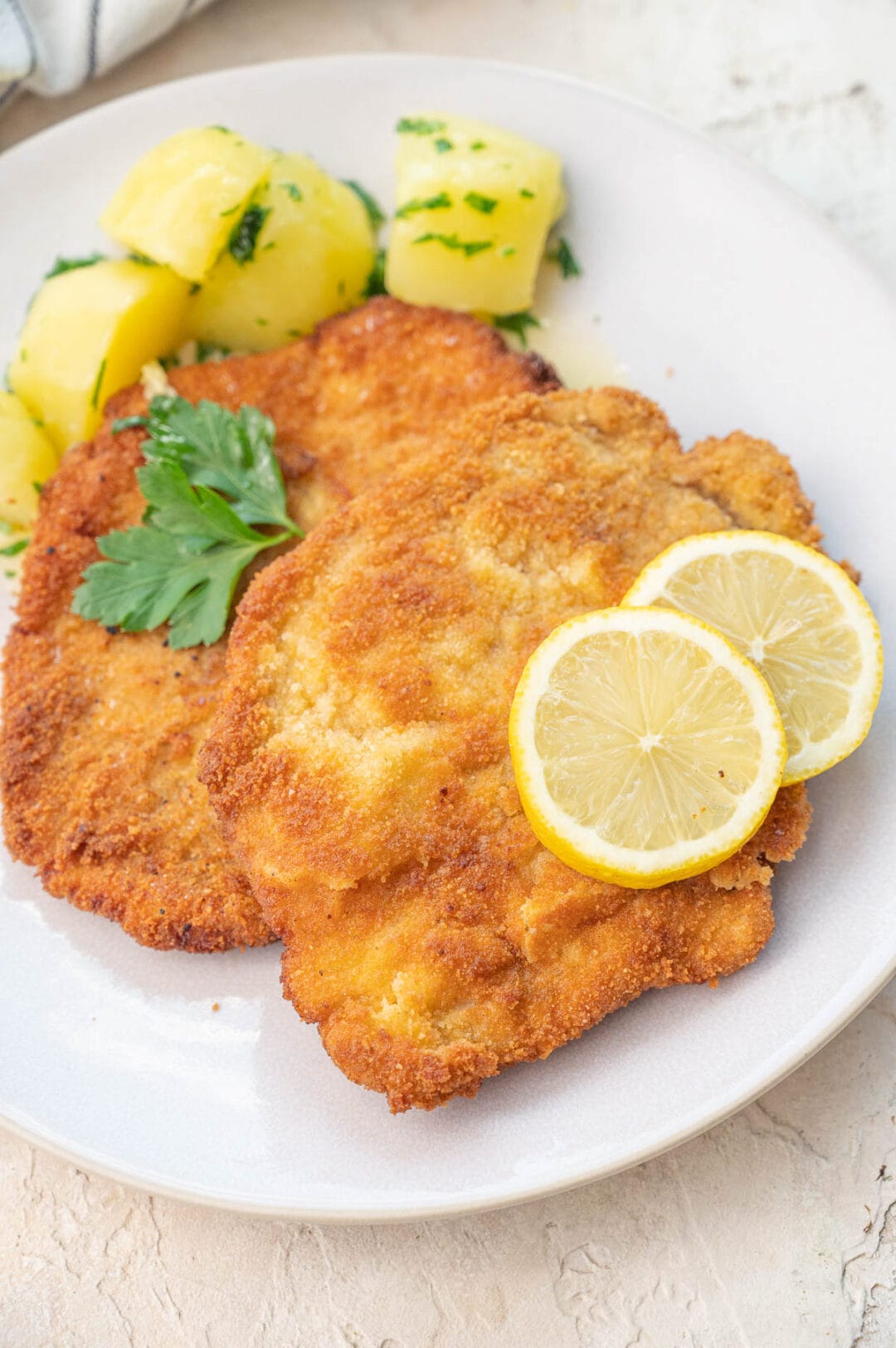
Traditional German Pan-Fried Pork Schnitzel (Käsespätzle Option)
A crispy, golden pork cutlet coated in flour and egg, fried to perfection and served with a rich tomato-based sauce or classic German potato noodles (Käsespätzle). This classic German dish is beloved for its simplicity and satisfying flavor.
🥘Ingredients
- 4 pork loin cutlets (about 6 oz each, ~1.5 cm thick)
- 2 large eggs
- 1 cup all-purpose flour
- 1 tsp salt
- 1 tsp black pepper
- 1 tsp paprika (optional, for color)
- 1 tbsp vegetable oil (for frying)
- 1 cup tomato sauce (or crushed tomatoes)
- 2 cloves garlic, minced
- 1 tbsp butter
- 1 tbsp olive oil
- Salt and pepper to taste
- Fresh parsley, chopped (for garnish)
- 1 cup egg noodles (or spätzle)
- 1 cup shredded Gruyère cheese
- 1 tbsp butter
- Salt and pepper to taste
👨🍳Directions
-
1
Preheat oven to 400°F (200°C) if baking or air-frying. For pan-frying, heat oil in a pan over medium-high heat. -
2
Pound the pork cutlets to an even thickness (~1/2 inch) using a meat mallet or rolling pin. Season both sides with salt and pepper. -
3
Beat the eggs in a shallow dish. In another bowl, mix flour, salt, pepper, and paprika. -
4
Dredge each cutlet in the flour mixture, shaking off excess, then dip into the beaten egg, and finally coat again in flour. Set aside. -
5
For pan-frying: Fry cutlets in hot oil for 3–4 minutes per side until golden brown. For oven/air-fryer: Place on parchment-lined tray and cook for 12–15 minutes, flipping halfway. -
6
While schnitzel cooks, heat butter and oil in a pan. Sauté garlic for 30 seconds, then add tomato sauce. Simmer for 5–7 minutes until thickened. Season with salt and pepper. -
7
For Käsespätzle: Cook noodles according to package instructions. Melt butter in a pan, add cheese, and stir until melted. Toss with cooked noodles. -
8
Serve schnitzel hot with tomato sauce or Käsespätzle. Garnish with parsley if desired. -
undefined
undefined -
undefined
undefined -
undefined
undefined -
undefined
undefined
🔧Equipment
- Mixing bowls
- Baking sheet (for air-frying or oven-baking)
- Frying pan (for traditional pan-frying)
- Measuring cups and spoons
- Knife and cutting board
- Parchment paper
📊Nutrition Facts (per serving)
📝Notes
- For extra crispiness, bake schnitzel instead of frying.
- Use veal or chicken for vegetarian schnitzel (substitute egg with aquafaba).
- Lemon juice brightens the sauce; adjust to taste.
- Store cooked schnitzel in the fridge for up to 3 days; reheat gently in the oven.
Watch Video Of How Traditional German Pan-Fried Pork Schnitzel (Käsespätzle Option) Works
❓ Frequently Asked Questions About German Pan-Fried Pork Schnitzel (Käsespätzle Option)
What is the traditional breading technique used in German schnitzel?
The traditional breading for German schnitzel, known as Panade, involves dredging the thin cut of meat (usually pork or veal) in a mixture of flour, egg, and breadcrumbs. The flour is first beaten with a little cold water to form a paste, then the egg is beaten with a pinch of salt and pepper, and finally the breadcrumbs are mixed in. This creates a light yet sturdy crust. Some versions also include a touch of paprika or nutmeg for extra flavor.
—
How thick should the schnitzel be cut for the best texture?
For the best texture and cooking results, schnitzel should be cut to about 1.5 to 2 centimeters (½ to ¾ inch) thick. This thickness ensures the meat cooks evenly through without drying out while still allowing the breading to crisp up properly. If the cut is too thin, it may cook too quickly and lose moisture; if too thick, it can become tough inside.
—
What is the ideal cooking method for schnitzel, and how long does it take?
The classic way to cook schnitzel is in a pan with butter or oil, frying it at medium heat until golden brown on both sides. The meat should be cooked for about 2–3 minutes per side for medium-rare doneness. Overfrying can make it dry, so it’s best to cook it just until the internal temperature reaches around 55–60°C (131–140°F). Avoid pressing the schnitzel with a spatula, as this can cause it to break apart.
—
Can schnitzel be made with chicken instead of pork or veal, and if so, how?
Yes, chicken schnitzel is a common variation, though it’s less traditional in German cuisine. To make it work, use boneless, skinless chicken breast, cut into thin slices (about 1.5 cm thick). The breading process remains the same—flour, egg, and breadcrumbs—but chicken can be slightly more delicate, so it’s best to cook it for 1.5–2 minutes per side to avoid overcooking. The meat should be firm but still juicy inside. Some recipes add a pinch of salt and pepper to the egg wash for extra flavor.
—
What are some common side dishes to serve with schnitzel?
Schnitzel is traditionally served with a few classic side dishes:
– Lemon wedges (to cut through the richness)
– Crispy fries (Kartoffelschnitzel) – a German favorite!
– Sautéed green beans or peas (Gurken oder Erbsen)
– Simple potato salad (Kartoffelsalat)
– A light salad with a tangy vinaigrette (like a cucumber or endive salad)
– Applesauce or a fresh fruit compote for a sweet contrast
A classic Austrian-German pairing is schnitzel with apple strudel or bread rolls (Brötchen) for dipping.


