
gluten free cheesecake recipe

The Best gluten free cheesecake recipe
The best part? This recipe isn’t just for special occasions. It’s something I keep in my rotation because it’s so versatile. You can slice it up for lunchboxes, eat it straight from the fridge for a quick dessert, or serve it at a dinner party where everyone’s watching their gluten intake but still wants something indulgent. And the health benefits? Well, it’s made with almond flour and coconut oil, which are naturally gluten-free and often packed with nutrients. It’s not just a dessert—it’s a way to enjoy something sweet without the heavy, processed ingredients that can leave you feeling sluggish afterward. My family loves it because it’s satisfying, it’s easy to make ahead, and it never disappoints. Plus, it’s a great way to sneak in some extra greens if you add a layer of spinach or kale in the crust—just don’t tell the kids I said that.
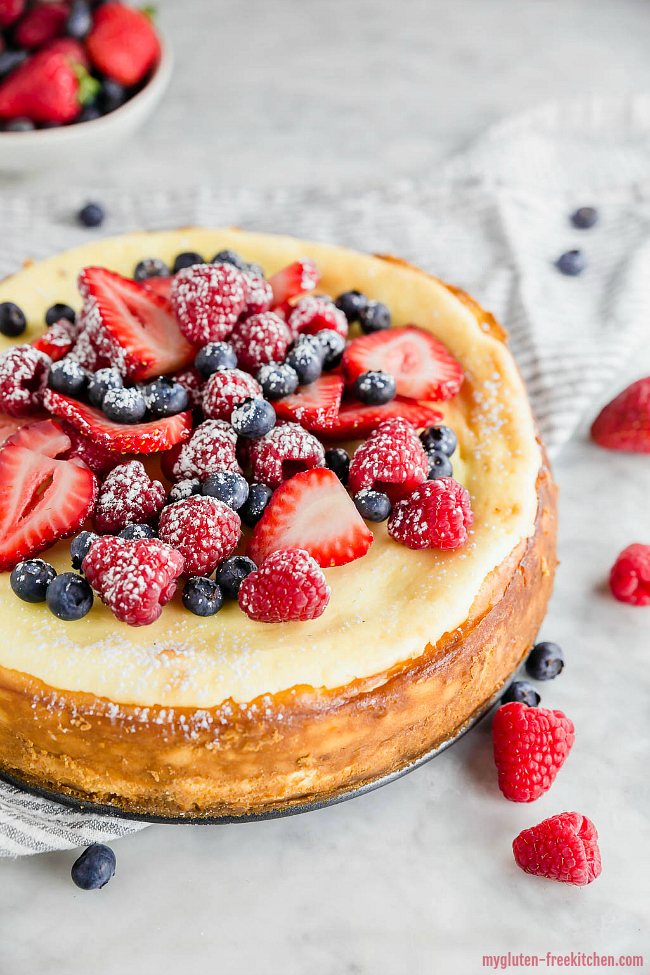
Gluten-Free Cream Cheesecake
A rich, creamy, and decadent cheesecake made without gluten, perfect for those with gluten sensitivities or celiac disease. This recipe uses almond flour and a gluten-free crust for a delightful treat.
🥘Ingredients
- 1 ½ cups gluten-free almond flour
- ½ cup granulated sugar
- 4 tbsp unsalted butter, melted
- 1 tsp vanilla extract
- 1 egg
- Pinch of salt
- 16 oz (450g) cream cheese, softened
- 1 cup powdered sugar
- 1 tsp vanilla extract
- 1 cup heavy whipping cream
- 1 cup heavy whipping cream (extra for topping)
- 1 cup almond milk
- 1 tsp almond extract (optional)
- ½ cup whipped cream
- ½ cup fresh berries (raspberries, blueberries)
- 1 tbsp honey
👨🍳Directions
-
1
Preheat oven to 325°F (165°C). Line a 9-inch springform pan with parchment paper and lightly grease the sides. -
2
For the crust: In a medium bowl, mix almond flour, sugar, melted butter, vanilla extract, egg, and salt until combined. Press the mixture evenly into the bottom of the springform pan. Bake for 10 minutes, then let cool. -
3
For the filling: Beat cream cheese and powdered sugar until smooth. Add vanilla extract and mix well. In a separate bowl, whip heavy cream until soft peaks form. Gently fold whipped cream into the cream cheese mixture. Stir in almond milk and almond extract (if using). -
4
Pour the filling over the cooled crust. Smooth the top with a spatula. Bake at 325°F (165°C) for 45–50 minutes, or until the edges are set but the center is slightly jiggly. -
5
Allow the cheesecake to cool to room temperature, then refrigerate for at least 4 hours (or overnight). Before serving, top with whipped cream, fresh berries, and drizzle with honey if desired.
🔧Equipment
- Mixing bowls (2 medium)
- Electric mixer or stand mixer
- Whisk
- Rubber spatula
- 9-inch springform pan
- Parchment paper
- Baking sheet
- Oven
📊Nutrition Facts (per serving)
📝Notes
Tips
- Ensure all ingredients are certified gluten-free to avoid cross-contamination.
- For a lighter texture, replace half the heavy cream with Greek yogurt.
- Chill the crust before adding the filling to prevent it from breaking.
- Use a water bath (double oven method) for a more even bake by placing the pan in a larger pan filled with hot water.
Substitutions
- Almond flour can be substituted with gluten-free oat flour (ensure certified GF) in a 1:1 ratio.
- For a dairy-free option, use coconut cream and dairy-free cream cheese.
Watch Video Of How Gluten-Free Cream Cheesecake Works
❓ Frequently Asked Questions About Gluten-Free Cream Cheesecake
1. What is the primary difference between this gluten-free cheesecake recipe and traditional cheesecake recipes?
The main difference lies in the crust and base layers. This recipe uses a gluten-free graham cracker crumb crust made with almond flour, coconut flour, and a gluten-free graham cracker blend to ensure a crispy, flavorful foundation without relying on wheat flour. The filling itself remains similar to traditional cheesecake—creamy, rich, and slightly tangy—using a blend of cream cheese, sour cream, and a touch of sweetener.
—
2. Can I substitute any of the ingredients in this gluten-free cheesecake for dietary restrictions or personal preferences?
Yes! Here are some common substitutions:
– Dairy-free option: Replace cream cheese with dairy-free cream cheese (like Kite Hill or Miyoko’s) and sour cream with coconut yogurt or almond milk-based sour cream.
– Lower sugar: Reduce the sweetener (like powdered sugar or maple syrup) by 25% and add a bit of vanilla extract to enhance flavor.
– Nut-free crust: Swap almond flour for sunflower seed flour or oat flour (ensure it’s certified GF).
– Extra richness: Add a splash of heavy cream or coconut cream to the filling for a creamier texture.
—
3. How do I ensure the cheesecake stays moist and not dry or crumbly?
Moisture is key! Follow these tips:
– Bake at the right temperature: Use a water bath (double boiler) for the first 20–25 minutes to ensure even baking and a smooth texture.
– Chill thoroughly: Let the cheesecake cool completely before refrigerating for at least 4–6 hours (or overnight) to set properly.
– Avoid overmixing: Beat the filling just until combined—overmixing can make it dense.
– Use room-temperature ingredients: Cream cheese and dairy products should be softened slightly (not melted) for a smoother batter.
– Brush with simple syrup: After baking, brush the top with a mix of equal parts sugar and water (or agave) to help retain moisture.
—
4. Why does my gluten-free cheesecake have a grainy or lumpy texture?
A grainy or lumpy texture often comes from:
– Underbaking the crust: Ensure the crust is fully baked (check with a toothpick—it should come out clean). If it’s too soft, it’ll absorb too much filling.
– Too much flour in the filling: If you’re using a gluten-free flour blend (like Bob’s Red Mill 1:1), reduce it slightly or replace some with almond flour for a smoother texture.
– Overmixing the crust: Mix the gluten-free crumbs just until combined—overworking them can create lumps.
– Lack of fat in the filling: If the cream cheese or butter is too cold or melted, it can make the cheesecake grainy. Use room-temperature ingredients.
– Using a poor-quality gluten-free flour: Some blends can absorb too much liquid. Try a high-quality GF flour like King Arthur or Cup4Cup for better results.
—
5. How can I make this cheesecake ahead of time and still keep it fresh?
This cheesecake is best made a day or two ahead for optimal texture:
– Prep the filling: Mix the filling ingredients, cover, and refrigerate for up to 24 hours before assembling.
– Assemble the cheesecake: Layer the crust and filling, then refrigerate for at least 4 hours (or overnight) before baking.
– Bake fresh: If possible, bake the cheesecake within 24 hours of assembly to avoid excessive firming.
– Store properly: Keep in an airtight container in the fridge for up to 3 days. For longer storage, freeze the unbaked cheesecake (with a crust) for up to 3 months. Thaw overnight in the fridge before baking.
– Reheat if needed: To soften a firm cheesecake, warm it in the microwave in 10-second bursts or run it under warm water for 1–2 minutes.
—
6. Can I add mix-ins like chocolate chips, nuts, or fruit to this cheesecake?
Absolutely! Here’s how to incorporate them:
– Chocolate chips: Fold them into the filling before baking. Use a mix of dark, milk, and white chocolate for variety.
– Nuts (e.g., walnuts, pecans): Stir them into the crust for crunch or mix them into the filling for texture. Toast them first for extra flavor.
– Fruit (e.g., berries, sliced bananas): Add fresh fruit on top after baking or mix in mashed banana or berry puree into the filling.
– Cocoa powder: Sprinkle it into the crust for a chocolatey twist or mix it into the filling for a darker color.
– Proper placement: For a layered look, bake the cheesecake, let it cool slightly, then add mix-ins before chilling again.


