
gluten free gnocchi recipe

- The Best gluten free gnocchi recipe
- Easy Gluten-Free Gnocchi with Tomato Garlic Sauce
- 🥘Ingredients
- 👨🍳Directions
- 🔧Equipment
- 📊Nutrition Facts (per serving)
- 📝Notes
- Watch Video Of How Easy Gluten-Free Gnocchi with Tomato Garlic Sauce Works
- ❓ Frequently Asked Questions About Gluten-Free Gnocchi with Tomato Garlic Sauce
The Best gluten free gnocchi recipe
I love this recipe because it’s versatile enough to work for a quick weeknight dinner or a special occasion. It’s easy to customize—swap in different sauces, add fresh herbs, or even toss it with roasted veggies for a lighter meal. Plus, it’s packed with nutrients. The potato and flour base gives it a good fiber boost, and when you pair it with lean proteins like chicken or shrimp, it’s a balanced meal that keeps everyone full without feeling too heavy. My family doesn’t even notice it’s gluten-free; it just tastes like home. And honestly? It’s a great way to sneak in some extra veggies if you’re feeling creative with the toppings. No one has to know it’s anything but delicious.
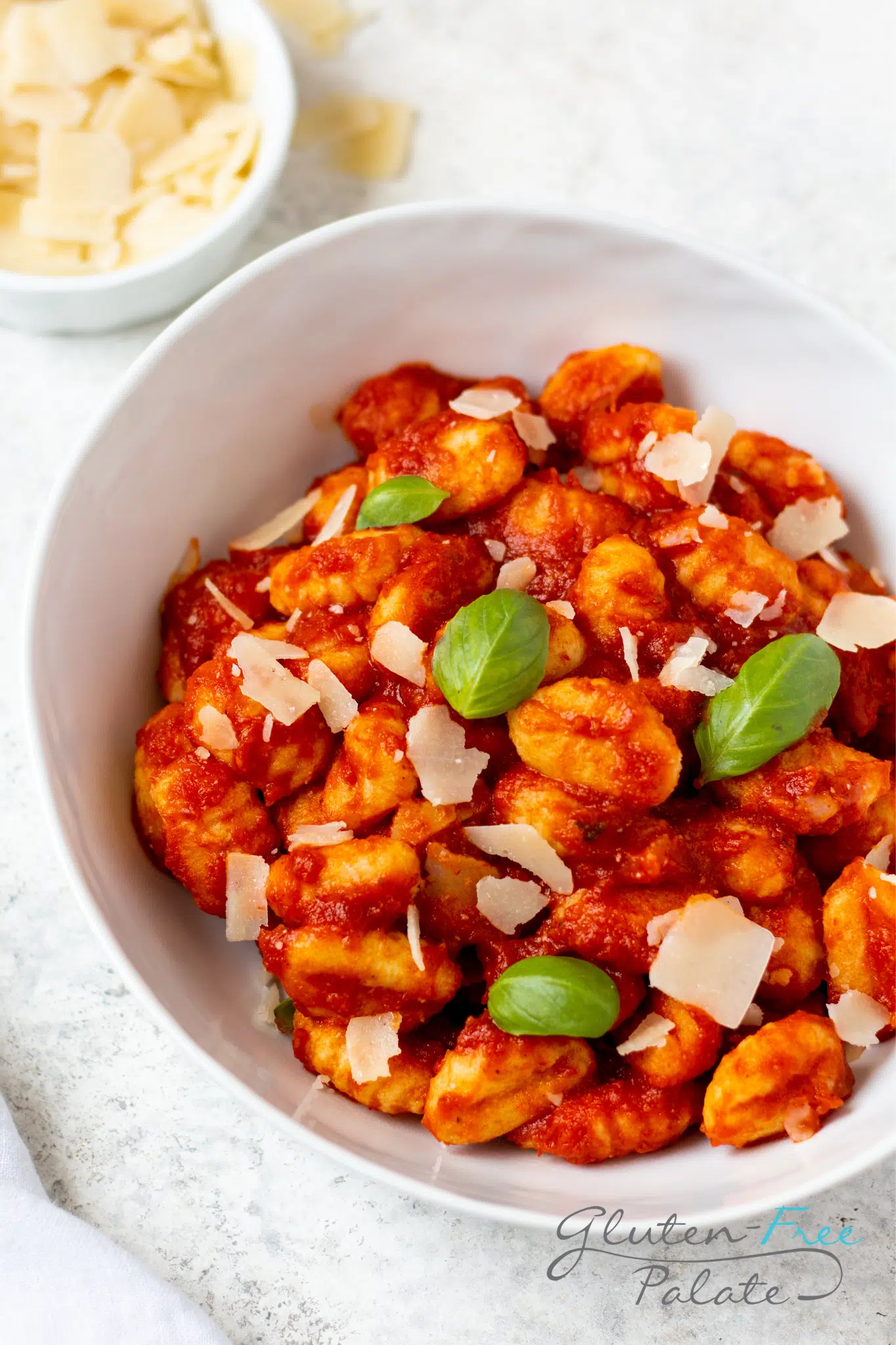
Easy Gluten-Free Gnocchi with Tomato Garlic Sauce
A simple and delicious gluten-free gnocchi recipe made with almond flour and potato, paired with a rich tomato and garlic sauce. This recipe is a must-try for any occasion.
🥘Ingredients
- 2 cups (250g) almond flour (fine grind)
- 1 cup (150g) grated potato (about 1 medium potato)
- 1 large egg
- 1 tsp salt
- ½ tsp nutmeg (optional)
- 1 cup (240ml) gluten-free tomato sauce
- 2 cloves garlic, minced
- 1 tbsp olive oil
- ½ tsp dried oregano
- Salt and pepper to taste
- ½ cup (120ml) heavy cream or coconut milk (optional)
👨🍳Directions
-
1
Preheat oven to 425°F (220°C). Line a baking sheet with parchment paper. -
2
Grate the potato while it’s still warm (or boil and drain) to make it easier to blend. Let it cool slightly. -
3
In a food processor, pulse the almond flour, grated potato, egg, salt, and nutmeg until combined into a dough. If too sticky, add a little more almond flour. -
4
Roll the dough into a thin log (about 1-inch thick) and cut into 1-inch pieces. Roll each piece into a thin rope, then pinch the ends to form small dumplings. -
5
Place gnocchi on the baking sheet and bake for 15 minutes. Flip and bake for another 10-15 minutes until golden. -
6
While gnocchi bakes, heat olive oil in a pot over medium heat. Add minced garlic and sauté for 30 seconds until fragrant. Pour in tomato sauce, oregano, salt, and pepper. Simmer for 10 minutes. Stir in cream (if using) and let it thicken. -
7
Once gnocchi is cooked, transfer them to a bowl and pour the warm sauce over them. Toss gently to coat.
🔧Equipment
- Mixing bowl
- Food processor or rolling pin
- Baking sheet
- Oven
- Cooking pot
- Fine-mesh sieve
📊Nutrition Facts (per serving)
📝Notes
Tips
- For extra flavor, add a pinch of red pepper flakes or a splash of white wine to the sauce.
- Store cooked gnocchi in an airtight container in the fridge for up to 5 days or freeze for up to 3 months.
- Substitute almond flour with rice flour or chickpea flour for a different texture.
- Ensure your potato is well-drained and cooled before processing to avoid a soggy dough.
Adjustments: {“vegan”:”Replace the egg with 1 tbsp flaxseed meal mixed with 3 tbsp water (let it thicken for 5 mins).”,”lowerCarb”:”Use less potato or omit it entirely, focusing on almond flour for a lower-carb version.”}
Watch Video Of How Easy Gluten-Free Gnocchi with Tomato Garlic Sauce Works
❓ Frequently Asked Questions About Gluten-Free Gnocchi with Tomato Garlic Sauce
What is the key difference between traditional gnocchi and gluten-free gnocchi in terms of ingredients?
Traditional gnocchi typically relies on flour (often semolina or all-purpose) as the primary binding agent, while gluten-free gnocchi uses alternative starches like potato flour, tapioca starch, or a blend of almond flour and rice flour to achieve the same chewy texture. The absence of gluten means you may need extra binding ingredients like eggs, flaxseed, or psyllium husk to mimic the stretchiness of classic gnocchi.
How can I ensure my gluten-free gnocchi stays soft and doesn’t become gummy or dry?
To keep gluten-free gnocchi soft, avoid overcooking—boil them in well-salted water for just 2–3 minutes until they float (like traditional gnocchi). Adding a splash of pasta water while shaping them can also help maintain moisture. For extra tenderness, lightly brush the cooked gnocchi with olive oil or a beaten egg before serving. Storing them in an airtight container with a damp paper towel can also prevent dryness.
Can I substitute any of the starches in the gluten-free gnocchi recipe, and if so, what are the best alternatives?
Yes! You can mix different starches for better texture—common blends include potato flour + tapioca starch (for a soft, pillowy result) or almond flour + rice flour (for a slightly heartier bite). Avoid pure tapioca alone, as it can make gnocchi too dry. For extra binding, add 1–2 tbsp ground flaxseed or psyllium husk to the mix. Always adjust liquid (like water or egg) based on the starch combination.
Why do some gluten-free gnocchi recipes require an egg, while others don’t? And can I skip it if I’m vegan?
Eggs act as a natural binder and help create the signature soft, elastic texture of gnocchi. If your recipe calls for an egg, it’s usually essential for structure—without it, the gnocchi may fall apart. For vegan versions, you can replace the egg with 1 tbsp ground flaxseed + 3 tbsp water (let it sit for 5 mins to thicken) or 1 tbsp aquafaba (chickpea brine). Some blends (like potato-based) may work without eggs, but texture could be slightly less tender.
How do I prevent gluten-free gnocchi from sticking together while boiling or shaping?
Sticking is a common issue with gluten-free gnocchi because they lack gluten’s natural cohesive properties. To prevent clumping:
– Shape them quickly while the dough is still warm and pliable.
– Use a well-greased surface (like parchment paper or a lightly oiled board) to roll them out.
– Boil in batches if needed, and gently separate with a fork or spoon.
– Add a pinch of cornstarch to the dough (if not already included) to help with handling.
– Press gently when shaping—don’t overwork them, as gluten-free dough is more fragile.
