
gravy recipe with turkey

The Best gravy recipe with turkey
What I love most about this recipe is how versatile it is. It’s perfect for Thanksgiving, of course, but it’s just as good over mashed potatoes on a Tuesday night. The best part? It’s made with real turkey drippings, so it’s packed with flavor and a little extra protein. Plus, since it’s not loaded with butter or cream, it’s a lighter option that still tastes indulgent. My family always cleans their plates, and I love that it’s a dish that brings everyone together without any fuss. If you’re looking for a gravy that’s foolproof and actually good for you, this is the one.
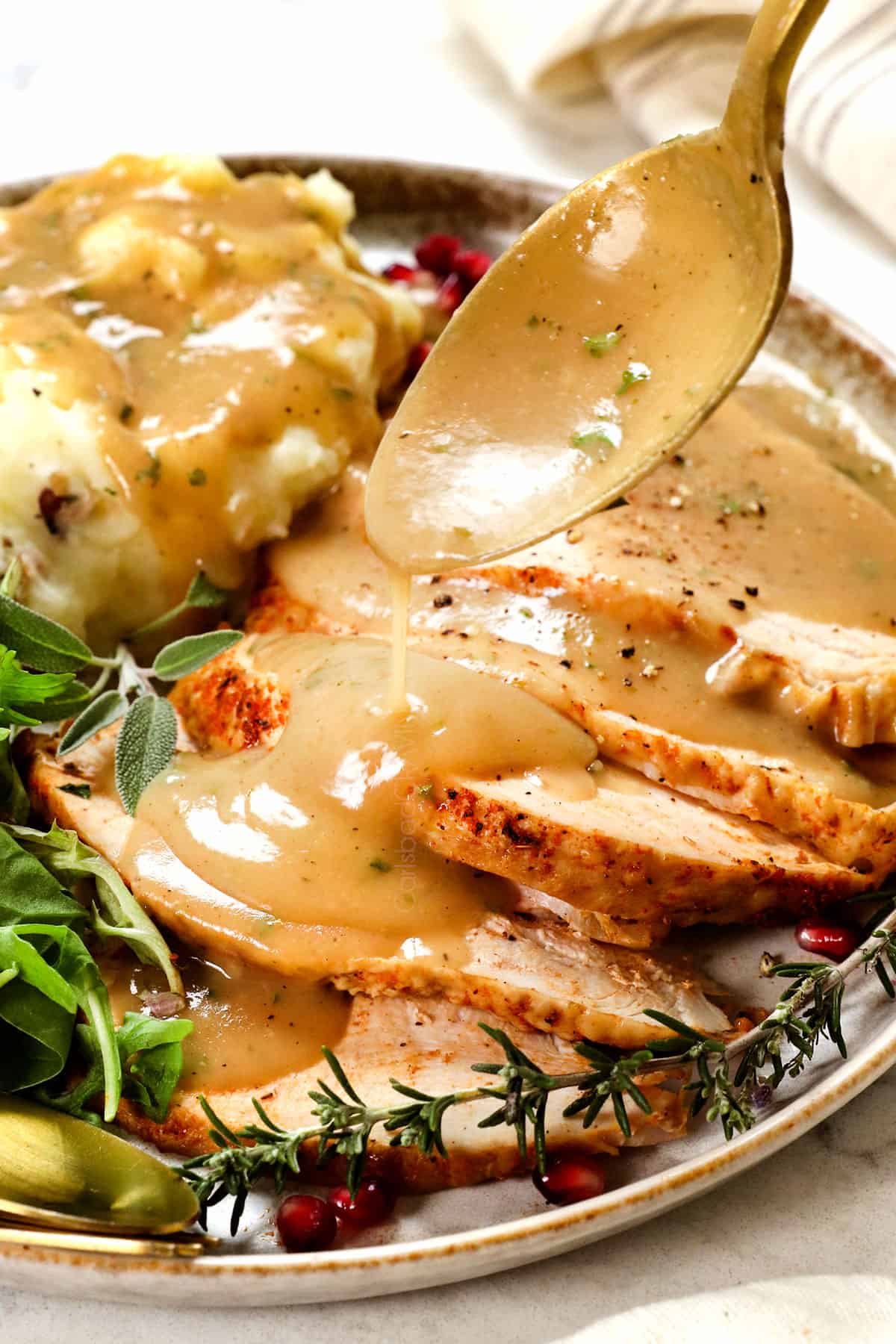
Classic Turkey Gravy
A rich and savory homemade gravy made from turkey drippings, perfect for serving with roasted turkey, mashed potatoes, or stuffing. This easy recipe delivers deep flavor and a smooth, velvety texture every time.
🥘Ingredients
- 2 cups turkey drippings (from roasted turkey)
- 1/4 cup all-purpose flour
- 2 cups low-sodium chicken or turkey broth
- 1/2 tsp salt (adjust to taste)
- 1/4 tsp black pepper
- 1/2 tsp poultry seasoning (optional)
- 1 tbsp unsalted butter (optional, for richness)
👨🍳Directions
-
1
After roasting your turkey, transfer it to a platter to rest. Place the roasting pan on the stovetop over medium heat. -
2
Skim off and discard most of the fat from the drippings, leaving about 1/4 cup of fat in the pan. If there isn’t enough fat, add butter to make up the difference. -
3
Sprinkle the flour over the fat and whisk constantly for 2-3 minutes to cook the flour and form a roux. The mixture should turn golden brown. -
4
Gradually pour in the chicken or turkey broth while whisking continuously to prevent lumps from forming. -
5
Bring the mixture to a simmer, then reduce heat to low. Let it cook for 10-15 minutes, stirring occasionally, until the gravy thickens to your desired consistency. -
6
Strain the gravy through a fine-mesh strainer into a clean saucepan or gravy boat to remove any lumps or bits of turkey. -
7
Season with salt, pepper, and poultry seasoning (if using). Taste and adjust seasoning as needed. Serve warm.
🔧Equipment
- Large roasting pan (to collect drippings)
- Whisk
- Medium saucepan
- Fine-mesh strainer
- Ladle
📊Nutrition Facts (per serving)
📝Notes
Watch Video Of How Classic Turkey Gravy Works
❓ Frequently Asked Questions About Turkey Gravy
1. What’s the best way to make gravy from turkey drippings?
To make rich gravy from turkey drippings, start by straining the drippings into a fat separator or bowl to remove any solids. Pour off most of the fat (reserve about 2 tablespoons) and return the drippings to a pan. Whisk in 2–3 tablespoons of all-purpose flour to create a roux, cooking for 1–2 minutes until golden. Gradually whisk in 2 cups of low-sodium chicken or turkey broth, scraping up any browned bits. Simmer for 5–10 minutes until thickened, then season with salt, pepper, and herbs like thyme or sage. For extra depth, add a splash of white wine or a spoonful of soy sauce.
2. How do I fix gravy that’s too thin or too thick?
If your gravy is too thin, mix 1 tablespoon of cornstarch with 1 tablespoon of cold water, then whisk it into the simmering gravy. Cook for 1–2 minutes until thickened. Alternatively, make a slurry with equal parts flour and water. For too-thick gravy, whisk in warm broth or water, ¼ cup at a time, until it reaches your desired consistency. Avoid adding cold liquid directly, as it can cause lumps.
3. Can I make gravy ahead of time, and how do I reheat it?
Yes! Make gravy up to 2 days ahead and store it in an airtight container in the fridge. To reheat, warm it gently in a saucepan over medium-low heat, stirring frequently. If it thickens too much, whisk in a little warm broth or water. For a smoother texture, strain it before serving. Avoid boiling, as it can break the gravy’s emulsion. If freezing, leave out dairy (like butter or cream) until reheating to prevent separation.
4. Why does my gravy turn out lumpy, and how can I prevent it?
Lumpy gravy usually happens when flour isn’t fully incorporated or when cold liquid is added too quickly. To prevent lumps, whisk the flour into the fat over medium heat until smooth (a roux) before adding liquid. Always add broth gradually, whisking constantly. If lumps form, strain the gravy through a fine-mesh sieve or blend it with an immersion blender. For a foolproof method, use a whisk or fork to mix flour with a little cold water into a slurry before adding it to the drippings.
5. What can I add to turkey gravy for extra flavor?
Boost your gravy’s flavor with these additions:
– Herbs: Fresh thyme, rosemary, or sage (tie sprigs in cheesecloth for easy removal).
– Aromatics: Sautéed shallots, garlic, or mushrooms in the fat before making the roux.
– Umami: A splash of Worcestershire sauce, soy sauce, or a spoonful of tomato paste.
– Acidity: A teaspoon of apple cider vinegar or lemon juice to brighten the flavor.
– Dairy: Stir in 2–3 tablespoons of heavy cream or butter at the end for richness.
– Stock: Use homemade turkey or chicken stock instead of store-bought for deeper flavor.


