
homemade ketchup recipe

The Best homemade ketchup recipe
I love this recipe because it’s versatile. Whether you’re serving it on burgers, hot dogs, grilled chicken, or even on toast with avocado, it works. It’s something you can make ahead and store for weeks, so you’re always got it on hand for quick meals or when guests show up. And the health benefits? Well, homemade ketchup is way better for you than the processed kind. No artificial colors, no preservatives, and way less sugar if you adjust the recipe just right. My family loves that it’s a cleaner way to enjoy ketchup without all the extra junk. Plus, it’s a great way to teach kids about cooking—simple steps, fresh ingredients, and something they’ll actually eat. It’s the kind of thing that makes cooking feel like a real part of life, not just a chore. And honestly? It’s one of those recipes that feels like a little win every time you pull it out.
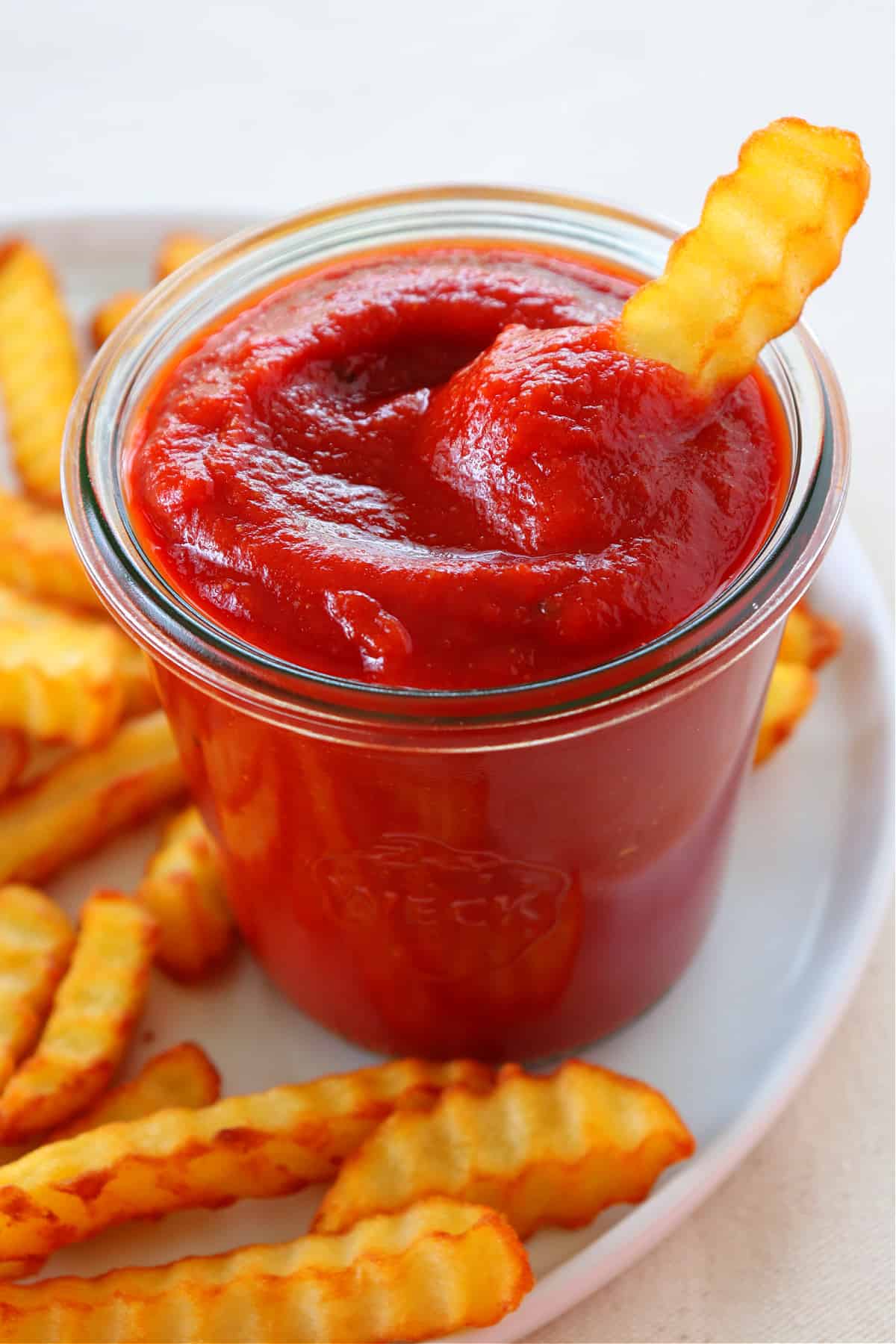
Classic Homemade Ketchup
A simple, homemade ketchup made with fresh tomatoes, sugar, vinegar, and spices for a tangy, flavorful condiment. This recipe is a must-try for any occasion.
🥘Ingredients
- 4 large ripe tomatoes, peeled and chopped
- 1/4 cup granulated sugar
- 1/4 cup apple cider vinegar
- 1 tsp salt
- 1/2 tsp black pepper
- 1/2 tsp garlic powder
- 1/2 tsp onion powder
- 1/4 tsp cayenne pepper (for heat)
- 1 tbsp tomato paste (for thickness)
👨🍳Directions
-
1
Peel tomatoes by cutting off the top, scoring the bottom in a cross pattern, and blasting them in the microwave for 10–15 seconds. Let cool, then scoop out the pulp with a spoon. -
2
In a saucepan, combine tomato pulp, sugar, vinegar, salt, black pepper, garlic powder, and onion powder. Stir well. -
3
Bring to a gentle boil, then reduce heat to low and simmer for 25–30 minutes, stirring occasionally, until thickened. -
4
Strain the mixture through a fine-mesh sieve to remove seeds and skin. Stir in tomato paste if using. -
5
Pour into a clean jar, seal, and let cool to room temperature before refrigerating.
🔧Equipment
- Medium saucepan
- Wooden spoon
- Fine-mesh strainer
- Clean jar with lid
- Chef’s knife
- Cutting board
📊Nutrition Facts (per serving)
📝Notes
Tips
- For extra depth, add 1 tsp mustard powder or a pinch of smoked paprika.
- Store in the fridge for up to 2 weeks or freeze for longer storage.
- Adjust sweetness by adding more sugar or reducing vinegar if preferred.
Substitutions
- Use unsweetened applesauce instead of sugar for a lower-sugar version.
- Replace vinegar with lemon juice for a brighter flavor.
Watch Video Of How Classic Homemade Ketchup Works
❓ Frequently Asked Questions About Ketchup
1. What are the key ingredients in a traditional homemade ketchup recipe, and why are they important?
The classic homemade ketchup recipe typically includes tomatoes (ripe and crushed), vinegar (usually apple cider or white vinegar), sugar (or sweetener), salt, garlic powder, onion powder, and spices like black pepper, mustard powder, and a touch of cayenne pepper (optional for heat). Tomatoes provide the base flavor, vinegar balances sweetness and preserves the ketchup, and spices enhance depth. The sugar helps stabilize the sauce, while vinegar adds tanginess. The spices give it that classic tomato flavor.
2. How do I ensure my homemade ketchup is smooth and free of lumps?
To achieve a silky texture, start by crushing the tomatoes finely (using a potato masher or food processor) before adding other ingredients. Blend them briefly if needed, then simmer gently over low heat while stirring constantly to break down any remaining bits. If lumps persist, strain the mixture through a fine-mesh sieve or cheesecloth before cooking. Avoid boiling vigorously, as it can cause separation. Also, adding a small amount of cornstarch or arrowroot powder (dissolved in a little water) can help thicken and smooth the sauce if needed.
3. Can I make ketchup without using vinegar, and what would be a different approach?
While vinegar is traditional for ketchup’s tangy flavor, you can experiment with alternative acid sources like citric acid, lemon juice, or even a small amount of tomato juice (for extra depth). However, without vinegar, the ketchup may lack the signature tang and could taste more tomato-forward or even slightly bitter. If you omit vinegar, you might need to adjust sweetness (reduce sugar slightly) and add a pinch of salt to balance flavors. Some people also use a small amount of lactobacillus (a probiotic powder) to mimic fermentation, but this is unconventional.
4. How long does homemade ketchup last, and how should I store it properly?
Homemade ketchup typically lasts 3–6 months in the refrigerator if stored correctly. For longer shelf life, you can can it (using a pressure canner for safety). To store it, transfer the ketchup to clean glass jars with new lids (or airtight plastic containers) and keep it in a cool, dark place. Avoid metal containers, as they can react with the acid. If the ketchup develops mold or an off smell, discard it immediately. For short-term storage, refrigerate in a sealed container for up to 2 months.
5. What’s the best way to adjust the sweetness or spice level in homemade ketchup?
If your ketchup is too sweet, reduce the sugar by ¼ to ½ cup and add a bit more vinegar (or lemon juice) to balance. For a tangier taste, increase vinegar by 1–2 tablespoons or add a splash of tomato juice. To enhance spice, add ½–1 teaspoon of cayenne pepper, red pepper flakes, or a pinch of smoked paprika. If the ketchup is too bland, stir in a small amount of garlic powder, onion powder, or a pinch of celery salt for extra depth. Taste as you go—homemade ketchup is best adjusted gradually.

