
japanese chicken recipe

The Best japanese chicken recipe
What I love most about this recipe is how it’s so adaptable. You can make it for a big family dinner, a weeknight when you’re short on time, or even just a quick snack with some rice and veggies. It’s got that perfect balance of flavors—bright, umami-rich sauce that coats the chicken so well, and a texture that’s tender but still holds up to every bite. My husband says it’s the only thing he’ll eat when he’s stressed, and honestly? I get it. There’s something comforting about something this flavorful, something that makes you feel like you’re eating something homemade, even if it’s just simmering in a pan. Plus, it’s got all those good-for-you things too—lean protein, fiber from the veggies, and healthy fats from the sesame seeds if you add them. It’s not just a meal; it’s a way to eat well without feeling like you’re missing out on anything fun. And honestly? My kids have been begging for it lately, so I’m glad I found a recipe that’s as easy as it is delicious.
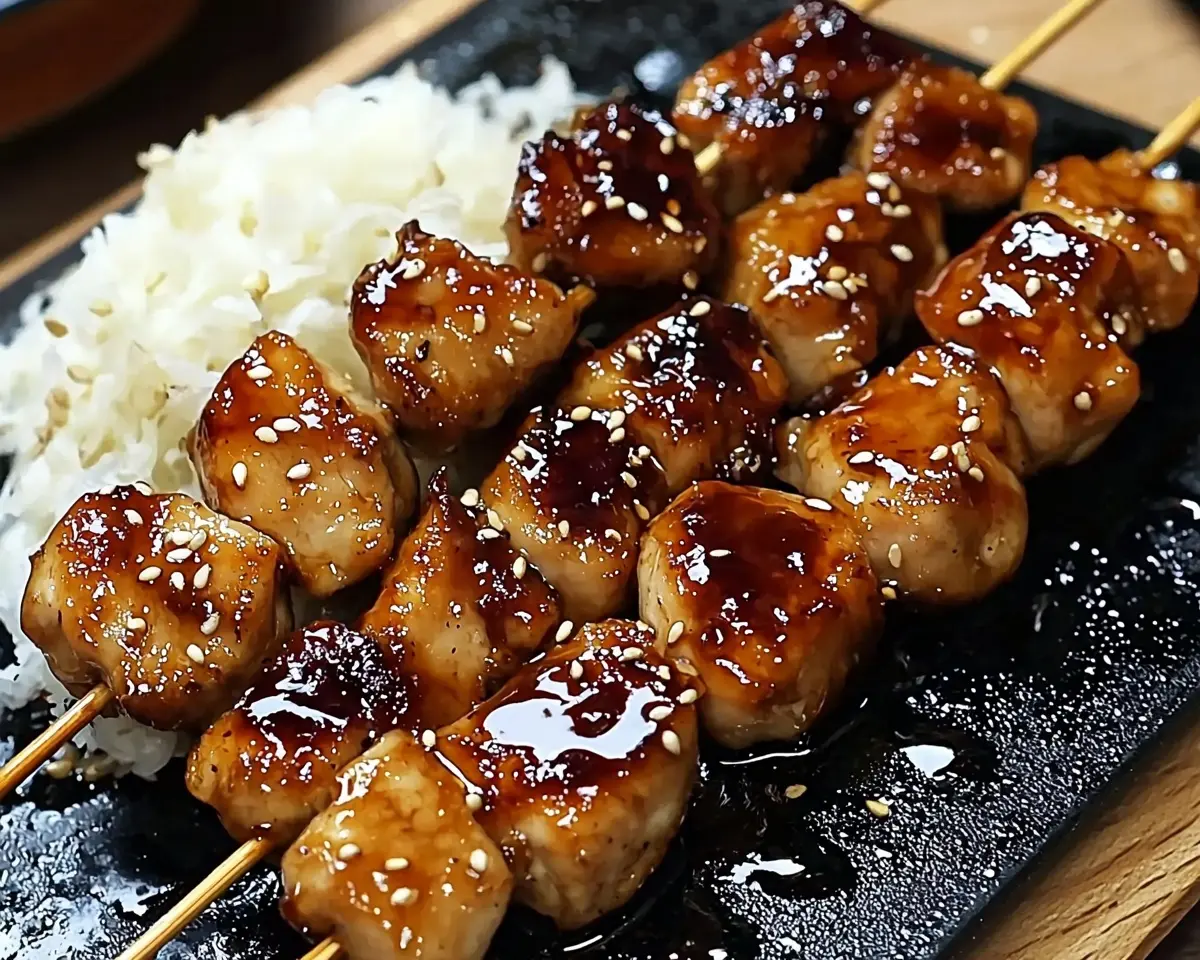
Teriyaki Chicken with Steamed Rice
A classic Japanese dish featuring succulent grilled chicken glazed in a sweet and savory teriyaki sauce, served with steamed white rice. This recipe is a must-try for any occasion.
🥘Ingredients
- 1.5 lbs boneless chicken thighs (cut into bite-sized pieces)
- 1 tbsp soy sauce
- 1 tbsp mirin
- 1 tbsp sake (or dry white wine)
- 1 tbsp honey
- 1 clove garlic (minced)
- 1 tsp grated ginger
- 1 tbsp vegetable oil
- 2 cups jasmine rice (rinsed)
- 2 cups water
- 1 tbsp sesame seeds
- 1/4 cup sliced green onions
- 1/4 cup chopped cilantro
👨🍳Directions
-
1
Cook the rice: Rinse the jasmine rice until the water runs clear. Combine rice and water in a pot, bring to a boil, then reduce heat to low, cover, and simmer for 15 minutes. Remove from heat and let it sit covered for another 10 minutes. -
2
Prepare the teriyaki sauce: In a small bowl, mix soy sauce, mirin, sake, honey, minced garlic, and grated ginger. -
3
Cook the chicken: Heat vegetable oil in a skillet over medium-high heat. Add chicken pieces and cook for 5-6 minutes until golden brown. Pour the teriyaki sauce over the chicken and stir to coat evenly. Cook for another 5-7 minutes until the sauce thickens and the chicken is fully cooked (internal temperature should reach 165°F/74°C). -
4
Garnish and serve: Divide the cooked rice into bowls. Place the teriyaki chicken on top of the rice. Garnish with sesame seeds, sliced green onions, and chopped cilantro if desired.
🔧Equipment
- Mixing bowls
- Cutting board
- Sharp knife
- Large skillet or grill pan
- Steamer basket
- Cooking pot
📊Nutrition Facts (per serving)
📝Notes
- For a quicker sauce, use store-bought teriyaki sauce and adjust the honey to taste.
- Ensure chicken reaches 165°F (74°C) internally for safety.
- For a gluten-free option, use tamari instead of soy sauce.
Watch Video Of How Teriyaki Chicken with Steamed Rice Works
❓ Frequently Asked Questions About Teriyaki Chicken with Steamed Rice
1. What is the secret to making the perfect Japanese-style chicken (Karaage) that is crispy outside and tender inside?
The secret lies in double-frying—first in hot oil to sear the chicken, then in a slightly cooler oil to achieve maximum crispiness while keeping the inside juicy. Use high-quality vegetable oil (like canola or peanut oil) and avoid overcrowding the pan. For extra tenderness, marinate the chicken in soy sauce, mirin, sugar, and a pinch of salt for at least 30 minutes before frying. Additionally, cutting the chicken into uniform pieces ensures even cooking.
2. Can I use chicken thighs instead of breasts for karaage, and if so, why?
Yes! Chicken thighs are a better choice for karaage because they are more flavorful, juicier, and hold up better to frying compared to breasts. Thighs also develop a richer, deeper flavor due to their higher fat content, which enhances the crispy exterior. If using breasts, consider trimming excess fat and brining them for 30 minutes in a mix of soy sauce, sugar, and a little rice vinegar to prevent dryness.
3. How do I avoid making karaage soggy or greasy?
To keep karaage crispy and not soggy, follow these key steps:
– Pat the chicken dry with paper towels before frying to remove excess moisture.
– Use enough oil—fill the pan about halfway and heat it to 350–375°F (175–190°C) before adding the chicken.
– Don’t overcrowd the pan—fry in batches if needed to maintain proper oil temperature.
– Double-fry as mentioned earlier—first fry at high heat for 3–4 minutes, then remove and fry again at a slightly lower heat for 1–2 minutes to seal in crispiness.
– Keep the oil hot—if it starts to smoke, lower the heat or add more oil.
4. What are the best marinade ingredients for karaage, and how long should I marinate it?
A classic Japanese karaage marinade includes:
– 1 cup soy sauce (or tamari for gluten-free)
– ½ cup mirin (or ¼ cup sugar + ¼ cup water for a substitute)
– 2 tbsp sugar (or honey)
– 1 tbsp rice vinegar (optional, for brightness)
– 1 tbsp sesame oil (optional, for extra depth)
– 1 tsp garlic powder (or 1 fresh garlic clove, minced)
– 1 tsp ginger powder (or 1 tbsp fresh grated ginger)
– ½ tsp black pepper
Marinate the chicken for at least 30 minutes (overnight for best results), but do not exceed 4 hours—longer marinating can make the meat too tender and lose its crispiness.
5. How do I serve karaage traditionally in Japan, and what sides or toppings are commonly paired with it?
Karaage is traditionally served hot and crispy, often with these classic pairings:
– Steamed rice (white or brown) as the base.
– Pickled vegetables (tsukemono) like cucumber, daikon, or radish for freshness.
– Miso soup to balance the richness.
– Toppings like bonito flakes (katsuobushi), nori (seaweed), or shredded cabbage for extra texture.
– A drizzle of ponzu or soy sauce for tangy flavor.
– Pickled ginger (beni shoga) to cleanse the palate.
Some modern variations include karaage tacos, sandwiches, or even as a topping for ramen, but the traditional Japanese style remains the most beloved.

