
kalua pork with cabbage recipe


The Best kalua pork with cabbage recipe
Kalua pork with cabbage is one of those meals I make when I want dinner to feel like a big deal without spending the whole day in the kitchen. I rub a pork shoulder with coarse salt and liquid smoke, set it in the slow cooker or a covered pot in the oven, and let it cook low and slow until the meat pulls apart with a fork. The cabbage goes in near the end so it keeps some texture and soaks up all the salty, smoky juices. It smells incredible while it cooks, and the finished dish tastes like something you would serve at a party.
My family asks for this one by name. My kids pile the shredded pork and soft cabbage over rice and eat it without a single complaint, which is rare around here, and my husband likes his with extra cabbage and a splash of the pan juices. I serve it for weeknights because the prep takes about 15 minutes, and I also make it for birthdays, graduation parties, and game days because it feeds a crowd and holds well on the counter in a slow cooker. There is no last minute cooking right before people show up, which is the part I appreciate most.
I also feel good about what is on the plate. Pork shoulder gives you a solid amount of protein, and the cabbage adds vegetables and bulk to the meal, so a little meat stretches further than you would expect. I keep the seasoning simple, just salt and smoke, so it works for kids and for adults who want to add their own hot sauce or soy sauce at the table. Served with rice or a pile of greens, it makes a filling dinner that does not leave anyone hungry an hour later.
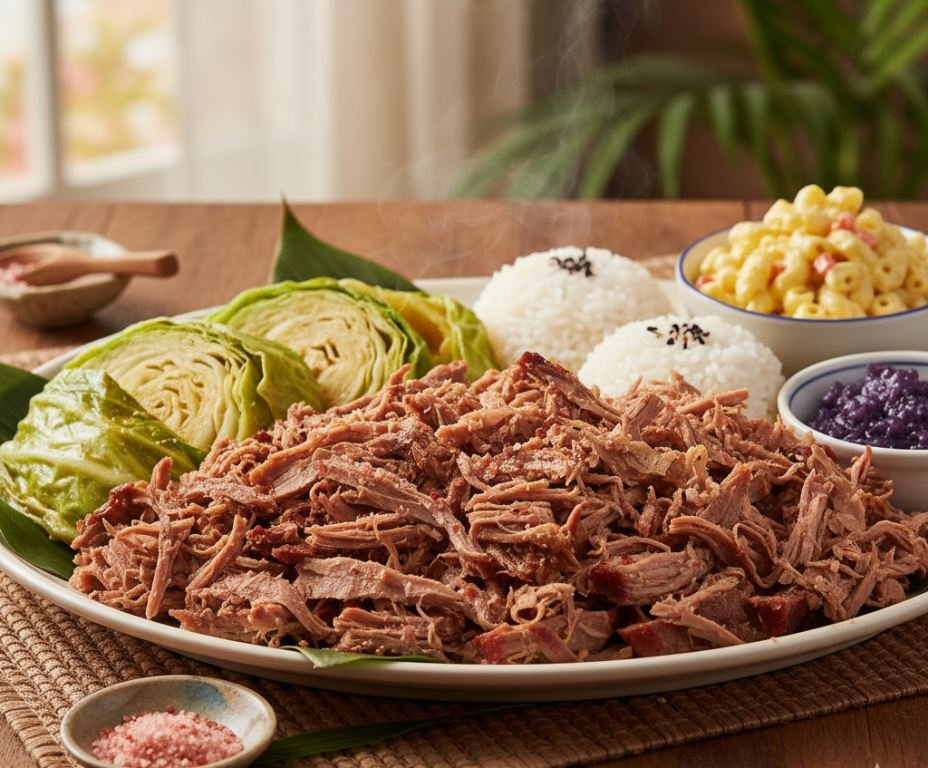
Kalua Pork with Cabbage
Tender pork shoulder rubbed with coarse salt and liquid smoke, slow-cooked until it shreds at the touch of a fork. Cabbage steams right in the same pot at the end, soaking up the smoky drippings.
🥘Ingredients
For the Pork
For the Cabbage
For Serving
👨🍳Directions
🔧Equipment
📊Nutrition Facts (per serving)
📝Notes
Watch Video Of How Kalua Pork with Cabbage Works
I make this kalua pork with cabbage for family gatherings because it feeds a crowd without much work from me, and everyone leaves happy. The slow cooker does the heavy lifting while I get to enjoy my own party. It is simple, forgiving, and always a good idea no matter the occasion.
❓ Frequently Asked Questions About Kalua Pork with Cabbage
1. What cut of pork should I use for kalua pork?
Pork butt, also sold as Boston butt or pork shoulder, is the standard choice. Its heavy marbling breaks down during long, slow cooking and produces the shreddable texture kalua pork is known for. Avoid lean cuts like loin or tenderloin, which turn dry before they turn tender. A bone-in roast adds a little extra richness, but boneless works just as well and is easier to shred.
2. Can I make kalua pork without an imu or banana leaves?
Yes. The smoky character traditionally comes from an underground imu, but a slow cooker, oven, or pressure cooker gets you close. Liquid smoke and coarse Hawaiian-style sea salt supply most of the flavor. If you want the banana-leaf aroma, wrap the roast in banana leaves or ti leaves before cooking, or line the slow cooker with them. Otherwise, skip them entirely and rely on the salt and smoke.
3. How much salt should I use, and what if I only have table salt?
Use about 1 tablespoon of coarse sea salt per 5 pounds of pork, then adjust after shredding. Coarse crystals measure differently than fine table salt, so if table salt is all you have, start with roughly half that amount and taste before adding more. The cabbage absorbs salt quickly, so season the pork first, add the cabbage near the end, and check the finished dish before adding anything extra.
4. Why did my kalua pork turn out dry?
Dryness usually comes from too high a temperature, too short a cook, or trimming away the fat cap. Keep the oven at 300°F or the slow cooker on low, and let the pork go until it pulls apart with almost no resistance. That typically takes 6 to 8 hours in a slow cooker depending on size. Shred the meat in the reserved cooking liquid rather than draining it all off, which keeps the pork moist.
5. How should I store and reheat leftovers?
Refrigerate cooled pork and cabbage in a sealed container for up to four days. Reheat gently on the stovetop with a splash of water or broth, or in a covered dish in a 300°F oven, since high heat tightens the meat. The leftovers hold up well in fried rice, soup, or tacos. Cooked kalua pork also freezes well for up to three months; thaw overnight in the refrigerator before reheating.
