
kung pao chicken recipe

The Best kung pao chicken recipe
What I appreciate most about this dish is how versatile it is. You can serve it over rice for a hearty meal, wrap it in lettuce for a lighter option, or even toss it with noodles if you’re feeling like something different. Plus, it’s packed with protein from the chicken and nutrients from the bell peppers, peanuts, and other veggies. The peanuts add a nice crunch and healthy fats, while the chili peppers give it a little kick that keeps things interesting. It’s a meal that feels indulgent but is actually pretty balanced, which is exactly what I look for when feeding my family.
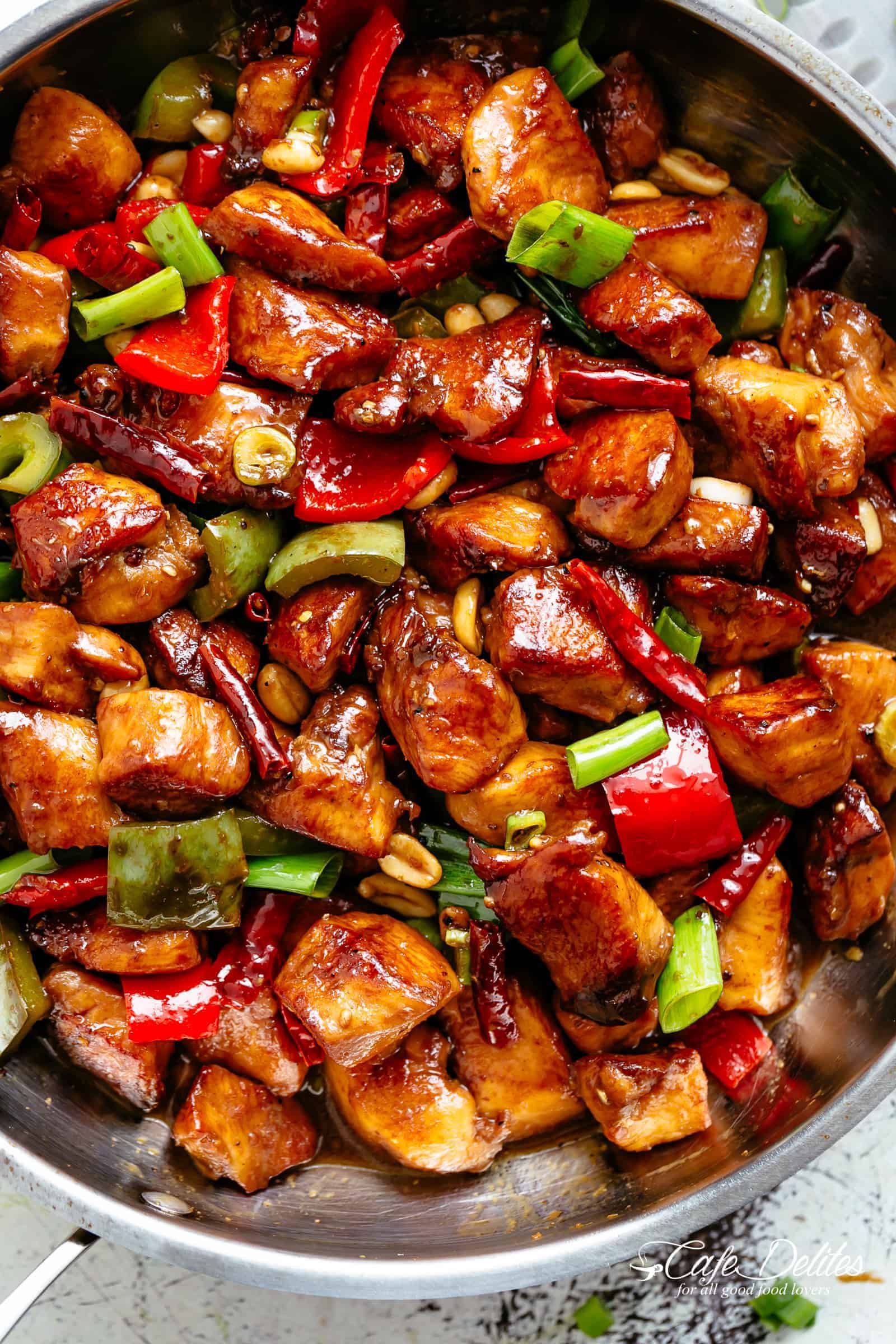
Kung Pao Chicken
A classic Sichuan dish featuring tender chicken stir-fried with dried chilies, Sichuan peppercorns, and roasted peanuts in a savory, spicy, and slightly sweet sauce. This dish is packed with bold flavors and a satisfying crunch.
🥘Ingredients
- 1 lb (450g) boneless, skinless chicken thighs or breasts, cut into 1-inch cubes
- 2 tbsp soy sauce
- 1 tbsp Shaoxing wine (or dry sherry)
- 1 tbsp cornstarch
- 1 tsp sesame oil
- 3 tbsp soy sauce
- 2 tbsp dark soy sauce (or substitute with regular soy sauce)
- 1 tbsp Chinkiang black vinegar (or balsamic vinegar)
- 1 tbsp Shaoxing wine (or dry sherry)
- 1 tbsp hoisin sauce
- 1 tbsp sugar
- 1 tsp cornstarch mixed with 1 tbsp water (slurry)
- 1/2 cup chicken stock
- 3 tbsp vegetable oil (divided)
- 12-15 dried red chilies (adjust to taste)
- 1 tsp Sichuan peppercorns (optional, for numbing spice)
- 3 cloves garlic, minced
- 1-inch piece ginger, minced
- 1 bell pepper, diced
- 3 green onions, cut into 1-inch pieces
- 1/2 cup roasted peanuts (or cashews)
- 1 tsp sesame oil (for finishing)
👨🍳Directions
-
1
Marinate the chicken: In a large bowl, combine chicken cubes with soy sauce, Shaoxing wine, cornstarch, and sesame oil. Mix well and let sit for 15 minutes. -
2
Prepare the sauce: In a small bowl, whisk together soy sauce, dark soy sauce, black vinegar, Shaoxing wine, hoisin sauce, sugar, and chicken stock. Set aside. -
3
Stir-fry the aromatics: Heat 2 tbsp vegetable oil in a wok or large skillet over high heat. Add dried chilies and Sichuan peppercorns (if using), stirring for 10-15 seconds until fragrant. Add garlic and ginger, stir-fry for another 10 seconds. -
4
Cook the chicken: Add the marinated chicken to the wok, spreading it out in a single layer. Let sear for 1-2 minutes before stirring. Cook for 3-4 minutes until the chicken is no longer pink. -
5
Add vegetables: Push the chicken to one side of the wok, add the remaining 1 tbsp oil, then stir-fry the bell pepper and green onions for 1-2 minutes until slightly softened. -
6
Combine and thicken: Pour the sauce mixture into the wok and stir everything together. Bring to a simmer, then add the cornstarch slurry. Stir until the sauce thickens, about 1-2 minutes. -
7
Finish the dish: Add the roasted peanuts and stir to combine. Drizzle with sesame oil and toss once more. Remove from heat and serve hot. -
8
Garnish and serve: Transfer to a serving dish and garnish with additional green onions or sesame seeds if desired. Serve with steamed rice.
🔧Equipment
- Large mixing bowl
- Wok or large skillet
- Wooden spoon or spatula
- Small bowl (for sauce)
- Knife and cutting board
- Measuring spoons and cups
📊Nutrition Facts (per serving)
📝Notes
Watch Video Of How Kung Pao Chicken Works
❓ Frequently Asked Questions About Kung Pao Chicken
1. What is Kung Pao Chicken, and where does it originate from?
Kung Pao Chicken (宫保鸡丁, Gōngbǎo Jīdīng) is a classic Sichuan dish known for its bold, spicy, and slightly sweet flavors. It originated in China’s Sichuan province and is named after Ding Baozhen, a Qing Dynasty official whose title was “Gongbao” (Palace Guardian). The dish traditionally features diced chicken stir-fried with dried red chilies, Sichuan peppercorns, peanuts, and vegetables in a savory sauce.
—
2. What makes Kung Pao Chicken spicy, and can I adjust the heat level?
The spiciness in Kung Pao Chicken comes from dried red chilies and Sichuan peppercorns, which add both heat and a unique numbing sensation. To adjust the heat level:
– Reduce spice: Use fewer chilies or remove the seeds (which contain most of the heat).
– Mild version: Substitute with milder peppers like bell peppers or omit the chilies entirely.
– Extra spicy: Add more chilies or include chili oil in the sauce.
—
3. What’s the best cut of chicken to use for Kung Pao Chicken?
The ideal cut is boneless, skinless chicken thighs or breasts, as they stay tender when stir-fried. Thighs are preferred for their juiciness and flavor, while breasts are leaner but can dry out if overcooked. Cut the chicken into ½-inch cubes for even cooking and a classic texture.
—
4. Can I make Kung Pao Chicken without peanuts or with substitutions?
Yes! Peanuts add crunch, but you can substitute or omit them:
– Substitutes: Cashews, almonds, or walnuts (toast lightly for extra flavor).
– No nuts: Use water chestnuts or bell peppers for crunch, or skip them entirely.
– Allergies: Sunflower seeds or pumpkin seeds work as nut-free alternatives.
—
5. How do I thicken the sauce for Kung Pao Chicken if it’s too runny?
A well-balanced Kung Pao sauce should lightly coat the ingredients. If it’s too thin:
– Cornstarch slurry: Mix 1 tsp cornstarch with 1 tbsp water, stir into the sauce, and cook for 1–2 minutes until thickened.
– Reduce the sauce: Simmer uncovered for a few minutes to evaporate excess liquid.
– Adjust ingredients: Ensure you’re using the right ratio of soy sauce, vinegar, and sugar (typically 1:1:1 or 2:1:1).

