
maine lobster roll recipe

The Best maine lobster roll recipe
What I love most about this recipe isn’t just the taste—it’s how adaptable it is. Whether you’re serving it at a casual family barbecue, a fancy dinner for friends, or just grabbing a bite on your way home from the beach, the lobster roll holds its own. The bun can be a classic sesame roll or a fluffy brioche if you’re feeling extra fancy, and the way the lobster is gently poached and then chilled just right makes it tender without being mushy. My kids swear by the way the cold lobster contrasts with the warm, buttery bun, and honestly, I think that’s the secret to making it feel like a perfect balance of comfort and freshness. Plus, it’s not just about the lobster—there’s something so satisfying about the way the mayo and lemon brighten up the dish, making every bite feel light yet rich. And let’s be honest, there’s nothing like the health benefits of eating fresh seafood, especially when it’s paired with whole grains and plenty of flavorful veggies in the slaw. It’s a meal that’s as good for you as it is for your taste buds.
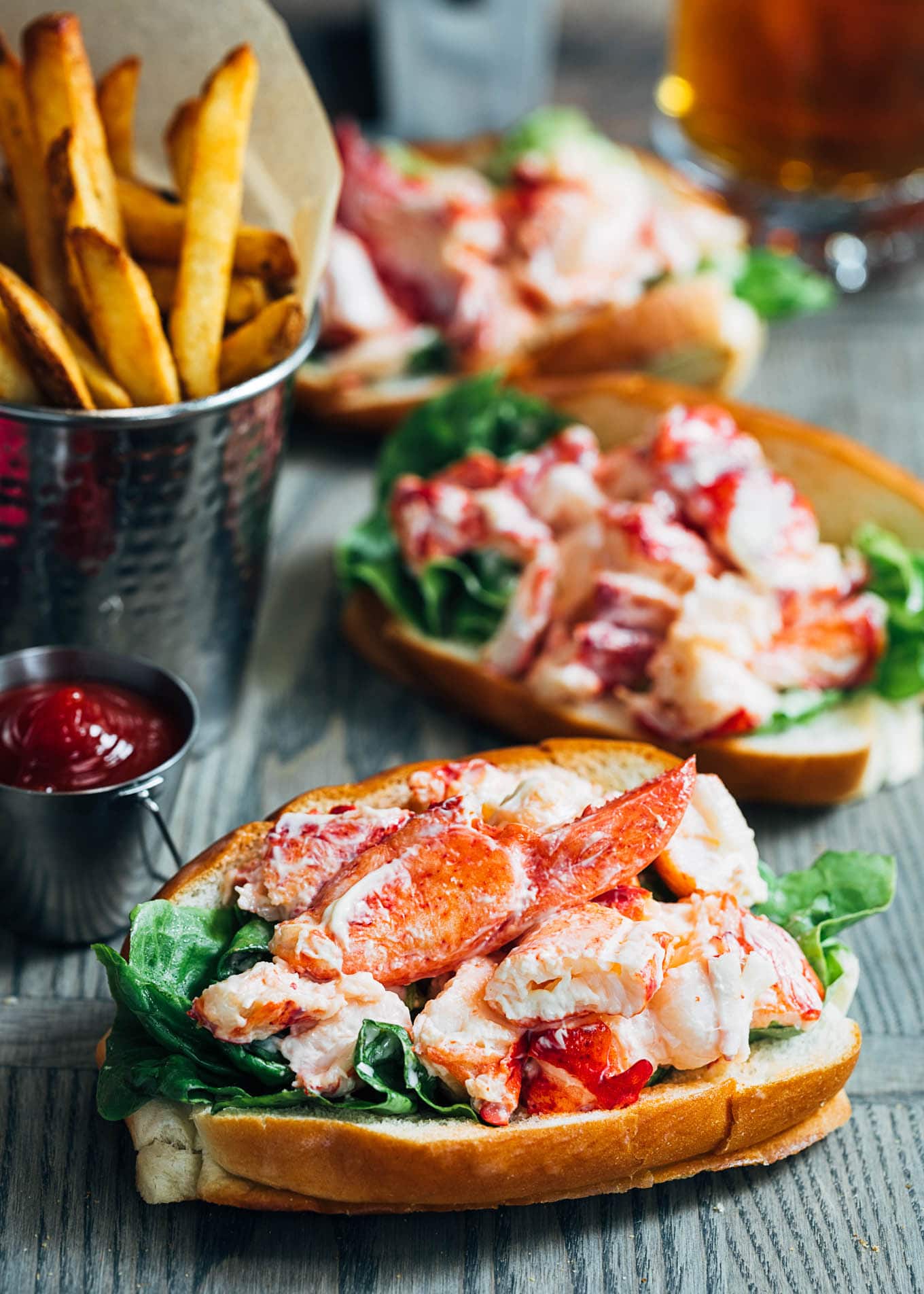
Classic Maine Lobster Roll
A buttery, hand-cut French-style bun topped with succulent lobster meat, creamy lobster bisque, and a touch of lemon. Perfect for a luxurious seafood meal.
🥘Ingredients
- 4 large brioche buns (or homemade brioche dough)
- 1 tbsp melted butter
- 1 tsp lemon zest
- 1 lb cooked lobster meat (peeled and deveined)
- 1/2 cup mayonnaise
- 1 tbsp lemon juice
- 1 tbsp chopped chives
- 1/2 tsp Old Bay seasoning
- 1 cup lobster stock
- 1/2 cup heavy cream
- 1/2 cup mayonnaise
- 1/4 cup chopped parsley
- 1 tsp lemon juice
- Salt and pepper to taste
👨🍳Directions
-
1
Preheat oven to 375°F (190°C). If using homemade buns, shape dough into rounds, brush with melted butter, sprinkle with lemon zest, and bake for 15-20 mins until golden. -
2
In a bowl, mix lobster meat with mayonnaise, lemon juice, chives, and Old Bay seasoning until well combined. -
3
In a saucepan, heat lobster stock and heavy cream until warm. Stir in mayonnaise, parsley, and lemon juice. Simmer for 5 mins until slightly thickened. Season with salt and pepper. -
4
To assemble, split buns in half horizontally. Spread a generous amount of lobster bisque on the bottom half, then top with lobster meat mixture. Close the bun and serve immediately.
🔧Equipment
- Mixing bowls
- Knife and cutting board
- Mixing spoon
- Food processor (optional)
- Baking sheet
- Oven
- Serving platter
📊Nutrition Facts (per serving)
📝Notes
Tips
- For extra freshness, use lobster meat from the day before.
- Substitute mayonnaise with Greek yogurt for a lighter option.
- Garnish with a lemon wedge and fresh chives for presentation.
Variations
- Add a poached egg on top for an ‘eggy’ lobster roll.
- Use crab meat instead of lobster for a lighter twist.
Watch Video Of How Classic Maine Lobster Roll Works
❓ Frequently Asked Questions About Maine Lobster Roll
What is the best way to prepare fresh Maine lobster for a lobster roll?
To prepare fresh Maine lobster for a lobster roll, start by thoroughly rinsing the lobster under cold water to remove any sand or debris. Use a sharp knife to carefully open the shell along the back, making sure to avoid piercing the meat. Once opened, remove the meat from the shell and discard the shell. For best results, use a lobster fork or a butter knife to gently separate the meat from the tail and body. Trim any remaining shell pieces and discard them. If you prefer, you can also use a lobster claw spreader to help separate the meat more easily. Finally, pat the meat dry with paper towels before using it in your lobster roll.
—
How do I choose the right type of bread for a traditional Maine lobster roll?
For a traditional Maine lobster roll, use a soft, buttery, and slightly sweet bread that holds its shape well when toasted. The most popular choice is a soft, white sandwich roll—typically around 6–8 inches in diameter. Look for a roll that’s slightly stale but not hard, as it will absorb the lobster butter without becoming soggy. Some bakeries sell lobster rolls specifically, which are designed to be extra soft and tender.
—
What is the secret to the perfect lobster butter for a lobster roll?
The key to the best lobster butter lies in a balance of rich, creamy, and slightly tangy flavors. Start with high-quality unsalted butter (about ½ cup for a standard roll), softened but not melted. Mix in minced garlic (1–2 cloves), lemon juice (about 1–2 tbsp), white wine vinegar or heavy cream (1–2 tbsp), and a pinch of salt and black pepper. For extra richness, add chopped fresh chives or parsley and a splash of butter-infused olive oil (optional). The butter should be smooth, glossy, and spreadable—never too runny.
—
Why does my lobster roll taste bland, even though I used fresh lobster?
If your lobster roll lacks flavor despite using fresh lobster, check these common mistakes:
1. Lobster preparation – Ensure the meat is properly cleaned and trimmed (any shell bits or cartilage can taste bitter). If using frozen lobster, thaw it in cold water (not room temperature) and pat it dry.
2. Butter consistency – If the butter is too cold or too warm, it won’t emulsify well. Use softened butter and mix it thoroughly with the other ingredients.
3. Bread choice – A stale or overly soft roll can make the roll taste flat. Use a slightly firm roll that holds up to toasting.
4. Seasoning – Lobster is naturally mild, so enhance it with lemon zest, chives, or a touch of Old Bay seasoning (a classic Maine trick).
5. Cooking method – If the roll is overcooked, the bread can dry out. Toast it just until golden (30–60 seconds per side) and press lightly with a spatula to keep it soft.
—
Can I make a lobster roll with frozen lobster, and if so, how do I adjust the recipe?
Yes, you can use frozen lobster, but adjust the process to ensure the best texture and flavor:
1. Thawing – Place frozen lobster in a colander under cold water (not warm water) for 30–60 minutes until fully thawed. Pat dry thoroughly.
2. Butter adjustment – Since frozen lobster can be slightly denser, use ½ cup butter (instead of ½ cup for fresh) and add 1 extra tbsp of lemon juice or cream to compensate for any dryness.
3. Butter consistency – The butter may separate slightly when frozen, so mix it well before spreading. If needed, add a splash of hot water (1 tsp) to help emulsify.
4. Lobster preparation – Trim any remaining shell bits, as frozen lobster can sometimes have more cartilage. For extra juiciness, lightly press the meat with a fork before assembling.
5. Bread – Use a slightly stiffer roll (like a brioche or lobster roll-specific bread) to prevent sogginess. Toast it well and press gently to keep it soft.


