
pesto recipe with pine nuts

The Best pesto recipe with pine nuts
My family loves it because it’s versatile—you can toss it into pasta, spread it on sandwiches, or even use it as a dip for veggies. The kids especially enjoy it when we make it into pesto pizzas or blend it into smoothies for breakfast. It’s not just delicious, though; it’s packed with good stuff. Pine nuts are loaded with healthy fats and protein, while the basil adds vitamins that help keep things running smoothly. It’s a recipe that’s as nourishing as it is satisfying, and it’s something you can make in bulk and store for days. Whether you’re hosting a small gathering or just want a quick, flavorful meal at home, this pesto is a reliable choice. The kids always ask for seconds, and honestly, I don’t blame them.
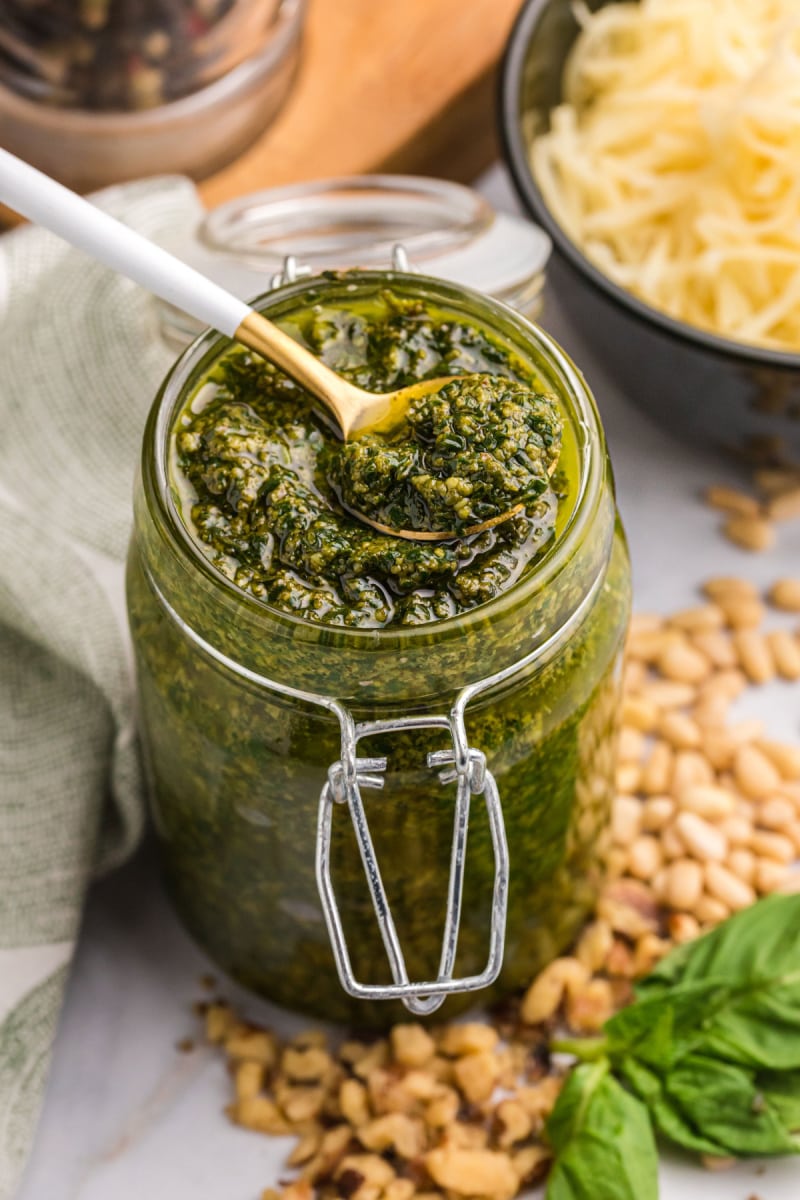
Classic Basil Pesto with Pine Nuts
A vibrant and flavorful pesto sauce made with fresh basil, garlic, pine nuts, Parmesan cheese, olive oil, and a touch of lemon. Perfect for pasta, dipping bread, or as a topping for grilled vegetables.
🥘Ingredients
- 1 cup fresh basil leaves, packed
- 1/2 cup raw pine nuts
- 1/2 cup grated Parmesan cheese
- 3 cloves garlic
- 1/4 cup extra-virgin olive oil
- 1/2 cup water (as needed)
- 1 tbsp lemon juice
- Salt to taste
👨🍳Directions
-
1
Rinse fresh basil leaves under cold water and pat dry. Remove stems and place leaves in a food processor. -
2
Add pine nuts, grated Parmesan, garlic cloves, lemon juice, and a pinch of salt to the food processor. Pulse until finely chopped. -
3
Slowly drizzle in olive oil while processing, scraping down the sides as needed. Add water 1 tablespoon at a time if the mixture is too thick. -
4
Process until the mixture is smooth and creamy. If desired, strain through a fine-mesh sieve for a silkier texture. -
5
Transfer pesto to a bowl, cover with plastic wrap, and press an extra piece of plastic directly on the surface to prevent oil from hardening. Store in the refrigerator for up to 5 days or freeze for longer storage.
🔧Equipment
- Food processor or blender
- Medium mixing bowl
- Fine-mesh strainer (optional)
📊Nutrition Facts (per serving)
📝Notes
Tips
- For extra richness, add a handful of walnuts or pecans instead of pine nuts.
- Use high-quality olive oil for the best flavor.
- Adjust garlic and lemon juice to taste—basil pesto is very versatile.
Substitutions
- {“original”:”Parmesan cheese”,”alternative”:”Pecorino Romano or fresh mozzarella”}
Watch Video Of How Classic Basil Pesto with Pine Nuts Works
❓ Frequently Asked Questions About Basil Pesto with Pine Nuts
What is the best way to prepare fresh basil for pesto?
To prepare fresh basil for pesto, gently rinse the leaves under cold water to remove any dirt or debris. Pat them dry with a clean kitchen towel or paper towels to remove excess moisture. For the best texture, use about 2–3 cups of fresh basil leaves per batch, chopping them finely with a sharp knife or using a food processor.
—
How do I choose the right pine nuts for pesto?
Opt for high-quality, fresh pine nuts—look for those that are plump, uniformly colored (golden or light brown), and free from mold or discoloration. Store-bought pine nuts from reputable brands (like those from Italy or specialty grocers) work well, but organic or raw pine nuts tend to have the best flavor. Avoid nuts that are overly dry or have a bitter taste.
—
Can I substitute pine nuts in pesto, and what are some alternatives?
Yes! If you’re out of pine nuts, try these substitutes:
– Walnut pesto: Blend walnuts (toasted) with garlic, Parmesan, and olive oil.
– Almond pesto: Use almonds (soaked if dry) for a lighter, slightly sweeter flavor.
– Cashew pesto: Soak cashews, blend with basil, garlic, and Parmesan.
– Sunflower seeds: For a nut-free option, toast sunflower seeds with garlic and herbs.
Just adjust the oil-to-herb ratio slightly for best results.
—
Why does my pesto taste bland or lack flavor?
Several factors can affect flavor:
1. Under-extracted herbs: If you’re not blending long enough, the basil and garlic won’t release their oils. Use a food processor or pulse in batches for 30–60 seconds until finely chopped.
2. Too much liquid: If you added too much water or olive oil, the pesto may dilute the flavor. Use just enough to bind the ingredients (about ¼ cup liquid per 2 cups basil).
3. Old or wilted herbs: Fresh basil is key—use vibrant, crisp leaves. Wilted basil loses intensity.
4. Cheese or garlic balance: If Parmesan or garlic is too strong, reduce it slightly or add a pinch of salt to balance. Taste as you go!
—
How should I store leftover pesto to keep it fresh?
For short-term storage (up to 5 days):
– Transfer pesto to an airtight container or jar, pressing it down to remove air bubbles.
– Store in the refrigerator (use within 5 days for best quality).
For longer storage (up to 3 months):
– Freeze pesto in ice cube trays (fill with pesto and olive oil) or small portions in a freezer-safe container.
– Thaw overnight in the fridge before using. Freezing slightly alters texture but preserves flavor.


