
recipe for making matzo

The Best recipe for making matzo
I love this recipe because it’s perfect for any occasion—whether it’s a cozy Sunday dinner, a holiday meal, or just when you’re feeling a little down. It’s got that hearty, comforting texture, and the matzo balls are soft and fluffy, not dry like some other recipes might make them. Plus, it’s got all the right flavors—savory broth, tender meat, and just the right amount of creaminess from the egg wash. My kids would eat it every day if I let them, and honestly, I don’t blame them. It’s like a little warm hug in a bowl, and that’s something you just can’t beat.
And let’s not forget the health benefits—it’s packed with protein from the meatballs, fiber from the matzo, and all the nutrients from the vegetables. It’s not heavy, but it’s not light either. It’s balanced, and that’s what makes it so special. My family loves it so much that I even make it for potlucks and gatherings, and everyone always asks for the recipe. It’s a recipe that’s easy to make, easy to eat, and easy to love. Plus, it’s something you can make ahead and reheat—perfect for busy days or when you just want something warm and familiar.
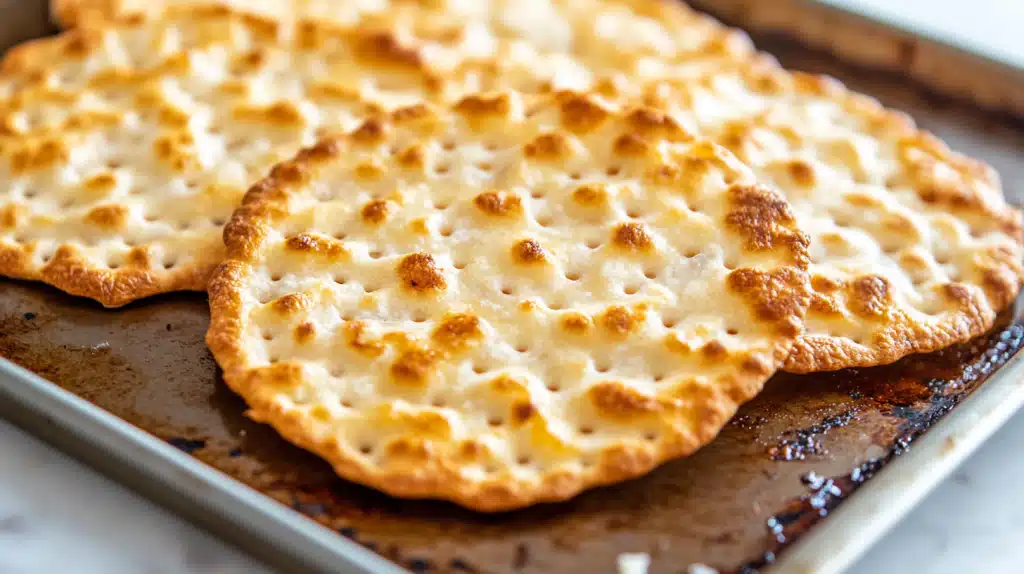
Traditional Homemade Matzo
A classic recipe for homemade matzo, a traditional Jewish flatbread used during Passover. This recipe captures the simplicity and authenticity of the dish.
🥘Ingredients
- 3 cups all-purpose flour
- 1 tsp salt
- 1 tsp baking soda
- 1 cup water (plus extra for kneading)
- 1 cup water (for soaking matzo)
- 1 tbsp vinegar (optional, for extra crispiness)
👨🍳Directions
-
1
Preheat oven to 375°F (190°C). Line two baking sheets with parchment paper. -
2
In a large bowl, combine flour, salt, and baking soda. Gradually add water while mixing until a stiff dough forms. Knead for 5-7 minutes until smooth and elastic. -
3
Place dough on a lightly floured surface and divide into 12 equal pieces. Roll each piece into a thin, flat circle, about 1/8-inch thick. -
4
Place rolled circles onto the prepared baking sheets, spacing them about 2 inches apart. Sprinkle each with a little water to help them hold their shape. -
5
Bake in the preheated oven for 15-20 minutes, or until edges are lightly browned. Remove from oven and let cool on a cooling rack. -
6
For extra crispiness, soak cooled matzo in water mixed with vinegar for 5-10 minutes, then dry thoroughly on a clean towel before storing.
🔧Equipment
- Mixing bowls
- Stand mixer or large mixing bowl and wooden spoon
- Rolling pin
- Baking sheet
- Oven
- Parchment paper
- Cooling rack
📊Nutrition Facts (per serving)
📝Notes
Tips
- Ensure dough is well-kneaded for even baking. If dough is too sticky, add a little more flour.
- For a gluten-free version, use a gluten-free flour blend.
- Store matzo in an airtight container at room temperature for up to 2 weeks.
TraditionalNote: Traditionally, matzo is baked in a special oven called a ‘matzeh oven’ but this homemade version is a close approximation.
Watch Video Of How Traditional Homemade Matzo Works
❓ Frequently Asked Questions About Matzo
1. What are the key ingredients required to make traditional homemade matzo?
To make traditional homemade matzo, you’ll need all-purpose flour (or a mix of all-purpose and whole wheat flour for a denser texture), water, salt, and a small amount of egg white or vinegar (traditionally used as a dough conditioner). Some recipes also include a pinch of sugar to help the dough stretch without tearing. The dough should be very thin, almost translucent, and baked quickly at a high temperature to prevent fermentation.
—
2. How do you prepare the dough for matzo-making, and why is it so thin?
The dough for matzo is rolled out extremely thin—typically to the thickness of parchment paper—to ensure it cooks uniformly and doesn’t have time to rise or develop gluten. Traditionally, it’s made by rolling the dough repeatedly between sheets of parchment paper to prevent sticking. The thinness also allows the matzo to dry out quickly during baking, which is crucial for its chewy texture. Some recipes call for kneading with egg white or vinegar to help the dough stretch without tearing.
—
3. What is the best way to bake matzo, and how long does it take?
Matzo is traditionally baked in a special matzo oven (matzeh leket) at a very high temperature (around 480–500°F/250–260°C), but a regular oven can work in a pinch. The dough should be baked immediately after rolling to prevent fermentation. It takes about 10–15 minutes for the matzo to cook through, but the key is high heat and quick baking. The matzo is done when it’s golden-brown and crisp on the outside but still soft inside. Overbaking can make it dry.
—
4. Why is matzo eaten during Passover, and what makes it special?
Matzo is eaten during Passover because it’s made from unleavened dough, adhering to the Jewish holiday’s dietary laws, which prohibit leavened bread (chametz). The quick-baking process prevents fermentation, so the matzo remains soft and chewy. Its simplicity—just flour, water, and salt—makes it a staple during the holiday. Additionally, matzo’s neutral taste allows it to pair with almost any Passover meal, making it a versatile and sacred food.
—
5. Can you make matzo without a matzo press or special equipment?
Yes! While a matzo press (used to flatten the dough) makes the process easier, you can still make matzo without it by rolling the dough very thin between parchment paper until it’s almost translucent. The dough should be very soft—almost like playdough—so it stretches easily. If it tears, you can repair it by pressing the torn edges together gently. A regular rolling pin works, but you may need to roll multiple times to achieve the right thinness. For best results, bake immediately after rolling.

