
recipe with rye bread

The Best recipe with rye bread
What I love most about rye bread is how it’s perfect for both simple and special occasions. It’s sturdy enough to hold up to a hearty sandwich or a loaded burger, but it also works beautifully in a rustic loaf for a dinner party. My family and I enjoy it every day—sometimes as a breakfast toast with jam and cream cheese, sometimes as a side for grilled meats or roasted vegetables. Plus, it’s healthier than white bread because it’s packed with whole grains and antioxidants. It’s a recipe that’s easy to make from scratch, so you can control the ingredients, and it’s always a hit with everyone around the table.
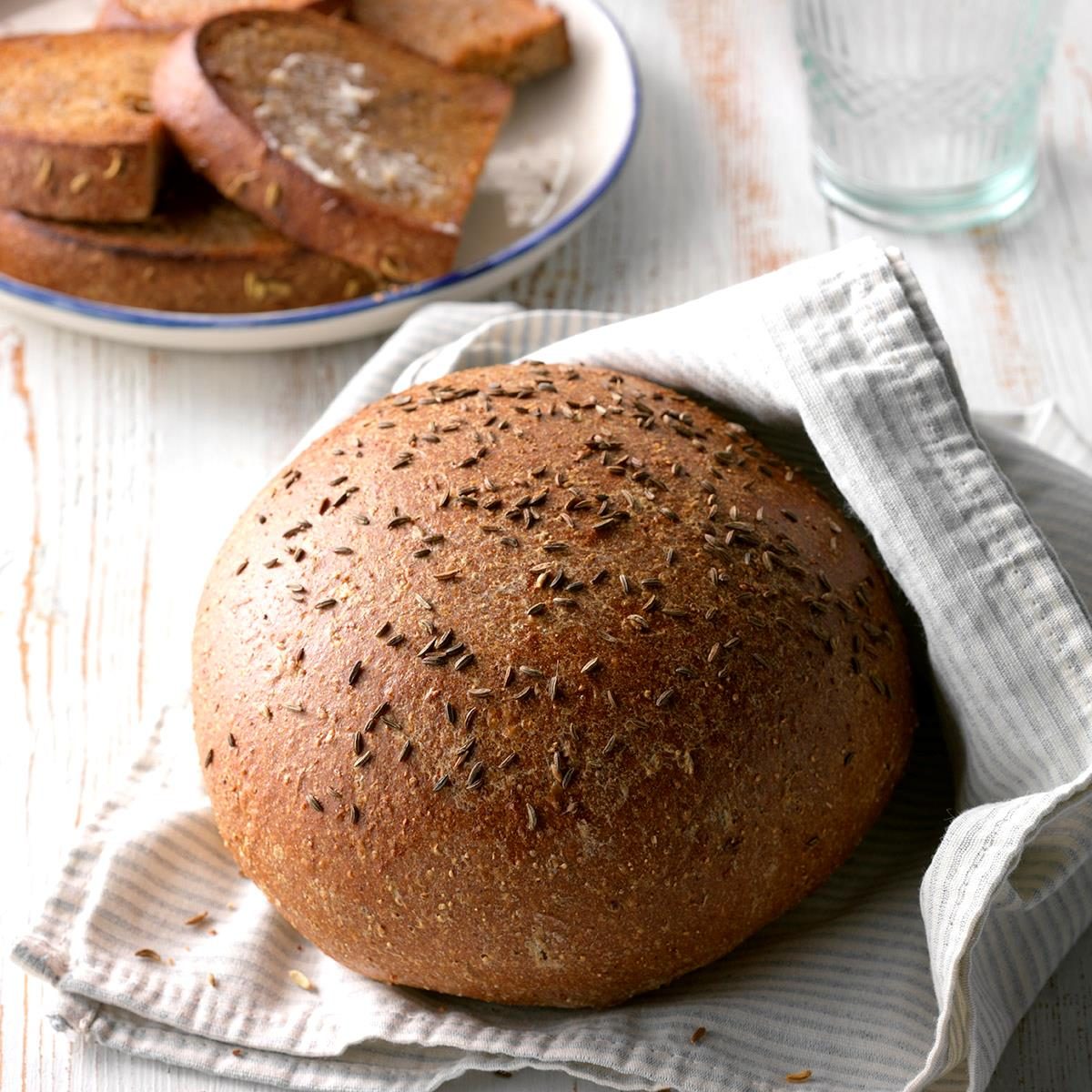
Garlic Butter Rye Bread with Tomato Sauce
A savory dish featuring rich rye bread topped with a tangy tomato sauce and aromatic garlic butter, perfect for a hearty meal. This recipe is a must-try for any occasion.
🥘Ingredients
- 2 cups all-purpose flour
- 1 cup whole wheat rye flour
- 1 packet (2 ¼ tsp) instant yeast
- 2 ½ cups warm water
- 1 tbsp olive oil
- 1 tsp salt
- 1 tbsp honey
- 4 tbsp unsalted butter, softened
- 4 cloves garlic, minced
- 1 tbsp fresh parsley, chopped
- 1 cup crushed tomatoes
- ½ cup tomato sauce
- 1 small onion, finely chopped
- 2 cloves garlic, minced
- 1 tsp dried oregano
- ½ tsp red pepper flakes (optional)
- Salt and pepper to taste
👨🍳Directions
-
1
Preheat oven to 375°F (190°C). Mix all ingredients for the rye bread in a large bowl. Knead for 5-7 minutes until smooth and elastic. Cover and let rise for 1 hour or until doubled in size. -
2
Preheat the oven to 400°F (200°C). In a separate bowl, mix softened butter, minced garlic, and parsley to make the garlic butter. -
3
Preheat oven to 375°F (190°C). Roll out the risen dough to a rectangle on a floured surface. Spread the garlic butter evenly over the dough. Place a baking sheet lined with parchment paper, then spread the tomato sauce evenly over the garlic butter. Cut the dough into desired shapes (e.g., squares or rounds). -
4
Bake for 25-30 minutes or until golden brown. Let cool for 10 minutes before slicing.
🔧Equipment
- Mixing bowls
- Stand mixer or large bowl with a dough hook
- Oven
- Baking sheet
- Knife and cutting board
- Mixing spoon
- Measuring cups and spoons
📊Nutrition Facts (per serving)
📝Notes
Tips
- For extra flavor, add a pinch of smoked paprika to the dough.
- Substitute fresh parsley with dried if needed, but adjust the quantity slightly.
- Ensure the dough rises properly for a lighter texture.
Variations
- Add a sprinkle of grated Parmesan cheese on top before baking.
- Use a mix of rye and whole wheat flour for a nutty flavor.
Watch Video Of How Garlic Butter Rye Bread with Tomato Sauce Works
❓ Frequently Asked Questions About Garlic Butter Rye Bread with Tomato Sauce
What is the best way to prepare rye bread for making a sandwich or toast?
To prepare rye bread for sandwiches or toast, start by slicing it thinly against the grain for even thickness. For toast, lightly brush the cut sides with melted butter or olive oil, then toast in a toaster or skillet over medium heat until golden brown. If using rye bread for sandwiches, consider lightly toasting it to enhance flavor, but avoid overtoasting to prevent dryness.
—
Can I substitute whole wheat flour for rye flour in this recipe, and if so, what adjustments should I make?
While you can substitute whole wheat flour, rye flour has a distinct flavor and texture that works best in its own right. If substituting, use 100% rye flour (dark or light) and reduce the whole wheat flour to 50% of the recipe. Since rye has a lower gluten content, you may need to add 1–2 teaspoons of vital wheat gluten to improve structure. Also, increase hydration slightly (by 1–2 tablespoons) to compensate for the denser flour.
—
How long should I let the rye bread rise before baking, and what if it doesn’t rise enough?
For most rye bread recipes, let the dough rise 1–2 hours at room temperature (or up to 4 hours in a warm place) until it doubles in size. Rye flour absorbs water slower than wheat, so it may not rise as much as white bread. If the dough doesn’t rise enough, try:
– Increasing hydration (add 1–2 tablespoons more water).
– Using a mix of rye and whole wheat flour (e.g., 70% rye + 30% whole wheat).
– Covering with a damp towel to retain moisture during proofing.
– Using a slower, cooler proofing method (refrigerate overnight for a gentler rise).
—
Why does my rye bread turn out dense or gummy, and how can I fix it?
Rye bread can be dense or gummy due to low gluten development (rye flour has less gluten than wheat) and overproofing. To improve texture:
– Use a mix of rye and whole wheat flour (or add 1–2 tsp vital wheat gluten).
– Knead longer (rye dough benefits from more handling for better structure).
– Reduce proofing time—overproofing weakens gluten. Proof for 1–1.5 hours max at room temp.
– Add a leavening agent (e.g., 1 tsp baking soda + 1 tbsp vinegar for a quick rise).
– Use a slightly lower hydration rate (try 60–65% instead of 70–75%).
– Bake at a slightly higher temperature (375°F/190°C) to set the crust faster.
—
How can I store rye bread to keep it fresh longer, and how long will it last?
To store rye bread:
– Room temperature: Wrap tightly in plastic wrap or a bread bag and store at room temp for 2–3 days. Rye absorbs moisture quickly, so avoid long-term storage this way.
– Fridge: Keep for up to 5 days (slightly stale texture is fine; reheat in a toaster or oven to revive).
– Freezer: Slice fresh bread, freeze on a tray, then transfer to a ziplock bag. Reheat from frozen by toasting or baking at 350°F (175°C) for 10–15 mins until crisp.
– For longer freshness: Use a rye bread loaf pan with a lid or a baking stone to prevent drying. Some bakers add 1 tsp baking soda to the dough for extra moisture retention.
