
salmon fish steak recipe

The Best salmon fish steak recipe
This recipe is perfect for so many reasons. It’s easy enough to make on a weeknight if you’re running late, but it also looks impressive enough to serve at a casual dinner party or even a family gathering. My kids love it because it’s not too greasy, not too dry—just right. And honestly, salmon is one of those foods that’s so good for you without feeling like a chore. It’s packed with omega-3s, which help keep your heart strong, and it’s lean protein that doesn’t make you feel sluggish afterward. My husband always jokes that it’s the only thing I make that tastes better than it does in restaurants, and I don’t mind admitting that’s true. Plus, the kids will eat it because it’s simple, flavorful, and feels like a little indulgence. It’s that kind of recipe that makes cooking feel like less work and more joy.
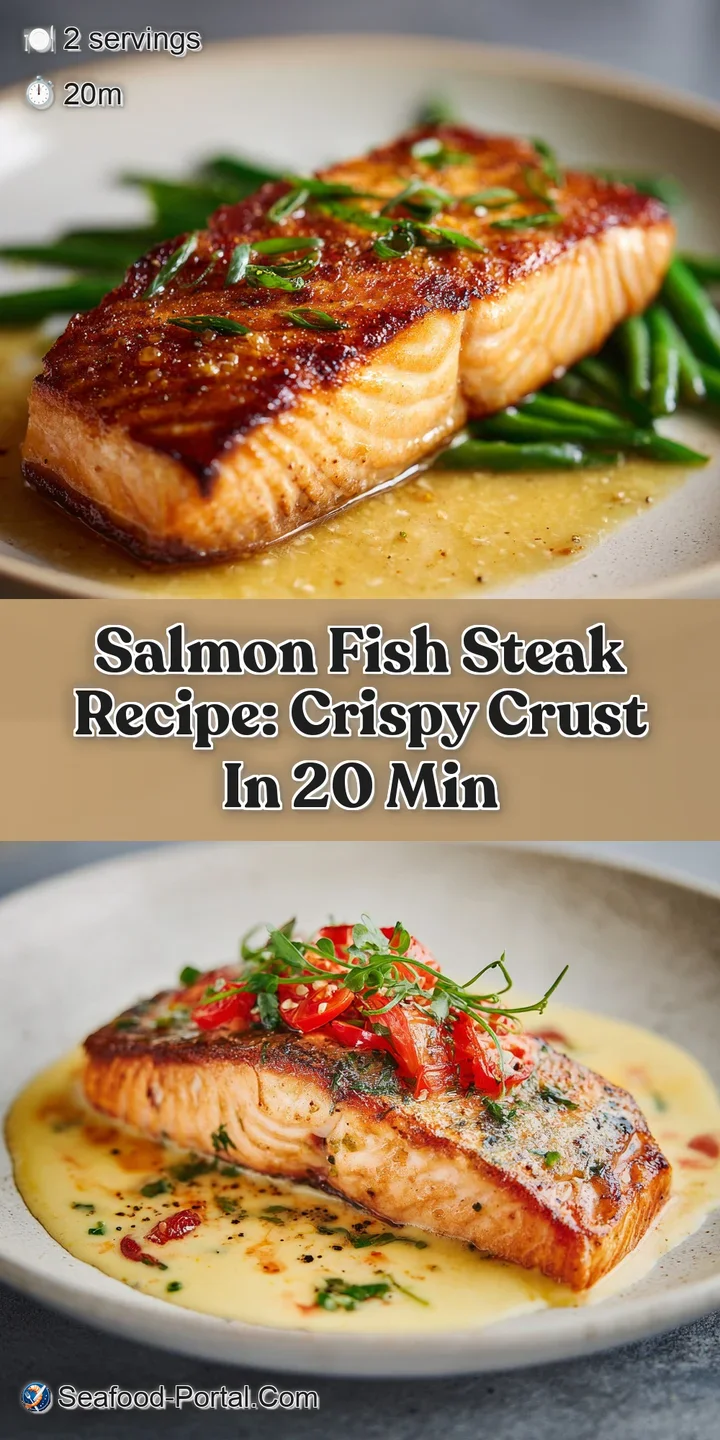
Grilled Salmon Steak with Lemon-Dill Sauce
A flavorful grilled salmon steak seasoned with herbs and paired with a bright lemon-dill sauce. Perfect for a healthy yet indulgent meal.
🥘Ingredients
- 4 salmon steaks (6 oz each)
- 2 tbsp olive oil
- 1 tbsp lemon juice
- 1 tsp dried dill
- 1 tsp garlic powder
- ½ tsp salt
- ½ tsp black pepper
- 1 tbsp honey
- ½ cup Greek yogurt
- 2 tbsp fresh lemon juice
- 2 tbsp fresh dill, chopped
- 1 clove garlic, minced
- 1 tsp Dijon mustard
- Salt and pepper to taste
- Fresh parsley, chopped
- Lemon wedges
👨🍳Directions
-
1
Preheat grill to medium-high heat (around 375°F/190°C). Clean and oil the grilling surface. -
2
In a small bowl, mix olive oil, lemon juice, honey, garlic powder, salt, and black pepper. Coat the salmon steaks evenly with this mixture. -
3
Place salmon steaks on the grill and cook for 4-5 minutes per side for medium-rare (adjust time based on thickness). For medium, cook 5-6 minutes per side. -
4
While salmon cooks, prepare the sauce by mixing Greek yogurt, lemon juice, chopped dill, minced garlic, Dijon mustard, salt, and pepper in a small bowl. -
5
Once salmon is cooked to desired doneness, transfer it to a plate and let it rest for 2-3 minutes. Pour the lemon-dill sauce over the salmon. -
6
Garnish with chopped parsley and lemon wedges before serving.
🔧Equipment
- Grill or grill pan
- Mixing bowl
- Small bowl
- Measuring spoons
- Knife and cutting board
- Tongs
📊Nutrition Facts (per serving)
📝Notes
- For extra flavor, marinate the salmon in the lemon-dill mixture for 15-30 minutes before grilling.
- Ensure salmon is cooked to the correct internal temperature (145°F/63°C for medium-rare).
- Substitute Greek yogurt with sour cream if preferred.
- Serve with steamed asparagus or a side salad for a balanced meal.
Watch Video Of How Grilled Salmon Steak with Lemon-Dill Sauce Works
❓ Frequently Asked Questions About Grilled Salmon Steak with Lemon-Dill Sauce
What is the ideal cooking temperature for salmon steak to ensure it is cooked through without drying out?
Answer: The ideal internal temperature for salmon steak is 125–130°F (52–54°C) for medium-rare, which ensures it’s tender and moist while retaining its natural juices. Use a meat thermometer to check accuracy, and avoid overcooking, as salmon cooks quickly—remove from heat when it reaches this temperature to let it rest.
—
Why does my salmon steak turn out rubbery instead of tender?
Answer: Rubbery salmon often happens due to overcooking, underseasoning, or not letting it rest properly. To prevent this:
– Cook it quickly at high heat (10–12 minutes for 1-inch thick steaks) to avoid overcooking.
– Don’t overcrowd the pan—sear in batches for even cooking.
– Let it rest for 5–10 minutes before slicing to redistribute juices.
– Use high-quality, fresh salmon (wild-caught or sustainably farmed) and avoid overmixing it after cooking.
—
Can I substitute another type of fish for salmon steak in this recipe, and if so, what would work best?
Answer: While salmon is the star, you can substitute tuna, mahi-mahi, or cod (for a milder taste) or halibut or trout (for a firmer texture). However, keep in mind:
– Tuna cooks faster (10–12 minutes) and can be slightly more prone to drying out.
– Cod or halibut may need 12–15 minutes to reach the same tenderness.
– Avoid fatty fish like salmon (like red snapper or kingfish) unless you prefer a richer flavor.
– Seasoning and cooking methods should still prioritize high heat and minimal resting time to avoid toughness.
—
How do I achieve a proper sear without burning the salmon steak?
Answer: A perfect sear requires high heat and patience. Follow these steps:
1. Pat the salmon dry with paper towels—moisture prevents a good crust.
2. Use a hot pan (cast iron works best) and cook over medium-high to high heat.
3. Don’t overcrowd—sear each side for 2–3 minutes (for 1-inch thick steaks) until golden brown.
4. Add butter or olive oil (1–2 tbsp) after searing (not before) to baste the fish—this prevents burning while adding richness.
5. Don’t peek—steam can make the salmon steam instead of sear. Let it cook undisturbed.
6. Finish with a splash of acid (lemon juice, vinegar, or soy sauce) if desired, but avoid overdoing it to keep the texture moist.
—
What are the best accompaniments to serve with salmon steak for a balanced meal?
Answer: Pair your salmon with dishes that complement its rich, buttery flavor while balancing the meal. Here are some crowd-pleasing options:
– Grain-based sides: Quinoa, farro, or wild rice (e.g., Cajun quinoa salad or herb-roasted rice pilaf).
– Vegetables: Steamed asparagus, roasted Brussels sprouts with balsamic glaze, or a simple green salad with a citrus vinaigrette.
– Crusty bread: Warm sourdough or brioche for dipping in pan juices.
– Sauces: Creamy lemon aioli, miso-glazed soy sauce, or a spicy honey-ginger drizzle.
– Dessert: A light fruit tart (like a berry tart) or dark chocolate mousse to cut the richness.
– Wine pairing: A Sauvignon Blanc (bright acidity balances fat) or a Pinot Noir (light and fruity). Avoid heavy reds that can overpower.

