
shrimp jambalaya recipe

The Best shrimp jambalaya recipe
What I love most about this recipe is how it’s packed with flavor without being heavy. The shrimp brings a bright, sweet taste that cuts through the richness of the sausage and rice, and the tomatoes and celery add a tangy crunch that keeps things interesting. It’s a meal that feels indulgent but also nourishing—full of protein from the shrimp and sausage, fiber from the rice and veggies, and healthy fats from the olive oil. It’s great for meal prep too, because it tastes even better the next day after the flavors meld together. Plus, it’s versatile enough to use whatever seafood you have on hand, whether it’s shrimp, crab, or even chicken if you’re feeling lighter. It’s that kind of dish that makes you feel like you’ve accomplished something good without overcomplicating things. And honestly? It’s one of those recipes that makes you feel proud to cook for your family, no matter how simple it is.
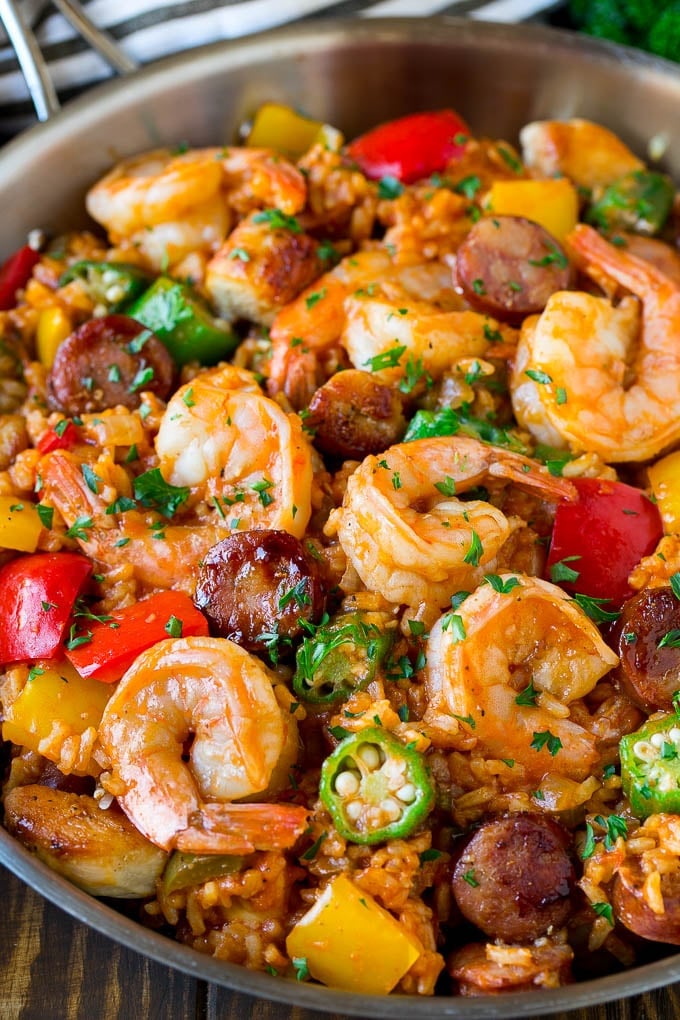
Shrimp Jambalaya
A flavorful Cajun-inspired one-pot dish featuring tender shrimp, smoked sausage, bell peppers, and rice, all simmered in a rich tomato-based sauce with aromatic spices. This recipe is a must-try for any occasion.
🥘Ingredients
- 1 lb large shrimp, peeled and deveined
- 1 lb smoked sausage, sliced into rings
- 1 red bell pepper, diced
- 1 green bell pepper, diced
- 1 large onion, finely chopped
- 3 cloves garlic, minced
- 1 celery stalk, diced
- 1 cup long-grain white rice, rinsed
- 1 cup tomato sauce
- 1 cup chicken broth
- 1/2 cup chicken fat or vegetable oil
- 1/2 cup Cajun seasoning
- 1/4 cup fresh parsley, chopped
- 1 tsp black pepper
- 1 tsp paprika
- 1/2 tsp thyme
- 1/2 tsp cayenne pepper (optional)
👨🍳Directions
-
1
In a large Dutch oven, heat chicken fat or oil over medium-high heat. Add sliced sausage and cook until browned (about 5 minutes). Remove and set aside. -
2
In the same pot, sauté onion, garlic, celery, and bell peppers until softened (about 5 minutes). Stir in Cajun seasoning, black pepper, paprika, thyme, and cayenne pepper. -
3
Add rinsed rice and stir to coat in the spices. Pour in tomato sauce and chicken broth, then bring to a boil. Reduce heat to low, cover, and simmer for 15 minutes. -
4
Add shrimp to the pot and cook for 3-4 minutes until pink. Stir in cooked sausage and parsley. Cook for an additional 2 minutes.
🔧Equipment
- Large Dutch oven or heavy pot
- Knife and cutting board
- Mixing bowls
- Wooden spoon
- Measuring cups and spoons
📊Nutrition Facts (per serving)
📝Notes
- For extra richness, add a pat of butter at the end of cooking.
- Substitute shrimp with chicken or andouille sausage if preferred.
- Ensure rice is fully cooked before adding shrimp to avoid overcooking.
Watch Video Of How Shrimp Jambalaya Works
❓ Frequently Asked Questions About Shrimp Jambalaya
What is the best type of shrimp to use in jambalaya?
The best shrimp for jambalaya are large, firm-fleshed shrimp like king prawns (prawns) or lobster shrimp, which hold their shape well when cooked. If you can’t find these, peeled and deveined large shrimp (about 1.5–2 inches long) work well too. Avoid overly small shrimp, as they can turn mushy.
Can I substitute any ingredients in jambalaya, and if so, which ones?
Yes! Here are some common substitutions:
– Shrimp → Use chicken thighs, sausage (andouille or smoked), or a mix of both for a meatier version.
– Diced ham → Swap for crumbled bacon or spam (chopped finely).
– Long-grain white rice → Brown rice or cauliflower rice (for a lower-carb option).
– Tomato paste → Diced tomatoes or a pinch of smoked paprika for depth.
– Green bell peppers → Onions, celery, or jalapeños for extra flavor.
How do I avoid making my jambalaya too wet or dry?
To keep jambalaya balanced:
1. Use the right rice-to-liquid ratio—about 1 cup rice to 1.5 cups liquid (broth, water, or a mix).
2. Stir frequently while cooking to distribute moisture evenly.
3. Add liquid gradually—start with less broth and adjust with water or broth as needed.
4. Don’t overcrowd the pot—cook in batches if necessary.
5. Use a heavy pot (like a Dutch oven) to prevent splattering and ensure even cooking.
Why is my jambalaya mushy, and how do I fix it?
Mushy jambalaya usually happens from overcooking the rice or adding too much liquid. To fix:
– If rice is too soft: Reduce the broth by half and cook on low heat for 10–15 more minutes, stirring often.
– If shrimp is mushy: They may have been overcooked. Undercook slightly and add a splash of water to deglaze the pot.
– Prevent it next time: Use freshly cooked rice (not pre-cooked) and cook slowly with minimal liquid.
Can I make jambalaya ahead of time, and how do I reheat it?
Yes! Jambalaya tastes even better the next day.
– Make ahead: Store in an airtight container in the fridge for up to 3 days or freeze for up to 3 months.
– Reheating:
– Stovetop: Warm on low heat, stirring occasionally, until hot (add a splash of broth if too dry).
– Microwave: Transfer to a microwave-safe dish, cover loosely, and heat in 20-second bursts, stirring between each.
– Oven: Bake at 350°F (175°C) for 20–25 minutes, stirring halfway.
– Tip: Add a pinch of flour or cornstarch to thicken if it’s too thin after reheating.


