
smash cake recipe

The Best smash cake recipe
I love this cake because it’s simple enough that even if I’m running late, I can throw it together without stressing. The batter is light but sturdy, and the way it fluffs up when you smash it down gives it that perfect cakey crunch without needing extra steps. Plus, it’s not too sweet—just enough to satisfy without making you feel guilty later. My kids, especially my little one who’s picky, will take a bite and say, “Mom, this is good!” even when they’d rather have cookies. And honestly, that’s enough for me. It’s a recipe that works for everyday meals or when you’re hosting a small get-together, because nobody gets overwhelmed by it. Plus, the health benefits? Well, it’s got whole wheat flour, which means more fiber and nutrients than the usual white flour cakes, and the fruit in it adds natural sweetness without all the sugar crash. It’s the kind of cake that feels indulgent but isn’t completely out of place in a balanced diet. Plus, the kids love that it’s got real fruit in it—no fake stuff—so it’s a win-win for everyone.
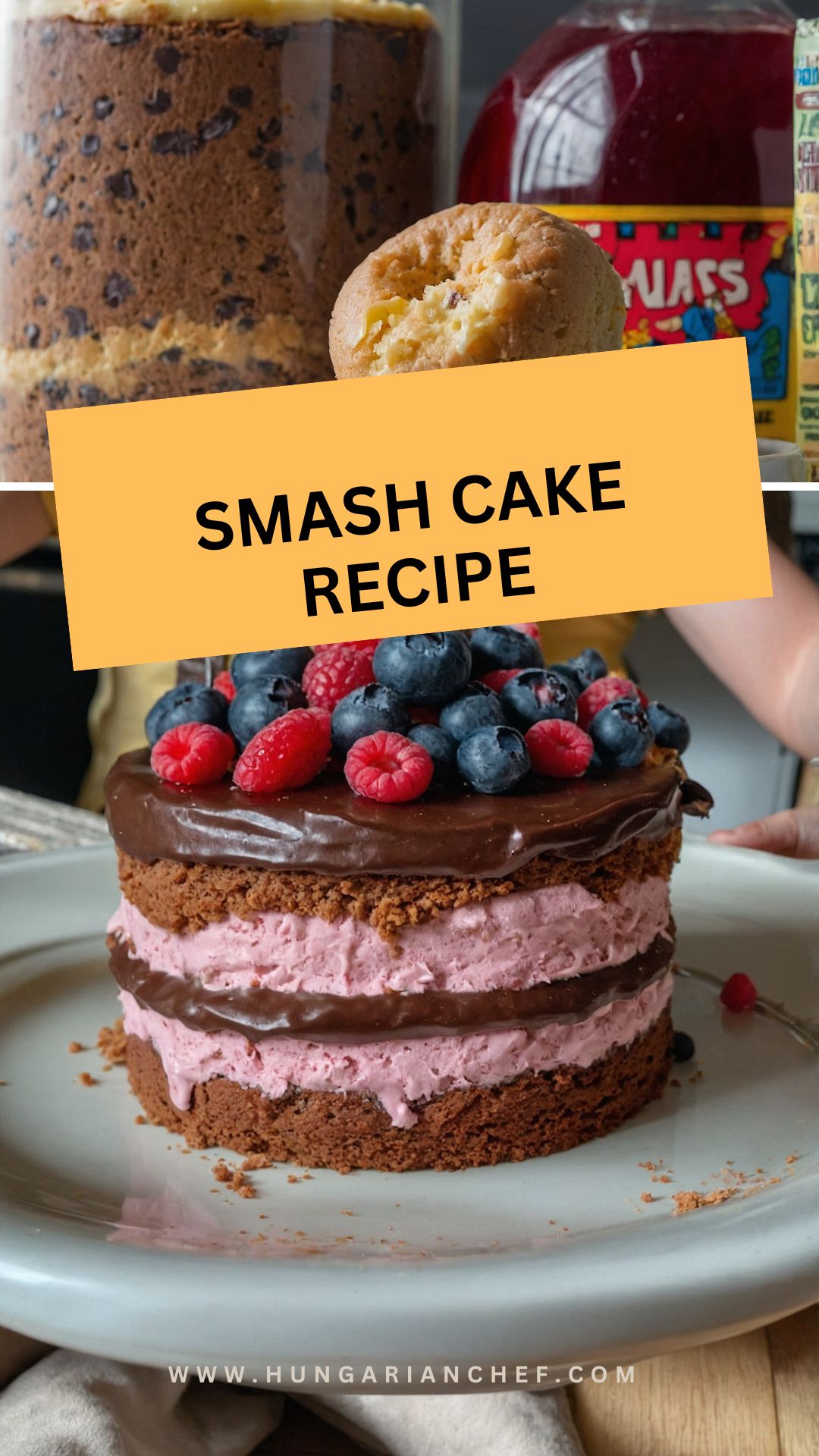
Classic Smash Cake
A light and fluffy vanilla cake that is lightly smashed to create a tender texture, perfect for both dessert and breakfast. This recipe is simple yet elegant, ideal for any occasion.
🥘Ingredients
- 2 ½ cups all-purpose flour
- 1 ½ tsp baking powder
- ½ tsp salt
- 1 cup unsalted butter, softened
- 2 cups granulated sugar
- 4 large eggs, room temperature
- 2 tsp vanilla extract
- 1 cup whole milk, room temperature
- 1 cup powdered sugar
- 2–3 tbsp milk or heavy cream
- 1 tsp vanilla extract
👨🍳Directions
-
1
Preheat oven to 350°F (175°C). Line a 9-inch round cake pan with parchment paper and lightly grease the sides. -
2
In a large bowl, cream together the softened butter and sugar until light and fluffy (about 3–4 minutes). -
3
Add eggs one at a time, beating well after each addition. Mix in the vanilla extract. -
4
In a separate bowl, whisk together the flour, baking powder, and salt. Gradually add the dry ingredients to the wet mixture, alternating with the milk, starting and ending with the dry ingredients. Mix until just combined. -
5
Pour batter into the prepared pan and smooth the top. Bake for 25–30 minutes, or until a toothpick inserted into the center comes out clean. -
6
Allow the cake to cool in the pan for 10 minutes, then transfer it to a wire rack to cool completely. -
7
Once fully cooled, use a serrated knife to cut the cake into a flat, even layer. Place the cake on a plate or cutting board. -
8
For the glaze, beat powdered sugar with milk or cream until smooth. Add vanilla extract and mix well. Drizzle the glaze over the cake.
🔧Equipment
- Mixing bowls
- Electric mixer or hand whisk
- 9-inch round cake pan
- Parchment paper
- Mixing spoons
- Oven
- Stand mixer (optional)
- Spatula
- Plate or cutting board
📊Nutrition Facts (per serving)
📝Notes
- For a lighter texture, replace half the butter with vegetable oil.
- Ensure eggs are room temperature for better mixing.
- Adjust baking time slightly if your oven runs hot or cold.
- Optional: Add a sprinkle of cinnamon or cocoa powder before glazing for extra flavor.
Watch Video Of How Classic Smash Cake Works
❓ Frequently Asked Questions About Smash Cake
What is the key difference between a smash cake and a regular sponge cake?
A smash cake is characterized by its dense, moist texture and slightly crumbly structure, achieved through a unique blending technique. Unlike regular sponge cakes that rely on air pockets from whipped egg whites or butter, a smash cake is created by folding in a smooth, well-incorporated batter that has been gently blended to remove air bubbles. This process gives it a denser, more uniform consistency, often making it richer and easier to slice without crumbling.
—
How do I ensure my smash cake batter is perfectly smooth and free of lumps?
To achieve a smooth smash cake batter, start by whisking the eggs and sugar together until they are pale and thickened (about 5-7 minutes). Then, gradually add the flour while folding gently with a spatula to avoid incorporating air. For a truly lump-free batter, ensure your flour and sugar are sifted beforehand, and use a stand mixer with a paddle attachment to mix continuously at medium speed for 2-3 minutes. Avoid overmixing to maintain a silky texture.
—
Why does my smash cake turn out dense or heavy instead of light and airy?
Several factors can cause a dense smash cake. First, overmixing the batter can trap too much air, leading to a heavier texture. Another common issue is not using enough flour—smash cakes typically require a slightly higher flour-to-egg ratio than traditional sponge cakes. Additionally, baking at too high a temperature can cause the cake to cook unevenly, making it dense. To fix this, preheat your oven to the recommended temperature (usually around 175°C/350°F), use a reliable cake tester, and avoid overbaking. Finally, ensure your eggs are at room temperature for better incorporation.
—
Can I substitute ingredients in a classic smash cake recipe, and which ones work best?
While you can experiment with substitutions, some key ingredients should be carefully chosen to maintain the cake’s texture and flavor. For eggs, you can use aquafaba (chickpea brine) in a 1:1 ratio, but the texture may be slightly different. For butter, you can use coconut oil or vegetable shortening, but adjust the baking time slightly. For flour, all-purpose works well, but for a lighter texture, try cake flour. Avoid replacing the baking powder or baking soda, as these are crucial for rise. If using a substitute for milk, ensure it’s full-fat for richness, or add an extra egg yolk for extra moisture.
—
What are some common mistakes to avoid when baking a smash cake?
Avoid these common mistakes to achieve the best smash cake: 1) Overmixing—stop folding once the flour is just combined; 2) Skipping the preheat—ensure your oven is fully hot before placing the cake; 3) Greasing pans improperly—use a light dusting of flour or a nonstick spray to prevent sticking; 4) Uneven baking—rotate the pan halfway through baking and check with a toothpick; 5) Not resting the cake—let it cool in the pan for 10 minutes before transferring to a wire rack to prevent crumbling. Also, avoid adding too much liquid, as this can dilute the batter and weaken the structure.

