
sourdough english muffins recipe

The Best sourdough english muffins recipe
I also love how these English muffins are way healthier than store-bought versions. No preservatives, no refined flour, and the sourdough fermentation helps break down gluten and improve digestion. It’s a great way to get more fiber and probiotics into your diet without feeling like you’re sacrificing taste. Plus, they’re so versatile—you can stuff them with eggs and cheese, top them with avocado and everything bagel seasoning, or even use them as a base for a simple breakfast sandwich. My husband always says they’re the perfect way to start the day, and honestly, I couldn’t agree more. Whether it’s a weeknight meal or a weekend brunch, these muffins are that reliable, comforting part of our routine. And the best part? They’re not hard to make—just a few simple steps that pay off with something truly special.
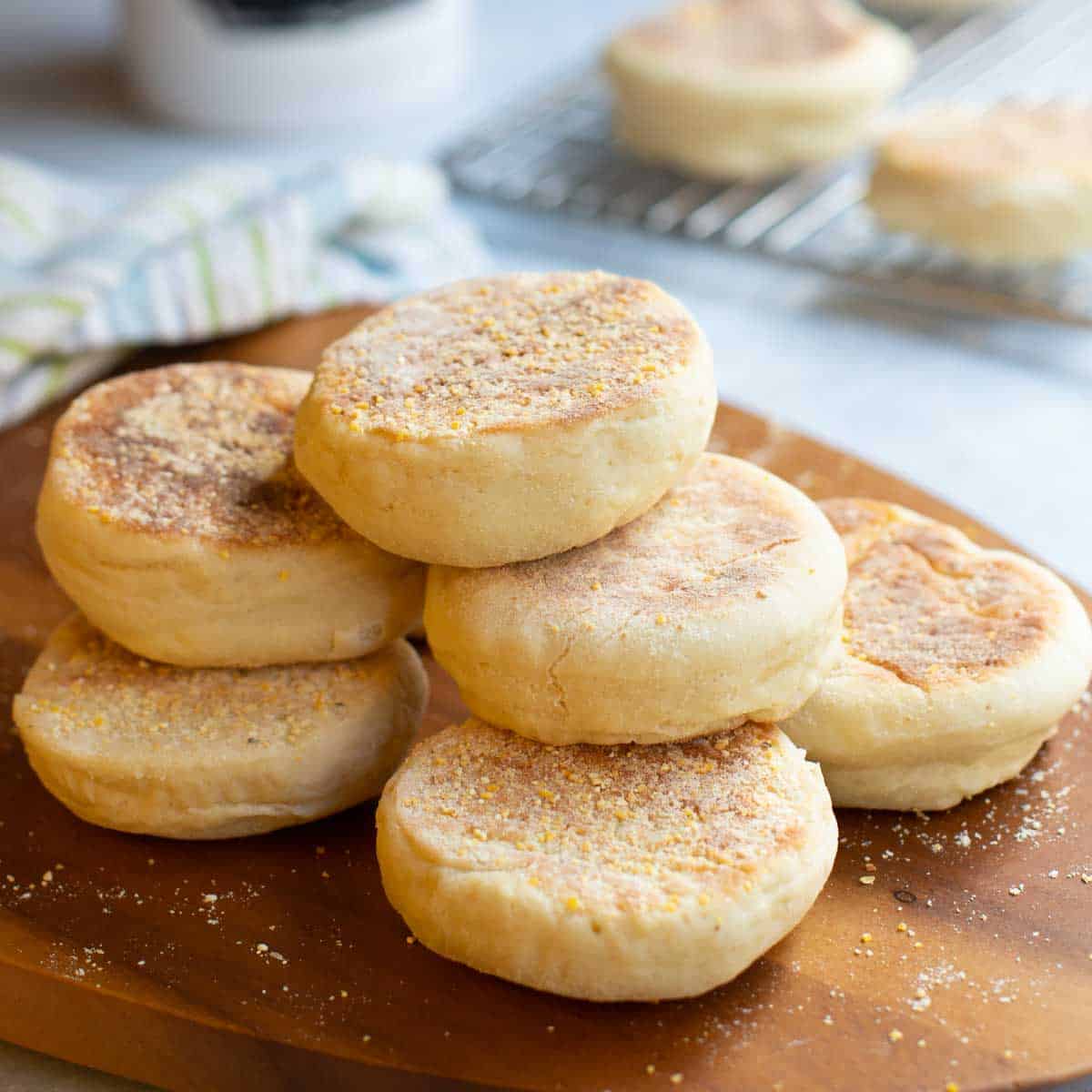
Homemade Sourdough English Muffins
A classic, artisanal twist on English muffins using a sourdough starter for a tangy, chewy texture. Perfect for breakfast or brunch with your favorite toppings.
🥘Ingredients
- 2 cups (250g) whole wheat flour or all-purpose flour
- 1 cup (240ml) warm water
- 1 tbsp (15g) active sourdough starter (50% hydration)
- 1 tsp (5g) salt
- 1 tbsp (15ml) olive oil
- 1 tbsp (15g) melted butter
- 1 tsp (5g) coarse sea salt
- 1 tsp (5g) smoked paprika
👨🍳Directions
-
1
Activate the sourdough starter by mixing it with warm water and letting it sit at room temperature for 1 hour until it doubles in size. -
2
In a large bowl, combine flour, salt, and olive oil. Add the activated sourdough starter and mix until a shaggy dough forms. -
3
Knead the dough on a lightly floured surface for about 5 minutes, or use a stand mixer with a dough hook for 5-7 minutes until smooth and elastic. -
4
Place the dough in a lightly oiled bowl, cover with a damp towel, and let it rise in a warm place for 1-2 hours, or until it has doubled in size. -
5
Preheat the oven to 375°F (190°C). Divide the dough into 8 equal portions and roll each into a ball. Place them in an English muffin pan or round baking pans, flatten slightly. -
6
Bake for 15-18 minutes, or until the muffins are golden brown. Allow them to cool on a wire rack before topping.
🔧Equipment
- Mixing bowls (2)
- Stand mixer or kitchen aid with dough hook
- Clean kitchen towel or parchment paper
- English muffin pan or round baking pans
- Oven
📊Nutrition Facts (per serving)
📝Notes
- For extra flavor, brush the baked muffins with melted butter and sprinkle with coarse sea salt or smoked paprika.
- If the dough is too sticky, add a little more flour while kneading.
- Store in an airtight container at room temperature for up to 3 days or freeze for longer storage.
Watch Video Of How Homemade Sourdough English Muffins Works
❓ Frequently Asked Questions About Sourdough English Muffins
What is the best way to activate the sourdough starter for English muffins?
To activate your sourdough starter, feed it with equal parts flour and water (e.g., 50g starter + 50g whole wheat flour + 50g warm water) 8–12 hours before baking. Use a ratio of 1:1:1 (starter:flour:water). Let it rise until it’s bubbly and doubled in size. If it’s weak, feed it again after 24 hours.
—
How long should the sourdough dough rest before shaping for English muffins?
The dough should rest (autolyse) for at least 30–60 minutes after mixing and kneading to develop gluten. For sourdough, a longer rest (up to 2 hours) improves flavor and texture. After autolyse, let it proof at room temperature for 1–2 hours until slightly puffy before shaping.
—
Can I use store-bought sourdough starter instead of a homemade one for English muffins?
Yes, you can use store-bought sourdough starter (like Active Rock or similar brands) as a substitute. Follow the package instructions for feeding, but expect slightly different fermentation times. For best results, feed it 1–2 times before using.
—
What’s the key difference between baking English muffins in a muffin tin vs. a skillet?
In a muffin tin, muffins bake faster (15–20 mins) and are more uniform, but they may not brown as much. In a skillet, they brown better (20–25 mins) but may spread more. For sourdough, a skillet gives a crispier crust, while a muffin tin keeps them slightly softer.
—
Why do my sourdough English muffins turn out dense or gummy?
Several factors cause this:
– Overproofing: Let the dough rise too long (check when it’s just puffy, not collapsed).
– Cold kitchen: Proof in a warm spot (70–75°F/21–24°C) to speed up fermentation.
– Weak starter: Ensure your starter is active (bubbly and strong) before using.
– Underproofing: If kneaded too hard, gluten tightens the dough. Let it rest longer or use a gentle touch.
For best results, aim for a dough that’s slightly underproofed but still soft and pliable.
