
stuffed meatloaf recipe stove top stuffing

- The Best stuffed meatloaf recipe stove top stuffing
- Stove-Top Stuffed Meatloaf with Homemade Stuffing
- 🥘Ingredients
- 👨🍳Directions
- 🔧Equipment
- 📊Nutrition Facts (per serving)
- 📝Notes
- Watch Video Of How Stove-Top Stuffed Meatloaf with Homemade Stuffing Works
- ❓ Frequently Asked Questions About Stove-Top Stuffed Meatloaf with Stuffing
The Best stuffed meatloaf recipe stove top stuffing
One of the best things about this dish is how adaptable it is. You can serve it as a main course with a fresh green salad or as a side with roasted vegetables, and it always feels hearty and satisfying. Plus, the stove-top stuffing keeps it simple—no baking required, which means less cleanup and more time to enjoy the meal. My family loves how the meatloaf stays juicy inside while the stuffing adds a delicious, slightly savory crunch, making each bite feel like a little treat. And because it’s made with whole grains and lean proteins, it’s also a healthier option than traditional meatloaf without the fuss. It’s the kind of dish that feels indulgent but still nourishing, which is why it’s a favorite for both weeknight dinners and special occasions.
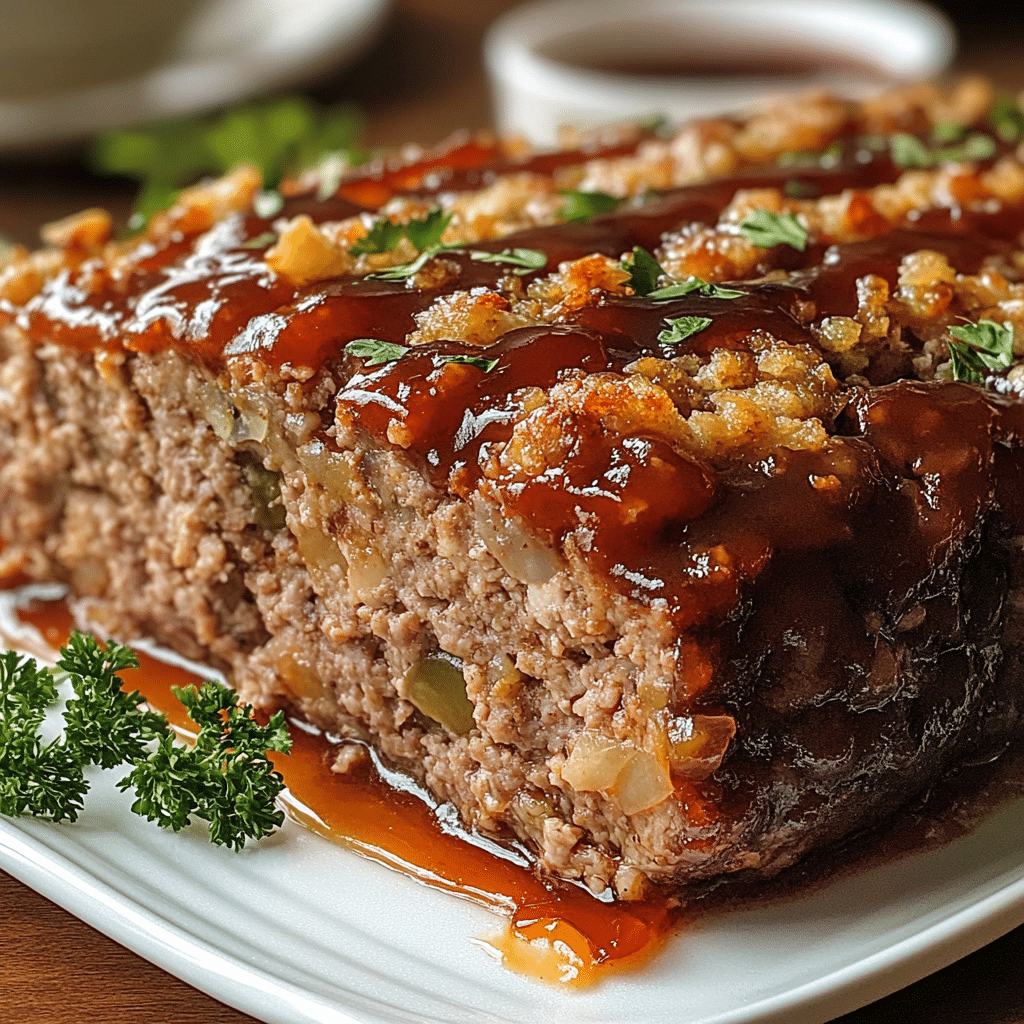
Stove-Top Stuffed Meatloaf with Homemade Stuffing
A comforting dish featuring a savory meatloaf encased in a rich, buttery homemade stuffing, perfect for a cozy meal. This recipe combines tender meatloaf with a flavorful, oven-baked stuffing for a hearty and satisfying experience.
🥘Ingredients
- 2 lbs ground beef (80/20 mix)
- 1 cup breadcrumbs
- 1 egg
- 1 cup ketchup
- 1 cup milk
- 1 tsp garlic powder
- 1 tsp onion powder
- ½ tsp salt
- ½ tsp black pepper
- 1 tsp Worcestershire sauce
- 1 cup whole wheat bread cubes
- 1 cup chicken broth
- ½ cup butter (melted)
- 1 large onion (diced)
- 2 celery stalks (diced)
- 2 carrots (diced)
- 2 cloves garlic (minced)
- 1 tsp dried thyme
- 1 tsp dried rosemary
- ½ tsp salt
- ½ tsp black pepper
- 1 egg (beaten)
- 1 tbsp olive oil
👨🍳Directions
-
1
Preheat oven to 375°F (190°C). In a large bowl, mix ground beef, breadcrumbs, egg, ketchup, milk, garlic powder, onion powder, salt, pepper, and Worcestershire sauce until well combined. -
2
In a large skillet, heat olive oil over medium heat. Sauté onion, celery, carrots, and garlic until softened (about 5-7 minutes). Remove from heat and let cool slightly. -
3
In another bowl, combine bread cubes, sautéed veggies, chicken broth, melted butter, thyme, rosemary, salt, and pepper. Stir in the beaten egg and mix well. -
4
Shape the meatloaf mixture into a loaf and place it in a greased 9×13-inch baking dish. Spread the stuffing mixture evenly over the top of the meatloaf. -
5
Bake in the preheated oven for 45-50 minutes, or until the meatloaf reaches an internal temperature of 160°F (71°C) and the stuffing is golden brown.
🔧Equipment
- Mixing bowls
- Large skillet
- Baking dish (9×13 inches)
- Knife and cutting board
- Wooden spoon
- Measuring cups and spoons
📊Nutrition Facts (per serving)
📝Notes
Tips
- For extra moisture, add a splash of beef broth to the meatloaf mixture.
- Make sure the stuffing is evenly distributed to avoid a dry texture.
- You can bake the meatloaf and stuffing separately and then assemble before baking for a quicker method.
Substitutions
- Use gluten-free breadcrumbs if preferred.
- Add finely chopped mushrooms for extra flavor in the stuffing.
Watch Video Of How Stove-Top Stuffed Meatloaf with Homemade Stuffing Works
❓ Frequently Asked Questions About Stove-Top Stuffed Meatloaf with Stuffing
What is the best way to prepare stove-top stuffed meatloaf for stuffing, and how do I ensure it stays moist?
To make a delicious stove-top stuffed meatloaf, mix ground beef (or a blend of beef and pork) with breadcrumbs, eggs, milk, onions, garlic, ketchup, Worcestershire sauce, and seasonings like salt, pepper, and herbs like thyme or rosemary. Shape into a loaf and bake in a greased skillet at 375°F (190°C) for 30–40 minutes, basting occasionally. For extra moisture, add a splash of beef broth or a beaten egg on top before baking. Cover with foil if browning isn’t desired, then uncover for a crispy finish.
Can I use turkey or chicken instead of beef for this stuffed meatloaf?
Yes, you can substitute turkey or chicken, but texture and flavor will differ. For turkey, use ground turkey mixed with breadcrumbs, eggs, milk, and seasonings like sage or garlic powder. Cook at 375°F (190°C) for 35–40 minutes. For chicken, a similar approach works, but it may dry out faster—add a little extra moisture (like tomato sauce or broth) to prevent this. Avoid overbrowning to keep it juicy.
How do I make the stuffing for the meatloaf extra flavorful without overpowering the meatloaf?
To enhance flavor without overpowering the meatloaf, incorporate aromatic ingredients like sautéed onions, celery, and mushrooms in the stuffing. Use herbs like parsley, dill, or sage, and add a touch of smoked paprika or cayenne for depth. For extra richness, blend in a small amount of cream cheese or a spoonful of cream of mushroom soup. Avoid adding too much liquid (like broth) to prevent sogginess, as the meatloaf itself will provide moisture.
What’s the best way to serve this stuffed meatloaf with gravy?
For a perfect serving, let the stuffed meatloaf cool slightly before slicing to make it easier to cut. Use the pan drippings to make a simple gravy by whisking in a bit of flour, then gradually adding cold beef broth until smooth. Season with a splash of Worcestershire sauce, black pepper, and a touch of Dijon mustard. Serve the gravy ladled over the meatloaf, and pair with mashed potatoes, roasted vegetables, or a fresh green salad.
How can I make sure the stuffed meatloaf doesn’t dry out while cooking on the stove?
To prevent drying, keep the meatloaf moist by:
– Adding a small amount of milk, broth, or even a beaten egg to the mixture before shaping.
– Covering the skillet with foil during the first half of cooking to retain moisture, then uncovering for the last 10 minutes to brown.
– Reducing the oven temperature slightly (if possible) or cooking at a lower heat (350°F instead of 375°F) to slow drying.
– Using a meat thermometer to ensure it reaches 160°F (71°C) without overcooking.

