
taiwanese beef noodle soup recipe

The Best taiwanese beef noodle soup recipe
I’ll admit, at first, I was a little skeptical about the health benefits, but once I started paying attention, I realized how smart this recipe actually is. The broth is packed with collagen from the beef bones, which helps with joint health, and the whole-grain noodles give you a good dose of fiber. Plus, the veggies—carrots, mushrooms, and sometimes bok choy—add freshness and nutrients without overpowering the dish. My kids don’t even realize they’re eating healthy because it tastes so good, and honestly? Neither do I. It’s that kind of recipe where you can feel good about what you’re putting into your body without sacrificing flavor. And let’s be real—there’s nothing like a big pot of this on a cold night, or even a lazy Sunday afternoon when the whole family gathers around the table. It’s heartwarming, it’s filling, and it’s something you can make from scratch without breaking the bank. That’s why I keep it in my rotation year after year.
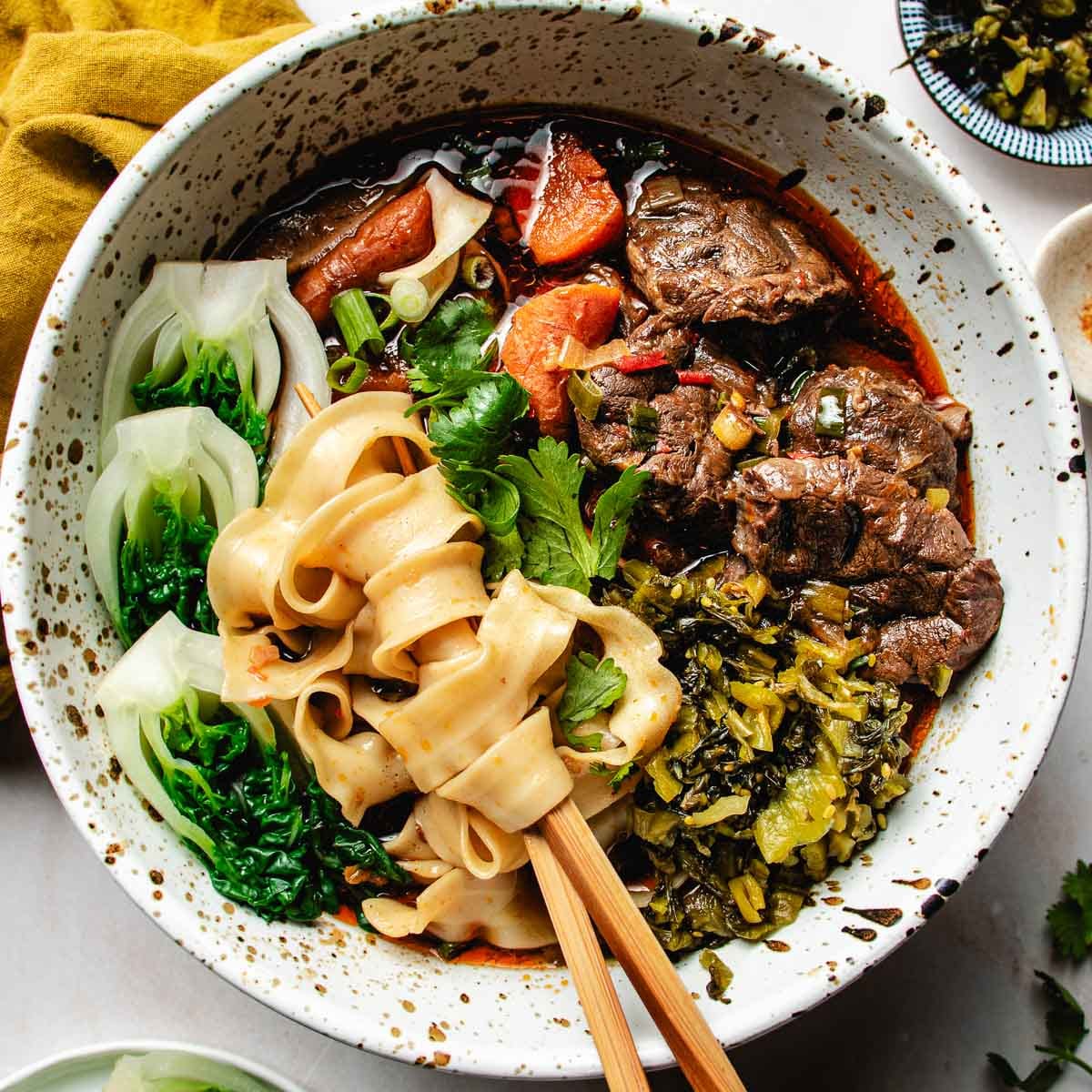
Taiwanese Beef Noodle Soup (牛肉麵)
A rich and aromatic Taiwanese beef noodle soup featuring tender beef, chewy wheat noodles, and a savory broth infused with herbs and spices. Perfect for a comforting meal.
🥘Ingredients
- 4 cups beef broth (or water + 1 beef bouillon cube)
- 1 lb (450g) beef shank or short ribs, cut into chunks
- 1 tbsp soy sauce
- 1 tbsp dark soy sauce
- 1 tsp sugar
- 1 tsp black pepper
- 1 tsp star anise
- 2 cloves garlic, minced
- 1-inch ginger, sliced
- 1 cup green onions, chopped
- 1 cup dried shiitake mushrooms (soaked & sliced)
- 1 tsp cornstarch mixed with 2 tbsp water
- 8 oz (225g) wheat noodles (or egg noodles)
- 1 tbsp oil
- 1/2 cup bean sprouts
- 1/2 cup sliced green onions
- 1/4 cup chopped cilantro
- 1/4 cup sliced peanuts
- 1/4 cup fried shallots
- 1/4 cup chopped scallions
- 1/4 cup chopped cilantro
- 1 tbsp sesame oil
👨🍳Directions
-
1
In a pot, combine beef broth, beef chunks, soy sauces, sugar, black pepper, star anise, garlic, and ginger. Bring to a boil, then reduce heat to low. Simmer for 30-40 minutes until beef is tender. -
2
While the broth simmers, cook noodles according to package instructions until al dente. Drain and rinse with cold water to stop cooking. -
3
In a bowl, mix cornstarch and water, then stir into the simmering broth to thicken slightly. Remove from heat. -
4
Steam shiitake mushrooms for 5-7 minutes until tender. Slice and set aside. -
5
Divide noodles among bowls. Pour hot broth over noodles, then add beef chunks, shiitake mushrooms, and green onions. Garnish with bean sprouts, sliced green onions, cilantro, peanuts, fried shallots, and scallions.
🔧Equipment
- Large pot
- Knife and cutting board
- Mixing bowls
- Slotted spoon
- Wooden spoon
- Steamer basket
- Foil
- Measuring spoons
📊Nutrition Facts (per serving)
📝Notes
Tips
- For extra flavor, add a splash of oyster sauce or hoisin sauce to the broth.
- Use a mix of beef and pork broth for richer taste.
- Adjust spice level by adding more or less black pepper.
- For a quicker version, use pre-cooked beef or canned beef chunks.
Variations
- Add sliced pork belly or chicken for extra richness.
- Include tofu cubes for a vegetarian option.
- Top with a fried egg for a protein boost.
Watch Video Of How Taiwanese Beef Noodle Soup (牛肉麵) Works
❓ Frequently Asked Questions About Taiwanese Beef Noodle Soup (牛肉麵)
What is the key difference between Taiwanese beef noodle soup and other versions like Chinese or Japanese versions?
Taiwanese beef noodle soup typically features hand-pulled wheat noodles (like mian or tangmian), a rich broth made with beef marrow, bones, and sometimes pork tripe, and a balance of sweet, savory, and umami flavors from ingredients like soy sauce, dark soy sauce, and a touch of sugar. Unlike Chinese versions that often use thicker noodles and a more herb-forward broth, or Japanese nabe soups with lighter, dashi-based broths, Taiwanese styles emphasize deep, meaty richness and homestyle comfort with ingredients like garlic, ginger, and preserved vegetables.
—
Why does Taiwanese beef noodle soup often include preserved vegetables like pickled mustard greens and preserved radish?
Preserved vegetables (like chiu tang or chiu shao—pickled mustard greens and preserved radish) are a staple in Taiwanese beef noodle soup because they add sweet, tangy, and salty depth that balances the richness of the beef broth. They also provide a longer shelf life (since they’re fermented), making them practical for home cooks. The sourness from pickled greens cuts through the fat, while the sweetness from preserved radish enhances the savory notes, creating a harmonious flavor profile that’s uniquely Taiwanese.
—
Can I substitute beef marrow for other types of meat or broth bases, and what would be the best alternatives?
While beef marrow is traditional for its creamy, fatty richness, you can substitute it with:
– Beef bone broth (simmered for 6+ hours for depth).
– Pork knuckle or tripe (for a similar gelatinous texture).
– Lamb or mutton marrow (if you prefer a slightly milder, earthier flavor).
For broth base, a strong beef or lamb stock (with added collagen from bones) works best, but avoid chicken or vegetable broths—they lack the umami needed. If using a liquid substitute, add 1–2 tbsp of soy sauce or hoisin sauce to compensate for lost depth.
—
How do I ensure the noodles stay soft and al dente in Taiwanese beef noodle soup?
Taiwanese noodles (like tangmian or mian) are firm but still chewy, not mushy. To keep them perfect:
1. Boil fresh noodles separately for 2–3 minutes until al dente, then rinse under cold water to stop cooking.
2. Add noodles to the broth 1–2 minutes before serving (they’ll reabsorb some liquid but won’t overcook).
3. For hand-pulled noodles, use a fine-mesh strainer to avoid tearing.
4. If using dried noodles, soak in warm broth for 10 minutes before adding to the full pot to prevent overcooking.
5. Avoid overcrowding the pot—cook in batches if needed.
—
What are the essential spices and seasonings used in Taiwanese beef noodle soup, and how do they contribute to the flavor?
The magic of Taiwanese beef noodle soup lies in its layered seasoning:
– Soy sauce (black & dark) – Adds saltiness and depth (black soy = richer, dark soy = slightly sweeter).
– Sugar or rock sugar – Balances the savory with natural sweetness (1–2 tsp per liter of broth).
– Five-spice powder – Gives a warm, aromatic lift (a pinch enhances the broth’s complexity).
– Garlic & ginger – Fresh minced garlic (3–4 cloves) and grated ginger (1-inch piece) add heat and brightness.
– Star anise & cinnamon – A tiny pinch (1/4 tsp each) infuses a subtle licorice-like warmth.
– Preserved vegetables – The tangy/sweet contrast (e.g., pickled mustard greens) cuts through fat.
– Sesame oil (optional) – A drop at the end adds nutty aroma (common in some regional versions).
The key is not overpowering—Taiwanese styles lean into subtle, balanced flavors rather than bold seasoning. Adjust to taste, but start with 1–2 tbsp soy sauce + 1 tsp sugar per bowl as a base.
