
thai red curry chicken recipe

The Best thai red curry chicken recipe
I love this recipe because it’s versatile—you can adjust the heat level, swap in different proteins, or even make it vegetarian if you want. We’ve done it with tofu for dinner nights when the kids were tired, and it still tasted amazing. It’s the kind of dish that feels festive but doesn’t take forever, so it’s perfect for game days, family gatherings, or just a quiet night in. My mom used to say that good food should make you feel good, and this curry does just that. The kids love how it’s slightly sweet and spicy, not too much heat to bother them, but enough to make them remember it later. And for me? It’s the kind of dish that makes me feel like I’m traveling somewhere without leaving the kitchen. No fancy ingredients, just a few key things that come together perfectly. Plus, the health benefits? Well, the coconut milk has heart-healthy fats, and the spices like turmeric and chili have anti-inflammatory properties. It’s not just tasty—it’s smart too. That’s what I call a win-win.
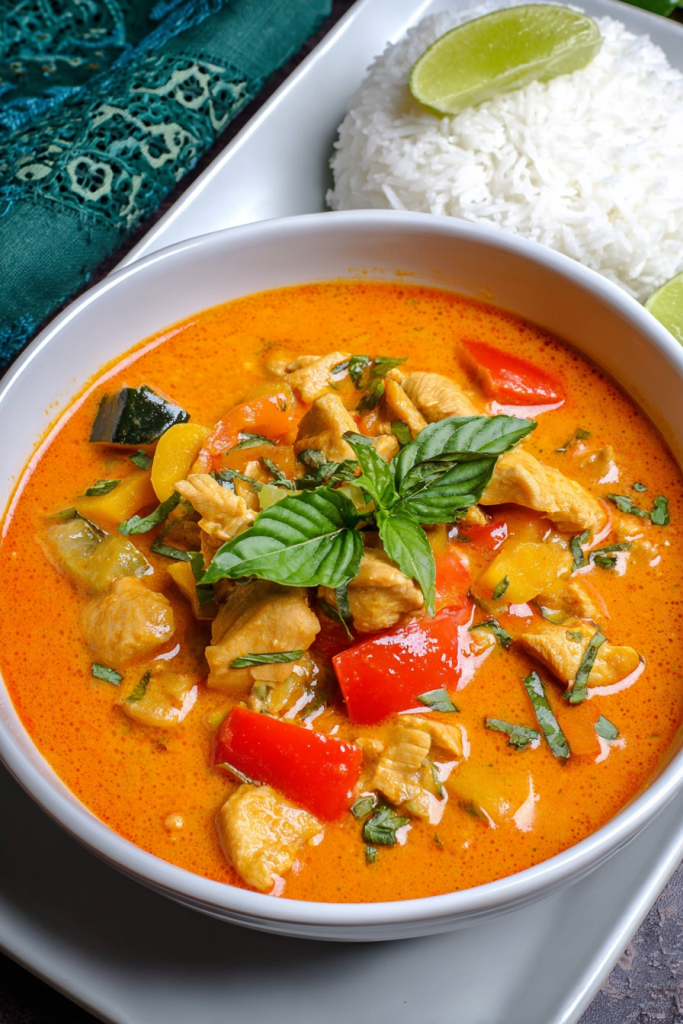
Thai Red Curry Chicken
A rich and aromatic Thai Red Curry Chicken dish featuring tender chicken in a spicy, coconut milk-based curry sauce with fresh herbs and vegetables. This recipe is a must-try for any occasion.
🥘Ingredients
- 2 tbsp oil
- 2 red curry paste blocks (or 3 tbsp paste)
- 1 can (400ml) coconut milk
- 1 cup chicken broth
- 1 cup cherry tomatoes, halved
- 1 bell pepper, sliced
- 1 cup Thai basil leaves
- 1 red onion, sliced
- 1 tbsp fish sauce
- 1 tsp sugar
- 1 tbsp lime juice
- 4 boneless, skinless chicken thighs
- 1 tbsp soy sauce
- 1 tsp garlic powder
- 1 tsp ginger powder
- 1 tsp red curry paste (optional for extra spice)
- 1 cup jasmine rice
- Fresh lime wedges
- Extra Thai basil leaves
👨🍳Directions
-
1
Preheat a large skillet or wok over medium-high heat. Add oil and swirl to coat the pan. -
2
Crumble the red curry paste into the pan and stir for 1-2 minutes until fragrant. Avoid burning the paste. -
3
Pour in the coconut milk and chicken broth. Stir well and bring to a gentle simmer. Let it cook for 5 minutes. -
4
Add cherry tomatoes, bell pepper, and red onion. Stir and cook for another 3-4 minutes until vegetables soften slightly. -
5
Season the chicken with soy sauce, garlic powder, ginger powder, and red curry paste (if using). Cut chicken into bite-sized pieces. -
6
Add the chicken pieces to the skillet and cook for 5-7 minutes, stirring occasionally, until fully cooked and no longer pink inside. -
7
Stir in fish sauce, sugar, and lime juice. Simmer for another 2-3 minutes to let flavors meld. -
8
Remove from heat and stir in Thai basil leaves. Taste and adjust seasoning if needed (add more fish sauce or lime juice for balance). -
9
Serve hot over steamed jasmine rice with fresh lime wedges and extra Thai basil on the side.
🔧Equipment
- Large skillet or wok
- Wooden spoon
- Measuring spoons
- Knife and cutting board
- Mixing bowls
- Fine-mesh strainer (optional)
📊Nutrition Facts (per serving)
📝Notes
- For extra richness, add a splash of heavy cream or coconut cream at the end of cooking.
- Adjust spice level by reducing or increasing the amount of red curry paste.
- Ensure chicken is fully cooked to avoid foodborne illness.
- For a vegetarian version, replace chicken with tofu or mushrooms.
Watch Video Of How Thai Red Curry Chicken Works
❓ Frequently Asked Questions About Thai Red Curry Chicken
What is the key difference between Thai red curry and green curry in terms of ingredients?
Thai red curry differs from green curry primarily in its base and spice profile. Red curry uses a paste made with red curry paste (containing dried red chilies, garlic, shallots, lemongrass, galangal, kaffir lime leaves, and sometimes coriander roots), which gives it a deeper, richer, and slightly smoky flavor with a moderate to high heat level. Green curry, on the other hand, uses a green curry paste with fresh green chilies, offering a fresher, more vibrant, and milder heat.
—
Why does my Thai red curry chicken turn out too watery or thin?
A watery or thin curry often happens due to overcooking, too much liquid, or not enough thickening agents. To fix this:
– Reduce the heat and stir frequently to prevent the sauce from breaking.
– Add a cornstarch slurry (1 tbsp cornstarch + 2 tbsp water) and cook until thickened.
– Use less broth—start with 1 cup and adjust based on how much liquid the chicken releases.
– Simmer longer (10–15 mins) to let the flavors meld without over-diluting.
—
Can I substitute chicken thighs for breasts in this recipe, and what’s the best way to prepare them?
Yes, bone-in chicken thighs work better than breasts because they stay juicier and absorb more flavor. For the best results:
– Marinate the thighs in coconut milk, lime juice, and a pinch of salt for 30+ minutes before cooking.
– Sear them first (pan-fry until golden) to add depth before adding the curry paste.
– Cut them into bite-sized pieces for even cooking—thighs can dry out if overcooked in curry.
—
How do I adjust the spice level if I’m sensitive to heat?
If you prefer a milder red curry, you can:
– Reduce the amount of red curry paste (start with half the recipe and add more if needed).
– Use fewer dried chilies in the paste (or skip the whole peppercorns).
– Add more coconut milk—it dilutes the heat slightly.
– Blend in a pinch of sugar or honey to balance the spice.
– Serve with fresh herbs (cilantro, Thai basil) to mask heat.
—
What’s the best way to store and reheat leftover Thai red curry chicken?
For storage:
– Cool quickly, then refrigerate in an airtight container for up to 4 days.
– Freeze for up to 3 months (portion into freezer bags to avoid freezer burn).
For reheating:
– Stovetop: Simmer on low heat for 5–7 mins, stirring occasionally, until heated through. Add a splash of water/coconut milk if too thick.
– Microwave: Heat in 30-second bursts, stirring between each, until warm (avoid over-microwaving to prevent sogginess).
– Air fryer: 375°F (190°C) for 4–5 mins, shaking halfway.

